

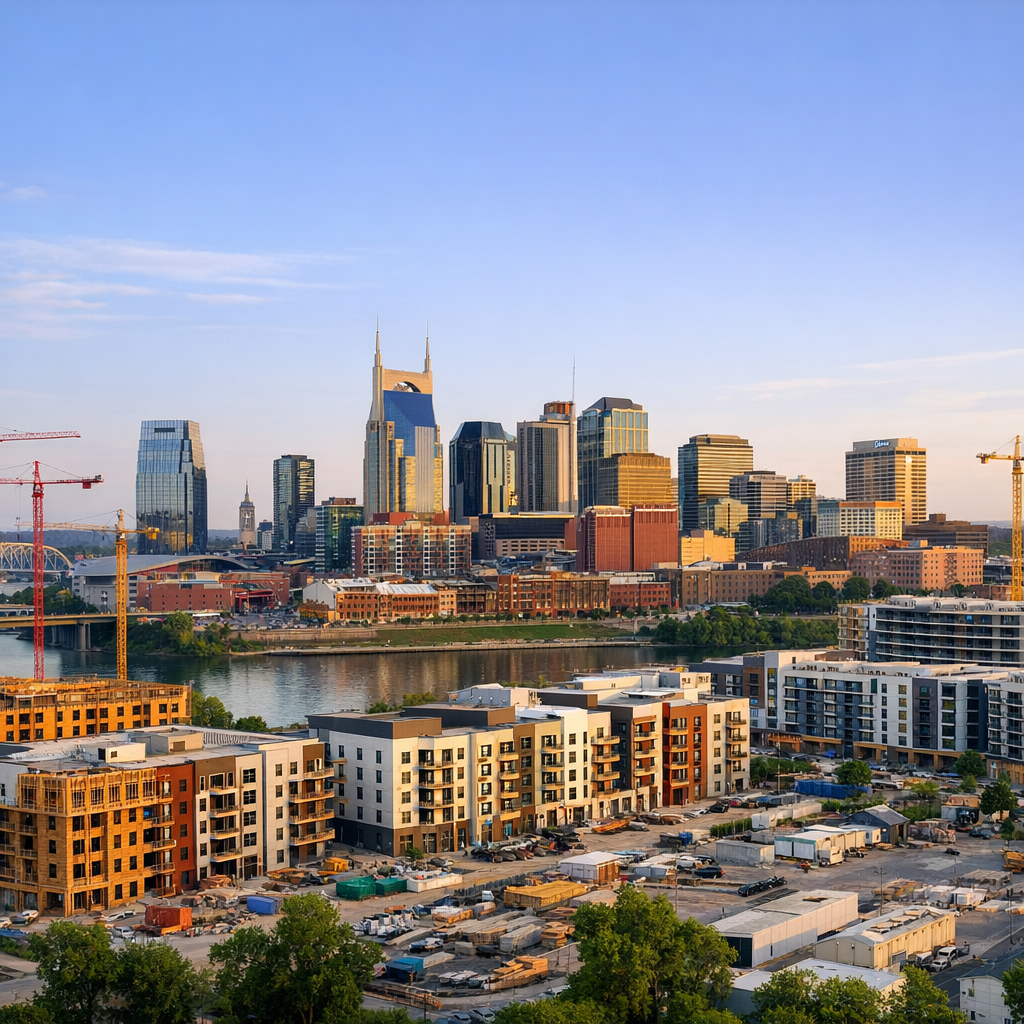
Nashville’s real estate market is undergoing significant transformations, presenting both challenges and opportunities for residents and investors. Understanding these shifts is crucial for making informed decisions in this dynamic environment.
Market Trends: A Shift Toward Buyers
Recent data indicates a notable increase in housing inventory across Nashville. As of March 2026, the Greater Nashville Realtors reported 12,315 properties available for sale, marking a 12% rise from the previous year. This surge, coupled with slightly lower interest rates, has empowered buyers with greater negotiating power, leading sellers to adopt creative tactics such as offering incentives. Although home prices have decreased slightly—condo prices fell from $350,000 in February 2025 to $338,500 last month—overall prices remain significantly higher than in past years, continuing to price out some buyers. The market, which has been cooling following its post-COVID surge, saw sales totaling 2,133 homes last month, a figure consistent with last year’s data. Notably, Middle Tennessee homes sold at an average of 6.4% below asking last year, but larger price declines were seen in other markets. Despite signs of increased affordability, many prospective buyers still struggle with high costs.
Neighborhood Spotlight: Antioch’s Continued Appeal
Antioch (ZIP code 37013) has solidified its position as a real estate hotspot, leading Nashville with 1,121 home sales in 2025. This marks the third consecutive year Antioch has topped the list, emphasizing its rapid growth in southeastern Davidson County. While overall regional sales slightly declined, Antioch and other neighborhoods like The Nations and Sylvan Park (ZIP 37209), Crieve Hall (37211), Hermitage (37076), Bellevue (37221), and North Nashville (37207) saw strong buyer interest. Rising home prices in popular areas like East Nashville have pushed buyers toward more affordable destinations like Antioch, which is also benefitting from new amenities such as Tanger Outlets and an upcoming In-N-Out. The most affordable ZIP code remains 37217 near Percy Priest Lake ($311,875 median), while the priciest is 37215 in Green Hills, with median home prices exceeding $1.1 million.
Development Projects: East Bank Revitalization
Metro Nashville plans to allocate $300 million, originally designated for Music City Center, to several key projects on the East Bank. Metro Finance Director Jenneen Reed outlined the funding strategy, emphasizing that these surplus tourism funds—generated due to the higher-than-expected revenues—will also allow the city to reallocate other public resources toward capital projects like schools, fire halls, and sidewalks. Among the East Bank initiatives receiving funding are utilities infrastructure and new parks, with up to $150 million of the total earmarked for these elements, primarily budgeted for 2030. Reed explained that this financial plan will not only support the expansion of Music City Center and East Bank development but also enhance Nashville’s bonding capacity for future projects. Key East Bank developments include the new Tennessee Titans stadium, the Tennessee Performing Arts Center headquarters, a mixed-use development by the Fallon Company, and an Oracle corporate campus.
Property Values: A Significant Uptick
A recent citywide assessment revealed that property values in Davidson County, Nashville, have increased by an average of 45% since 2021, highlighting the area’s booming real estate market. This data, released by Assessor of Property Vivian Wilhoite, shows varying growth rates across different Council districts, reflected in a newly available heat map. Although Tennessee law prevents local governments from profiting off these reappraisals, prompting a corresponding 45% reduction in the property tax rate, property owners with above-average increases may still face higher tax bills. Property owners can request an informal review of their new valuations through the assessor’s website or by phone, with a deadline of May 9. Additionally, Mayor Freddie O’Connell is expected to propose a citywide property tax increase in the upcoming budget.
Conclusion
Nashville’s real estate landscape is evolving, influenced by increased inventory, neighborhood developments, and significant property value appreciation. For potential buyers, the current market offers more choices and negotiating power. Sellers, on the other hand, may need to adopt innovative strategies to attract buyers. Staying informed about these trends is essential for anyone looking to navigate Nashville’s dynamic housing market effectively.