

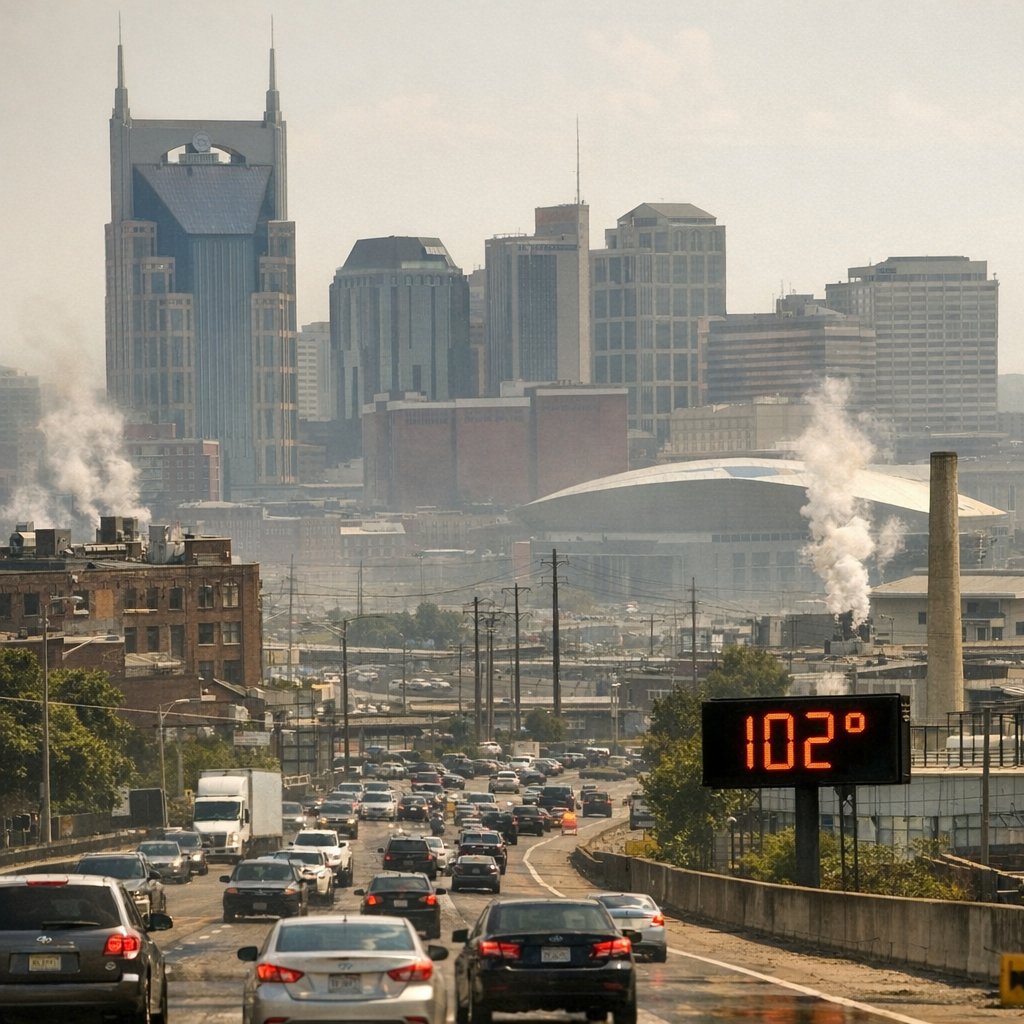
Nashville, Tennessee, experiences a humid subtropical climate characterized by hot, humid summers and mild to cool winters. Understanding the city’s weather patterns and environmental challenges is essential for residents and visitors alike.
Seasonal Weather Patterns
Summer: From late May to mid-September, Nashville’s temperatures often exceed 81°F (27°C), with July being the hottest month, averaging highs around 89°F (32°C). Humidity levels are high, contributing to the sultry summer atmosphere.
Winter: Spanning late November to late February, winters are relatively mild. January, the coldest month, sees average lows around 31°F (-1°C). Snowfall is infrequent but possible during this period.
Precipitation: Rainfall is fairly evenly distributed throughout the year, with May and December typically being the wettest months, each averaging over 5 inches (130 mm) of precipitation.
Environmental Challenges
Urban Heat Island Effect
Nashville’s rapid urbanization has led to the urban heat island effect, where urban areas experience higher temperatures than their rural surroundings due to human activities and infrastructure. Approximately 71% of Nashville residents live in neighborhoods affected by this phenomenon, which can exacerbate health risks during heatwaves.
Climate Resilience Efforts
In response to these challenges, Nashville has developed a Climate Adaptation and Resilience Plan (CARP) to address climate hazards such as flooding, tornadoes, extreme heat, and severe storms. The plan aims to enhance the city’s ability to anticipate, adapt to, and recover from climate-driven disruptions.
By staying informed about Nashville’s climate and supporting local resilience initiatives, residents can better prepare for and mitigate the impacts of environmental challenges.