

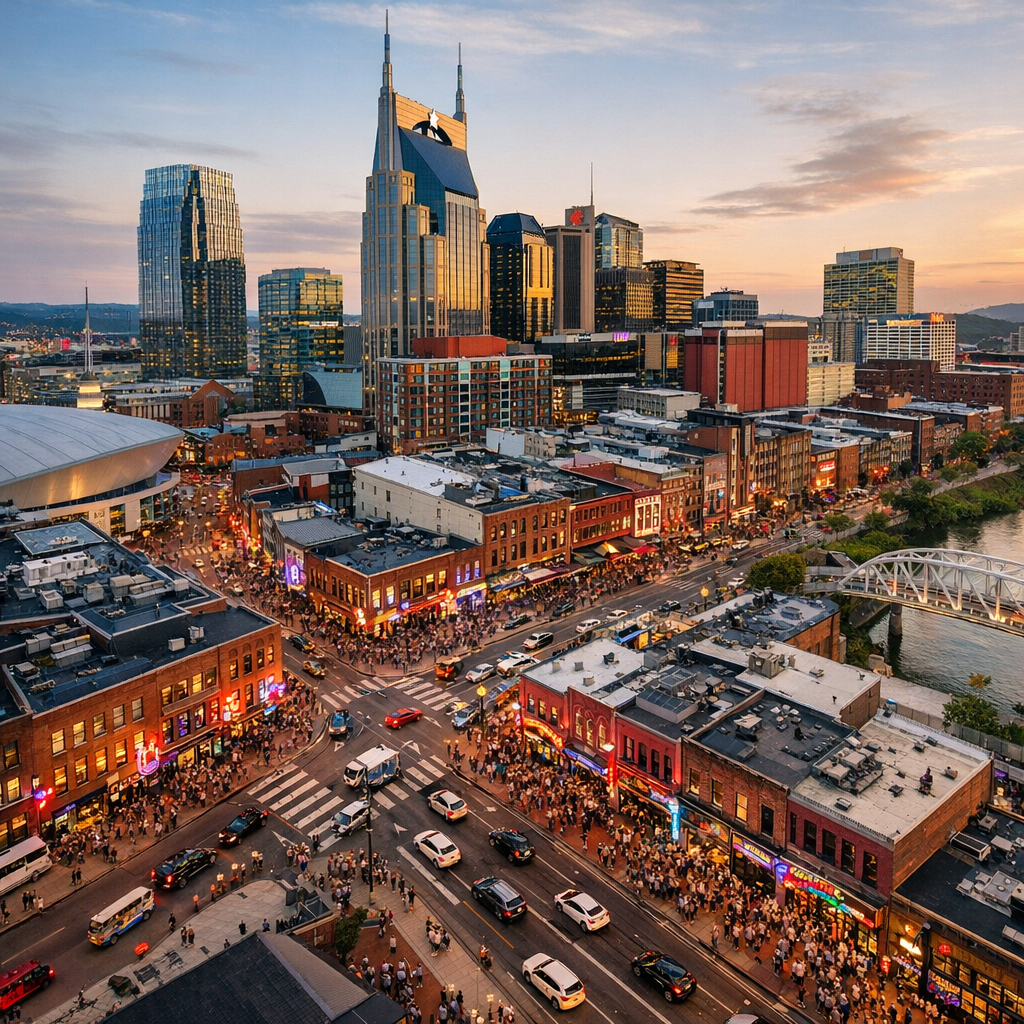
Nashville’s economic landscape has undergone significant transformation in recent years, reflecting broader national trends in urban development, population growth, and economic diversification.
Population Growth and Urban Development
In 2025, Davidson County led Tennessee’s population growth, adding nearly 9,300 residents—the highest increase among the state’s 95 counties. This surge underscores challenges such as rising home prices, increased traffic, and extensive construction projects, while also presenting opportunities in innovation and job creation. Notably, domestic migration from other U.S. states remains a key contributor to this expansion.
Economic Contributions of Key Institutions
Vanderbilt University and Vanderbilt University Medical Center have been pivotal in Nashville’s economic development. Between 2019 and 2024, these institutions contributed $22.13 billion to Tennessee’s economy. As the largest private employer in the Nashville area, Vanderbilt’s impact extends beyond its campus, shaping the region’s economy and quality of life.
Tourism and Major Events
Nashville’s tourism sector has seen remarkable growth, with events like Alan Jackson’s final concert at Nissan Stadium in June 2026 drawing significant crowds. The concert weekend saw 78,433 hotel rooms sold countywide, with downtown hotels experiencing a 98% occupancy rate. Such events not only boost local businesses but also enhance Nashville’s reputation as a premier destination.
Infrastructure and Future Prospects
Looking ahead, Nashville is preparing to host Super Bowl LXIV in 2030. The city plans to invest $60 million into the event, anticipating a substantial return on investment. This initiative aligns with Nashville’s broader strategy to enhance its infrastructure and solidify its position on the national stage.
In summary, Nashville’s economic trajectory mirrors national patterns, highlighting the city’s dynamic growth and its integral role in the broader U.S. economy.