

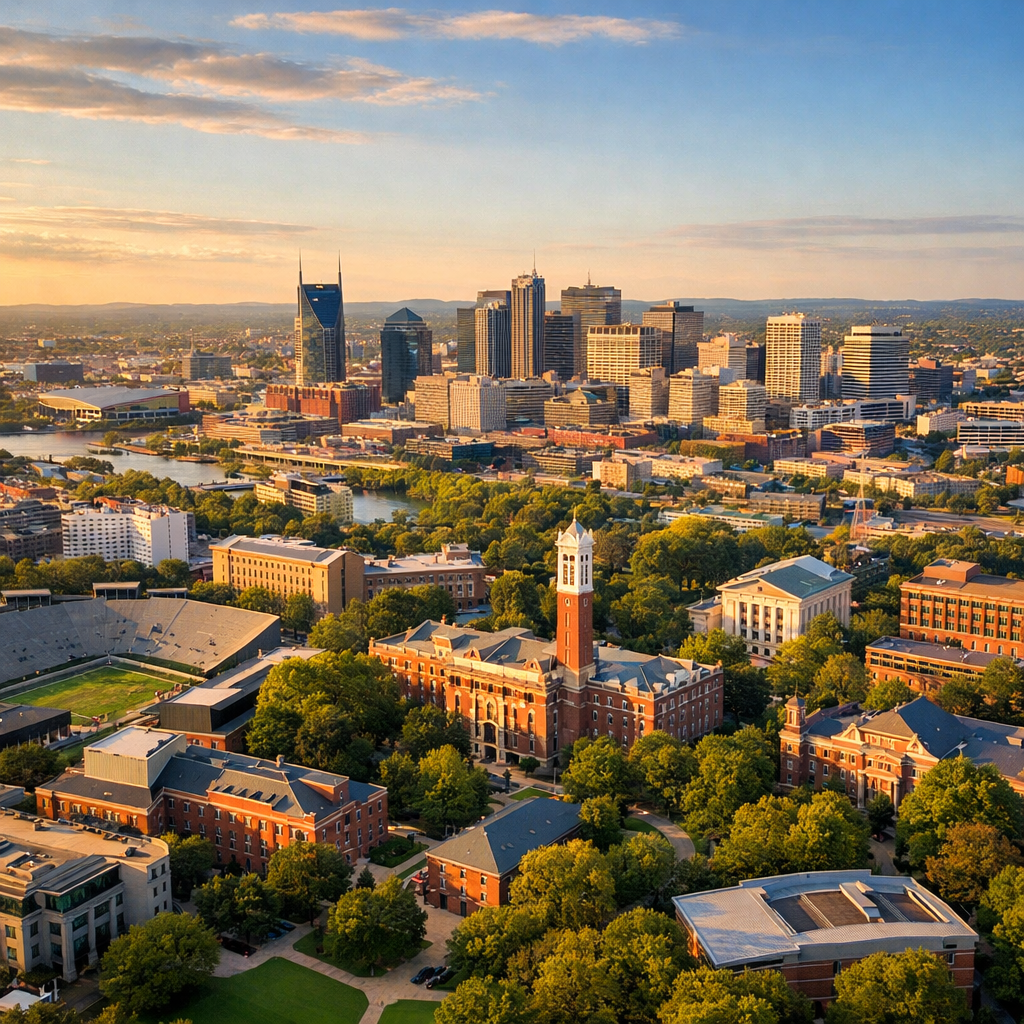
Nashville’s economic landscape has undergone significant transformation in recent years, reflecting broader national trends in urban development, education, and infrastructure investment.
Population Growth and Urban Development
In 2025, Nashville, particularly Davidson County, led Tennessee’s population growth by adding nearly 9,300 residents—the highest increase among the state’s 95 counties. This surge underscores challenges such as rising home prices, increased traffic, and extensive construction projects, while also presenting opportunities in innovation and new business ventures. Notably, domestic migration from other U.S. states remains a key contributor to this expansion.
Educational Attainment and Income Levels
Recent analyses reveal a strong correlation between higher education and income levels in Nashville. Adults aged 25 or older without a college education earned a median income of $41,393, highlighting the wage gap between high school graduates and those with higher education. To address this, Tennessee introduced initiatives like Tennessee Reconnect, offering tuition-free community or technical college education to residents aged 25 and older, aiming to improve economic outcomes for adult learners.
Infrastructure Investments and Economic Impact
Vanderbilt University and Vanderbilt University Medical Center have significantly contributed to Nashville’s economy, with a combined annual economic impact of $22.13 billion. As the largest private employer in the Nashville area and the second-largest in Tennessee, their reach extends beyond campus, shaping the region’s economy and quality of life. Their contributions stem from institutional spending on payroll, construction, and procurement with Tennessee companies, as well as local spending by students and visitors.
Additionally, Nashville is preparing to host Super Bowl LXIV in 2030, planning to invest $60 million into the event. The city anticipates a substantial return on this investment, projecting $386 million in direct spending and $706 million in total economic impact. This initiative reflects Nashville’s commitment to leveraging major events for economic growth, despite debates over the accuracy of such projections.
Conclusion
Nashville’s economic trajectory serves as a microcosm of national trends, illustrating the interplay between population growth, education, and strategic investments in infrastructure and events. As the city continues to evolve, it offers valuable insights into the dynamics shaping urban economies across the United States.