

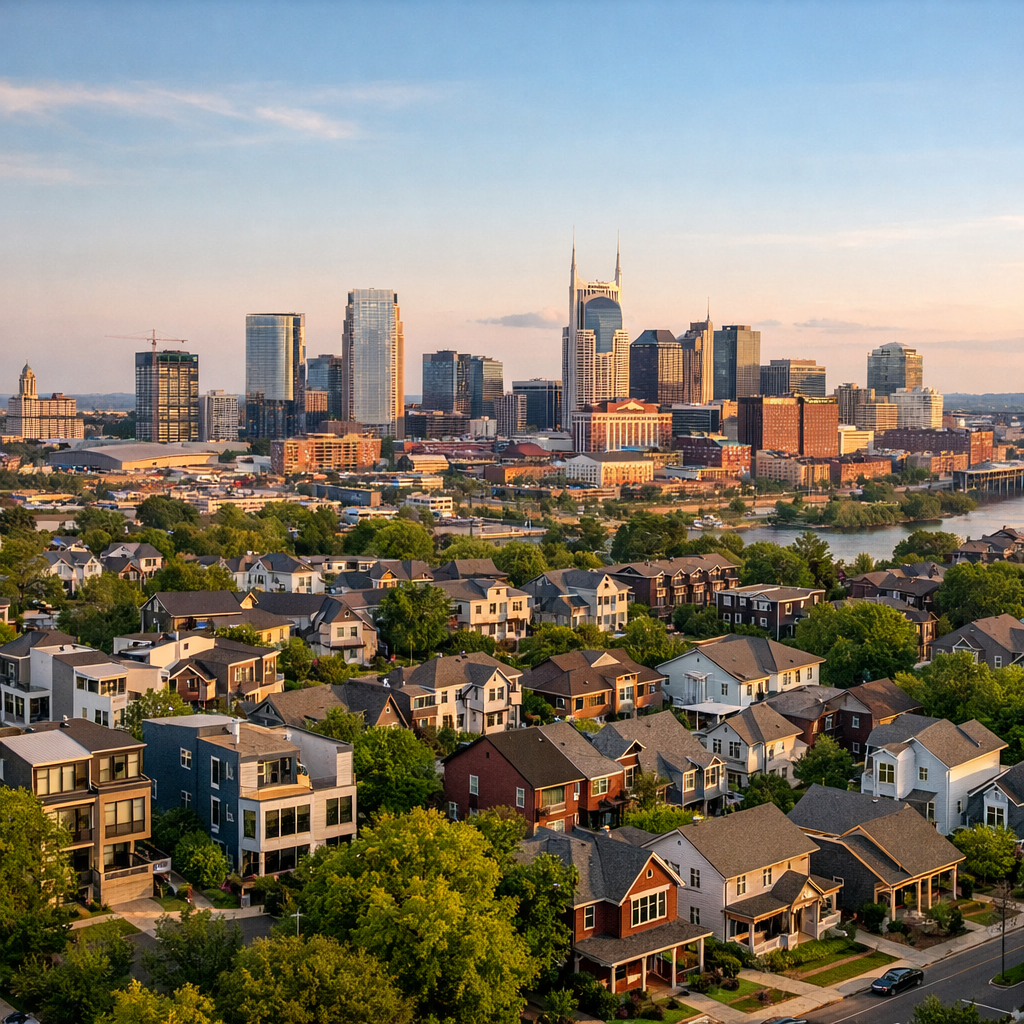
Nashville’s real estate market is experiencing notable shifts, presenting both challenges and opportunities for buyers and sellers alike. Understanding these changes is crucial for making informed decisions in this dynamic environment.
Market Trends and Inventory
Recent data indicates a significant increase in housing inventory across the Nashville area. As of March 2026, the Greater Nashville Realtors reported 12,315 properties available for sale, marking a 12% rise from the previous year. This surge in inventory has provided buyers with more options and greater negotiating power, leading sellers to adopt creative tactics such as offering incentives to attract interest. While home prices have seen slight decreases—condo prices, for instance, fell from $350,000 in February 2025 to $338,500 in February 2026—overall prices remain higher than in past years, continuing to pose affordability challenges for some buyers.
Neighborhood Developments
Several Nashville neighborhoods are experiencing significant growth and development:
- Antioch (ZIP code 37013): For the third consecutive year, Antioch led the city with 1,121 home sales in 2025. The area’s affordability and new amenities, such as the Tanger Outlets and an upcoming In-N-Out, have attracted a diverse range of buyers.
- Belle Meade: The upcoming 1 Iris Lane development at Belle Meade Plaza is set to offer luxury condos starting at $2.5 million. This project includes two residential towers with 92 units, averaging around 3,200 square feet each, and features premium amenities like private mahjong rooms and a Pilates studio.
Affordability and Emerging Areas
As home prices continue to rise in Nashville, more affordable neighborhoods such as Antioch, Madison, and Bordeaux are experiencing rapid growth. The median value of a single-family home in the greater Nashville area reached half a million dollars last year, leading homebuyers to seek cheaper alternatives. Neighborhoods like Antioch and Madison, with median home prices significantly lower, have become prime examples of affordable housing options. Antioch is one of the fastest-growing parts of the city, while the 37115 ZIP code in Madison, with a median price of $345,000, is the second-most affordable area in Nashville. These trends highlight the shaping effect of housing prices on city life and the increasing importance of affordable neighborhoods.
In summary, Nashville’s real estate market is characterized by increased inventory, evolving neighborhood dynamics, and ongoing affordability challenges. Staying informed about these trends is essential for anyone looking to navigate the city’s housing landscape effectively.