

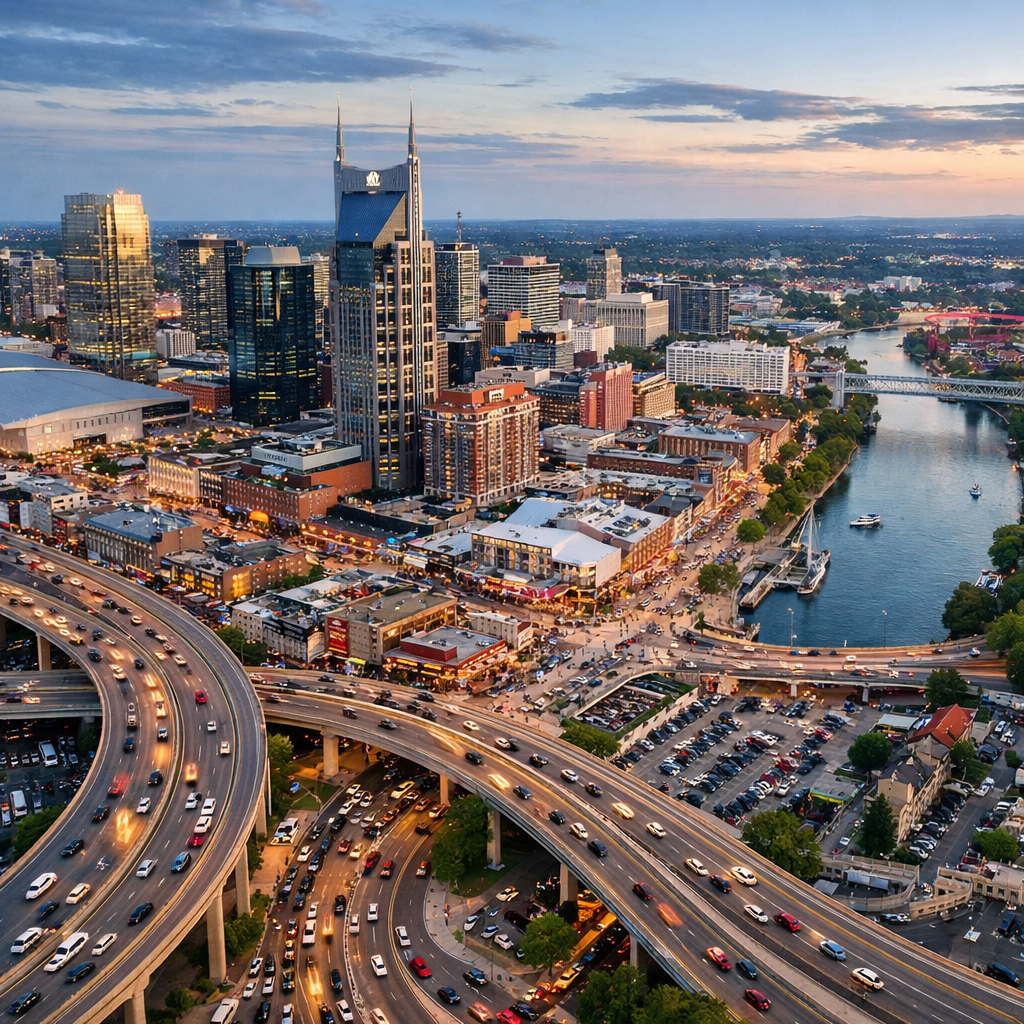
Nashville, long celebrated as the heart of country music, has evolved into a dynamic economic hub, reflecting broader national trends while carving out its unique path. This transformation is evident in various sectors, from population growth to education and infrastructure development.
Population Growth and Migration
In recent years, Nashville has experienced significant population growth, positioning itself as a focal point in Tennessee’s demographic expansion. This surge is largely driven by domestic migration, with individuals and families relocating from other states, attracted by the city’s vibrant culture and economic opportunities. However, international migration, which once contributed substantially to Nashville’s growth, has seen a decline. Changes in national immigration policies have led to a decrease in international arrivals, impacting the city’s demographic composition and labor market dynamics.
Education and Income Disparities
The correlation between education and income remains a critical issue in Nashville. Data indicates that adults aged 25 or older without a college education earn a median income of $41,393, highlighting the wage gap between high school graduates and those with higher education. This disparity underscores the importance of accessible educational opportunities. Programs like Tennessee Reconnect aim to bridge this gap by offering tuition-free community or technical college education to residents aged 25 and older, providing pathways to higher income and economic stability.
Housing Market Dynamics
The COVID-19 pandemic has left an indelible mark on Nashville’s housing market. Historically low borrowing costs and the rise of remote work have fueled a homebuying boom, leading to soaring home prices. This surge has made homeownership increasingly unattainable for many residents, prompting a shift towards suburban areas in search of affordable housing. The city’s housing challenges mirror national trends, reflecting the complex interplay between economic policies, market forces, and societal changes.
Infrastructure and Transportation Initiatives
In response to its rapid growth, Nashville has embarked on ambitious infrastructure projects. The “Choose How You Move” program, initiated by Mayor Freddie O’Connell, allocated $104 million for transit projects, including sidewalk improvements, smart traffic signals, and enhancements to public transportation. These initiatives aim to address the challenges of urban expansion and align with national efforts to modernize infrastructure and promote sustainable urban development.
Economic Contributions of Vanderbilt University
Vanderbilt University and Vanderbilt University Medical Center have emerged as significant economic drivers in Nashville and Tennessee. Between 2019 and 2024, these institutions contributed $22.13 billion to the state’s economy. As the largest private employer in the Nashville area and the second-largest in Tennessee, Vanderbilt’s impact extends beyond education and healthcare, influencing various sectors and reinforcing the city’s economic resilience.
Nashville’s journey from a music-centric city to a burgeoning economic powerhouse exemplifies the intricate relationship between local developments and national trends. By understanding and addressing these dynamics, the city continues to navigate its growth trajectory, offering valuable insights into the broader American economic landscape.