

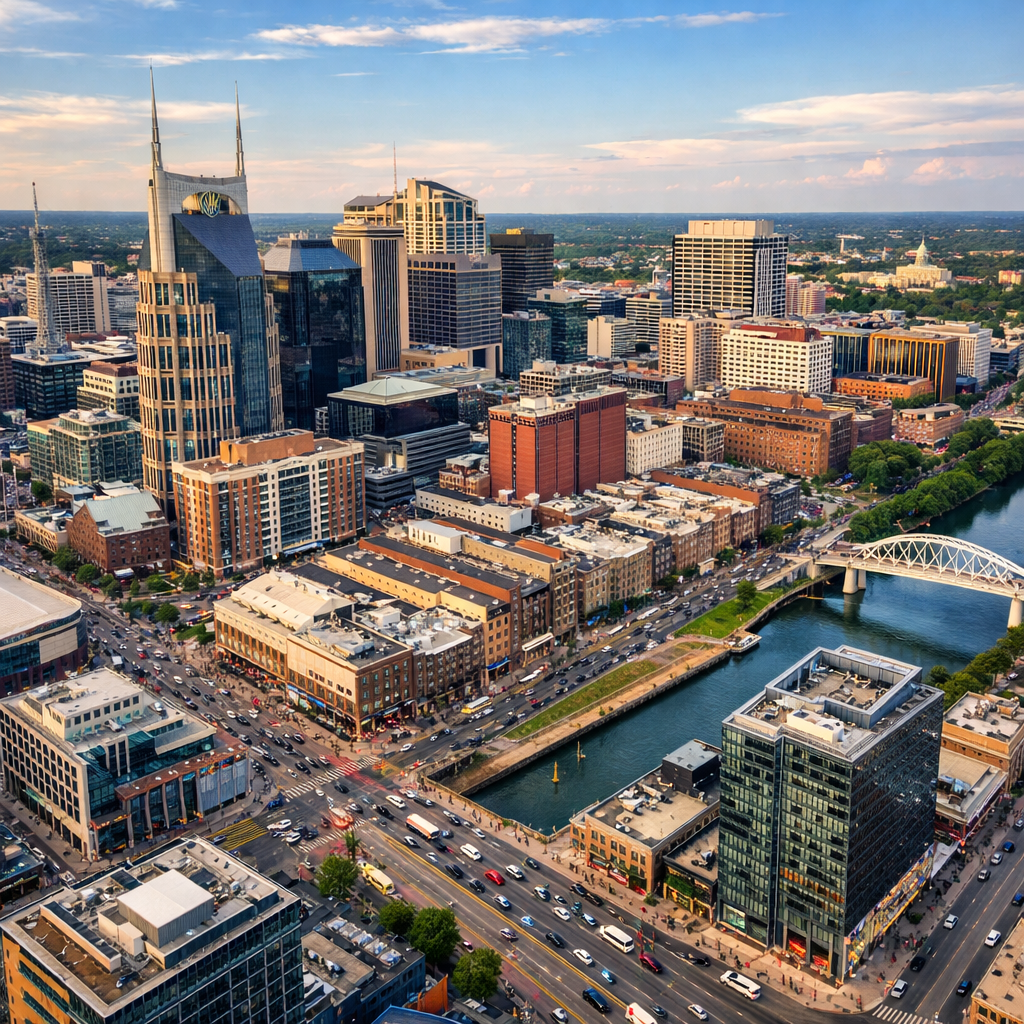
Nashville’s economic landscape has been profoundly shaped by national policies and trends, reflecting the city’s dynamic response to broader economic forces.
Population Growth and Migration
In recent years, Nashville has experienced significant population growth, with Davidson County adding nearly 9,300 residents in 2025, the highest increase among Tennessee’s 95 counties. This surge is largely driven by domestic migration, as individuals from other states are drawn to Nashville’s vibrant economy and quality of life. However, international migration, which peaked in 2024, declined dramatically in 2025 due to national immigration policy changes initiated during President Trump’s term. For instance, Davidson County alone added over 14,000 people via international migration in 2024, but this source of growth essentially stalled in 2025.
Education and Income
The value of higher education remains evident in Nashville. Adults aged 25 or older without a college education earned a median income of $41,393, underscoring the wage gap between high school graduates and those with higher education. This comes amid a national debate on the importance of college education, with some questioning its value. To address barriers such as rising tuition and student debt, Tennessee has introduced initiatives like Tennessee Reconnect, offering tuition-free community or technical college education to residents aged 25 and older. Approximately 11,000 people have participated in the program’s coaching services, highlighting the importance of accessible support systems in helping adult learners succeed in higher education and improve their economic outcomes.
Housing Market Dynamics
The COVID-19 pandemic drastically reshaped Nashville’s housing market, creating lasting impacts. Home prices in Nashville and across Tennessee soared due to a mix of historically low borrowing costs and the rise of remote work, which ignited a homebuying boom. This price surge rendered homeownership increasingly unattainable for many residents. Middle Tennessee, in particular, saw some of the sharpest price increases, with anecdotal evidence showing home values in areas like East Nashville increasing by 50% since 2020. At the same time, mortgage interest rates spiked after historic lows in 2021, discouraging potential buyers and prompting many current homeowners to stay put to preserve their favorable rates. As housing became more expensive, prospective buyers began to look farther into the suburbs in search of more affordable options. This shift in buying behavior and price increases reflect larger national real estate trends observed over the past five years.
Climate Challenges
Nashville has faced increasing climate-related challenges, including extreme heat and flooding. In June 2025, the city experienced a significant heat wave, part of a broader trend affecting cities nationwide. Experts link the increasing frequency and severity of such heat waves to human-induced climate change. Vulnerable populations include those with pre-existing health conditions, outdoor workers, and individuals without access to air conditioning. Additionally, severe storms in April 2025 led to dangerous flooding across Nashville and Middle Tennessee, rendering several roads impassable due to heavy rainfall. Emergency officials issued warnings urging drivers to remain cautious, as more rain was expected and could worsen conditions. These events underscore the need for resilient infrastructure and proactive climate policies.
Immigration Enforcement and Community Response
Following a weekend immigration enforcement operation in Nashville that targeted predominantly Hispanic neighborhoods, city leaders—led by Mayor Freddie O’Connell—established a fund to support the affected immigrant community. Mayor O’Connell criticized state and federal agencies for causing “deep community harm” and clarified that the Metro Nashville Police Department was not involved in the approximately 150 traffic stops. He warned of heightened tensions and emphasized that this approach contradicts the city’s inclusive vision. In response, ICE defended its actions as targeting individuals who pose public safety or national security threats. At a press conference, O’Connell and Community Foundation of Middle Tennessee CEO Hal Cato introduced the “Belonging Fund,” aimed at helping with child care, transportation, housing, and food insecurity for impacted residents. While Nashville city leaders are working to provide support, their authority is limited amid broader federal and state enforcement policies.
Economic Contributions of Vanderbilt University
Vanderbilt University and Vanderbilt University Medical Center made a $22.13 billion annual economic impact on the city of Nashville and across the state of Tennessee in 2024. As the largest private employer in the Nashville area and the second-largest private employer in Tennessee, Vanderbilt’s reach extends far beyond its campus to shape the region’s economy, quality of life, and future growth. The two institutions generated approximately 120,000 jobs in Nashville, accounting for more than 10% of the 1.16 million jobs in the area as of fiscal 2024. Their economic activity supported a total of $7.46 billion in labor income, reflecting the significant role they play in the city’s financial health.
Looking Ahead
As Nashville continues to navigate these national influences, the city’s resilience and proactive policies will be crucial in sustaining its growth and ensuring a high quality of life for all residents. Understanding the interplay between national trends and local dynamics is essential for informed decision-making and community engagement.