

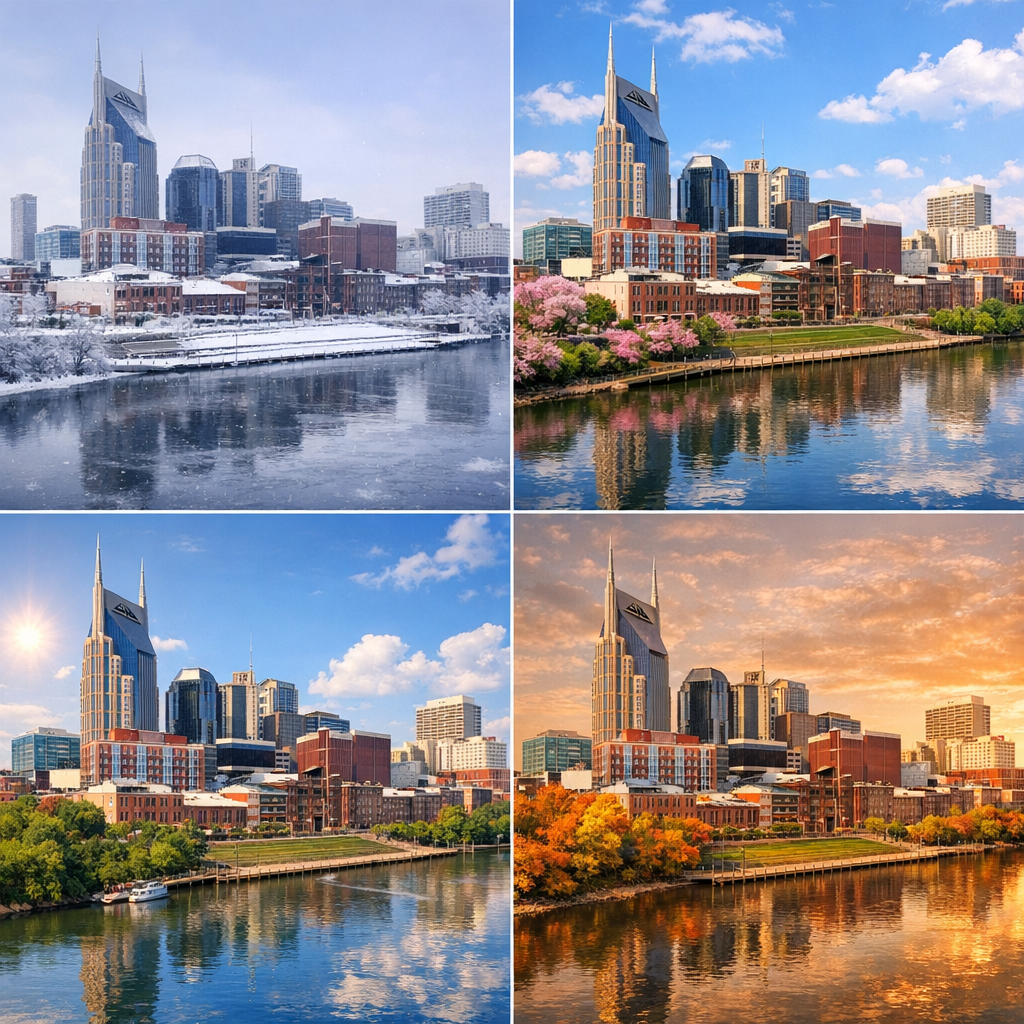
Nashville, Tennessee, experiences a humid subtropical climate, characterized by four distinct seasons: hot summers, mild winters, and transitional periods in spring and fall. Understanding these patterns can help residents and visitors prepare for the city’s varying weather conditions.
Spring (March–May)
Spring in Nashville is marked by rapidly warming temperatures, transitioning from average highs of 60.7°F (16°C) in March to 78.6°F (26°C) in May. This season is also the wettest, with May averaging 5.38 inches (136.65 mm) of rainfall. Thunderstorms are common, and the city is susceptible to tornadoes during this period. It’s advisable to stay informed about weather alerts and have a preparedness plan in place.
Summer (June–August)
Summers are hot and humid, with July being the warmest month, averaging highs of 89.2°F (32°C). The city experiences approximately 44 days annually with temperatures exceeding 90°F (32°C). High humidity levels can make it feel even hotter, so staying hydrated and limiting outdoor activities during peak heat hours is recommended. Additionally, Nashville’s urban heat islands—areas with higher temperatures due to infrastructure and limited green spaces—can exacerbate heat conditions, affecting about 71% of residents.
Fall (September–November)
Fall brings cooler temperatures and reduced humidity, offering a pleasant respite from the summer heat. September sees average highs of 83.1°F (28°C), which drop to 60°F (16°C) by November. This season is ideal for outdoor activities, as the weather is generally mild and stable.
Winter (December–February)
Winters are relatively mild compared to northern regions, with January being the coldest month, averaging lows of 28.3°F (-2°C). Snowfall is occasional, averaging about 2 inches (5 cm) per year. However, ice storms can occur, leading to hazardous conditions. It’s important to stay updated on weather forecasts and exercise caution during winter weather events.
Climate Change Impacts
Climate change is influencing Nashville’s weather patterns, leading to more frequent and intense heat waves, increased rainfall intensity, and heightened risks of severe storms. The city has developed a Climate Adaptation and Resilience Plan to address these challenges and enhance community preparedness.
By understanding Nashville’s seasonal weather patterns and the impacts of climate change, residents and visitors can better prepare for and adapt to the city’s dynamic climate.