

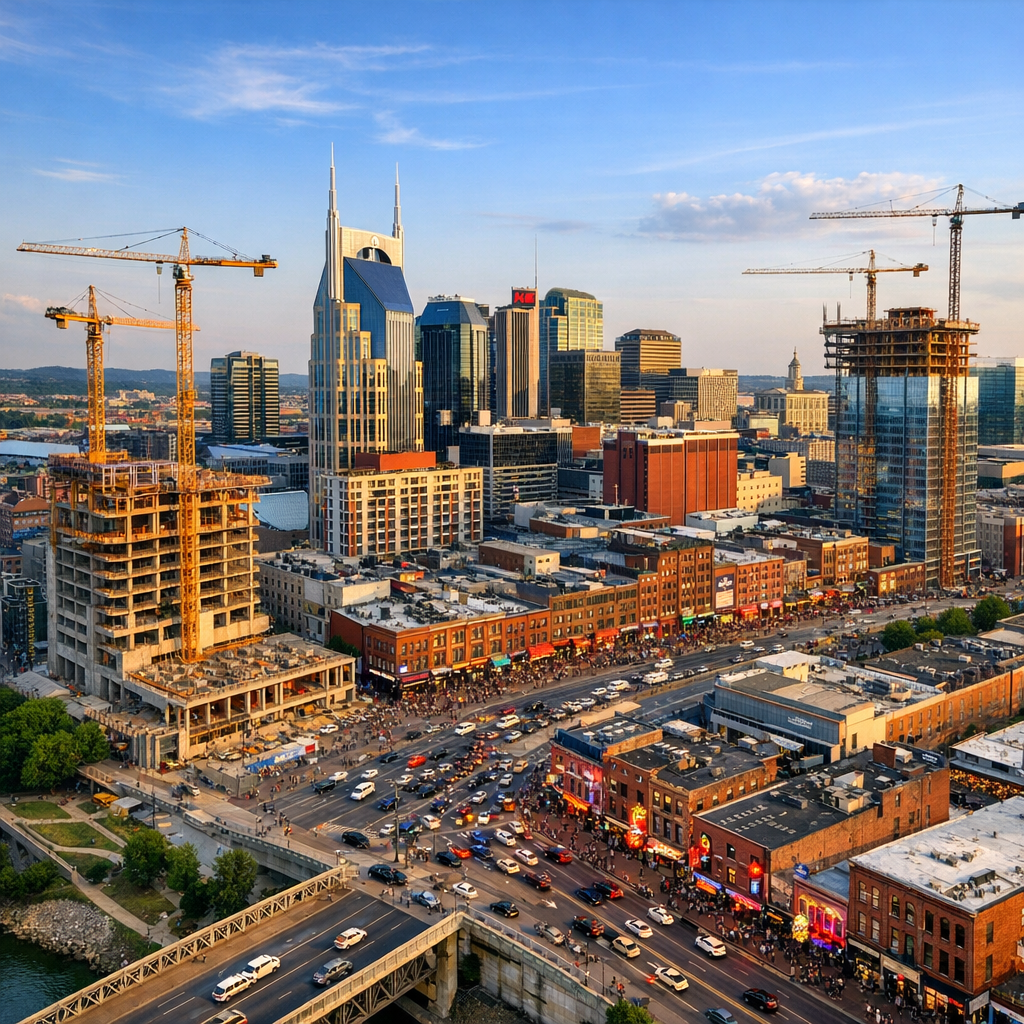
Nashville has long been celebrated for its vibrant music scene and rich cultural heritage. In recent years, however, our city has also emerged as a significant economic powerhouse, reflecting broader national trends while facing unique local challenges.
Population Growth and Economic Expansion
In 2025, Nashville, particularly Davidson County, led Tennessee’s population growth by adding nearly 9,300 residents—the highest increase among the state’s 95 counties. This surge underscores the city’s appeal and the opportunities it offers. However, it also brings challenges such as rising home prices, increased traffic, and higher tax bills. The influx of new residents has spurred extensive construction projects, aiming to accommodate the growing population and stimulate economic development.
Education and Income Disparities
Education remains a pivotal factor in economic mobility. Recent analyses of Census data reveal that in Nashville, adults aged 25 or older without a college education earned a median income of $41,393. This wage gap highlights the importance of higher education in achieving financial stability. To address this, Tennessee has introduced initiatives like Tennessee Reconnect, offering tuition-free community or technical college education to residents aged 25 and older. Such programs aim to bridge the income disparity and equip residents with skills relevant to the evolving job market.
Housing Market Dynamics
The COVID-19 pandemic significantly reshaped Nashville’s housing market. Historically low borrowing costs and the rise of remote work led to a homebuying boom, causing home prices to soar. Middle Tennessee experienced some of the sharpest price increases, with areas like East Nashville seeing home values rise by 50% since 2020. While this growth reflects national real estate trends, it also raises concerns about housing affordability for many residents.
Climate Challenges and Infrastructure
Extreme weather events have become more frequent, posing challenges to Nashville’s infrastructure. For instance, a recent ice storm caused widespread power outages, leaving over 232,000 households without electricity at its peak. Recovery efforts have been extensive, with more than 700 linemen working to restore power. Such events highlight the need for resilient infrastructure and proactive planning to mitigate the impacts of climate change.
Immigration Policies and Community Impact
National immigration policies have had tangible effects on Nashville’s communities. Immigration enforcement operations targeting predominantly Hispanic neighborhoods led to increased absenteeism in local schools, as families feared for their safety. In response, city leaders established support funds to assist affected residents, emphasizing Nashville’s commitment to inclusivity and community support.
Looking Ahead
As Nashville continues to grow and evolve, it’s crucial to balance economic development with the well-being of all residents. By addressing challenges in housing, education, infrastructure, and community support, we can ensure that our city remains a vibrant and inclusive place for everyone.