

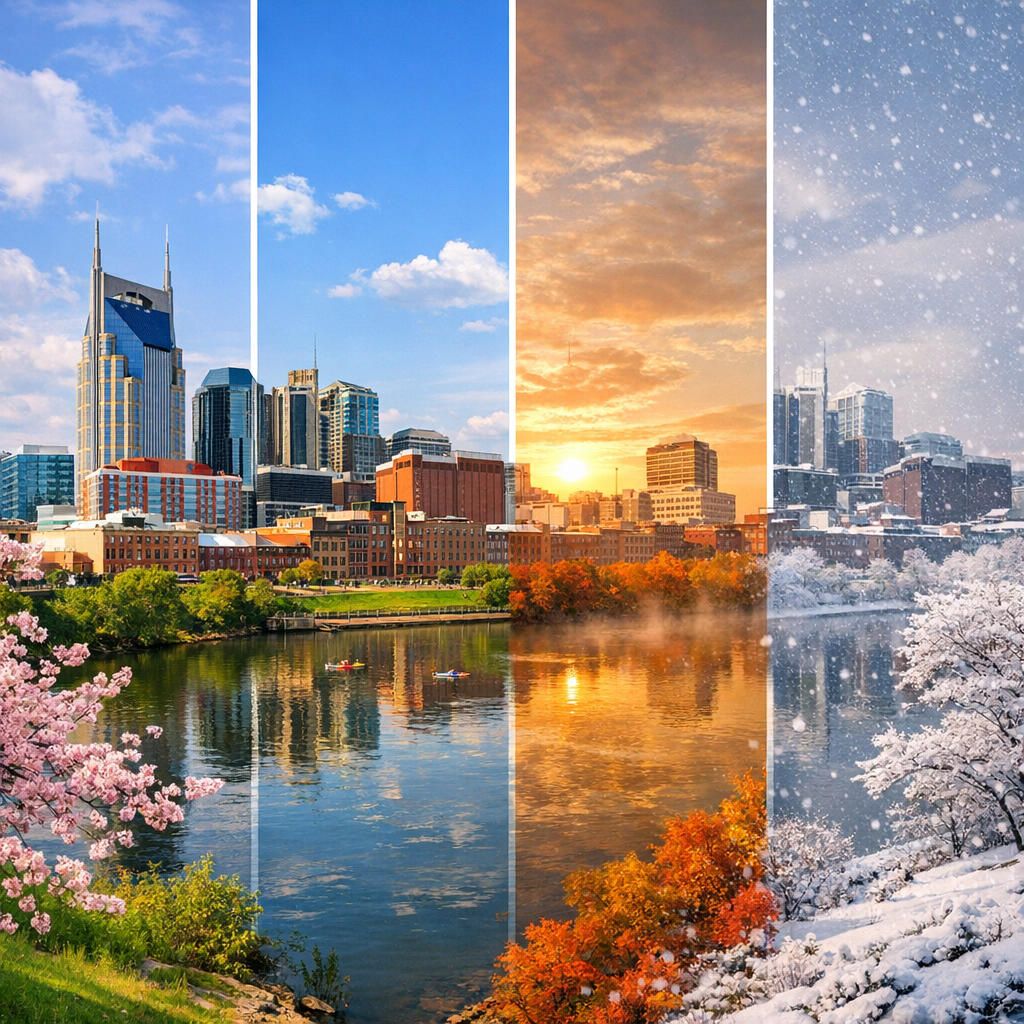
Nashville, Tennessee, experiences a humid subtropical climate characterized by hot, humid summers and mild to cool winters. Understanding these seasonal patterns is essential for residents and visitors alike.
Seasonal Breakdown
Summer
Summers in Nashville are notably hot and humid, with average high temperatures peaking around 89°F (31.7°C) in July. The city often experiences muggy conditions, especially from mid-May through September. During this period, it’s common for temperatures to exceed 90°F (32.2°C) on numerous days.
Winter
Winters are generally mild, with average low temperatures in January around 28.3°F (-2.1°C). While snowfall is infrequent, averaging about 2 inches annually, residents should be prepared for occasional cold snaps and icy conditions.
Spring and Fall
Spring and fall offer the most comfortable weather conditions. Spring temperatures gradually rise from March through May, while fall sees a gradual cooling from September through November. These seasons are ideal for outdoor activities, with moderate temperatures and lower humidity levels.
Precipitation and Weather Events
Nashville receives approximately 53.5 inches (1357.9 mm) of precipitation annually, distributed fairly evenly throughout the year. However, May tends to be the wettest month, averaging around 5.38 inches (136.65 mm) of rainfall. The city is also susceptible to severe weather events, including thunderstorms and occasional tornadoes, particularly in the spring and early summer months.
Environmental Considerations
Urban development has led to the formation of heat islands in Nashville, where built-up areas experience higher temperatures due to infrastructure like roads and buildings absorbing heat. Approximately 71% of residents live in neighborhoods affected by this phenomenon. Efforts are underway to mitigate these effects, including increasing green spaces and implementing reflective pavement coatings.
Understanding Nashville’s climate patterns is crucial for planning daily activities, preparing for seasonal changes, and addressing environmental challenges. Staying informed and proactive can help residents and visitors make the most of what Music City has to offer year-round.