

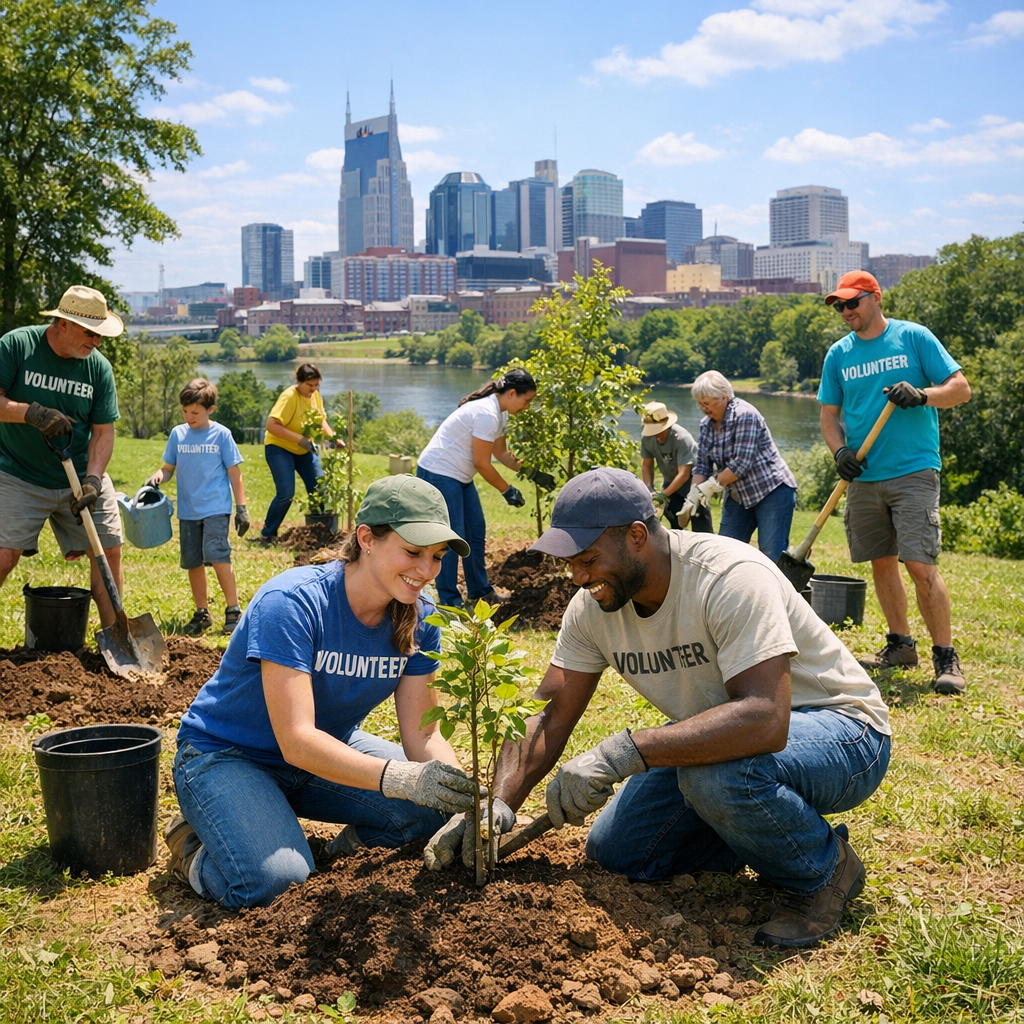
Nashville is making significant strides in environmental sustainability through various community-driven initiatives. These efforts aim to enhance the city’s resilience and promote a greener future.
Community-Led Environmental Projects
Organizations like Urban Green Lab are at the forefront of teaching communities how to live sustainably. Their programs have reached nearly half of Davidson County’s zip codes, training hundreds of educators and serving numerous organizations. This widespread impact underscores the community’s commitment to environmental education and action.
Additionally, the Centennial Park Conservancy has been instrumental in supporting local environmental projects. Since 2020, proceeds from Nashville Earth Day have funded initiatives such as planting over 380 trees in various parks and introducing thousands of bees to local ecosystems. These projects not only beautify the city but also contribute to biodiversity and ecological health.
Urban Greening and Conservation Efforts
The launch of the Nashville Downtown Arboretum showcases the city’s dedication to urban greening. Featuring over 3,000 trees along sidewalks and public spaces, this initiative enhances the urban canopy and provides residents with shaded, green areas amidst the bustling cityscape.
Furthermore, the Metro Planning Department has initiated the Ecological Conservation Strategy, a countywide plan to balance growth with the preservation of natural landscapes. This strategy aims to protect waterways, forests, and green spaces, ensuring that Nashville’s development is both sustainable and mindful of its unique environmental assets.
Educational and Youth Engagement
Programs like Recycle & Reinvest focus on cultivating the next generation of environmental leaders. By collaborating with local schools and organizations, they promote sustainability and job readiness among justice-impacted youth. Their efforts include art-based programs and community engagement, fostering a culture of environmental stewardship from a young age.
Metro Nashville Public Schools (MNPS) are also committed to sustainability. Through the MNPS Energy Program, the district has achieved a 20% annual reduction in energy consumption. Initiatives such as installing solar energy systems and implementing geothermal HVAC systems in schools demonstrate a proactive approach to reducing the environmental footprint of educational institutions.
Zero Waste and Recycling Initiatives
In pursuit of a zero-waste future, Nashville’s Solid Waste Master Plan aims to divert 90% of waste from landfills. This ambitious goal involves increasing recycling, reducing food waste, and adopting composting practices throughout Davidson County. Public education programs are integral to this effort, encouraging residents to refuse, reduce, reuse, recycle, and compost.
Corporate partnerships also play a role in sustainability efforts. For instance, Coca-Cola Consolidated has collaborated with local venues to enhance recycling accessibility. Their initiatives include transitioning to more recyclable packaging and implementing water efficiency measures, contributing to the city’s broader environmental goals.
Looking Ahead
As Nashville continues to grow, the collective efforts of community organizations, educational institutions, and corporate partners are vital in promoting sustainability. These initiatives not only address current environmental challenges but also lay the foundation for a resilient and green future for all Nashvillians.