

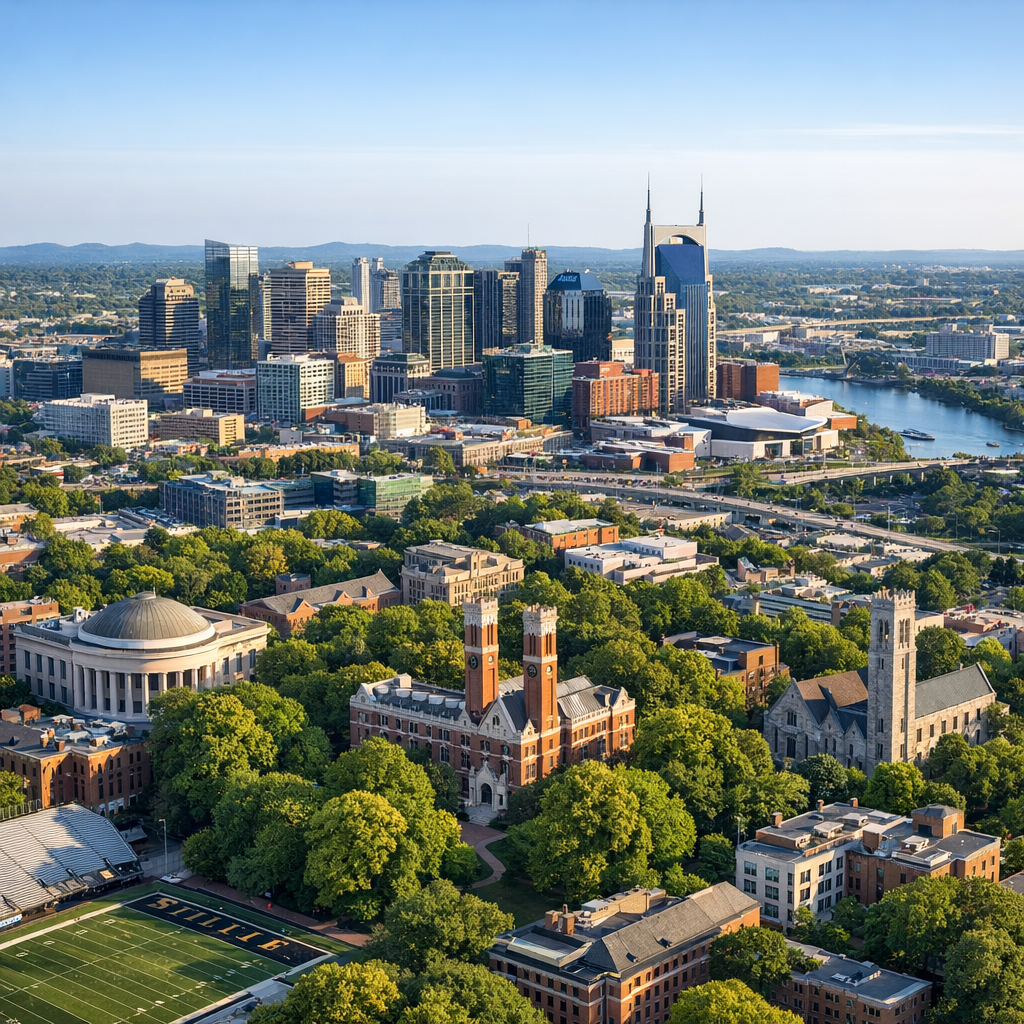
Nashville continues to experience significant economic growth, even as national policies present new challenges and opportunities. Central to this expansion is the substantial contribution from Vanderbilt University and Vanderbilt University Medical Center, which collectively generated an economic impact of $22.13 billion on the city and state economies. This impact stems from institutional spending on payroll, construction, procurement, and the economic activity generated by students and visitors.
As the largest private employer in the Nashville area and the second-largest in Tennessee, Vanderbilt’s influence extends beyond its campus, shaping the region’s economy and quality of life. The university and medical center employ approximately 50,000 individuals, supporting around 120,000 jobs in Nashville, which accounts for over 10% of the city’s employment.
In addition to institutional contributions, Nashville’s population growth has been a significant driver of economic expansion. The city added nearly 9,300 new residents in 2025, the highest increase among Tennessee’s 95 counties. This growth has led to increased demand for housing, services, and infrastructure, presenting both challenges and opportunities for the city.
However, national policy changes have also impacted Nashville’s economy. For instance, the decline in international migration following federal immigration policy shifts has affected the city’s demographic trends. In 2024, Davidson County saw a population boost of over 14,000 from international migration, but this source of growth stalled in 2025 due to these policy changes.
Despite these challenges, Nashville’s economy remains robust, driven by institutional contributions, population growth, and a dynamic business environment. The city’s ability to adapt to national policy shifts while fostering local economic development underscores its resilience and potential for continued prosperity.