

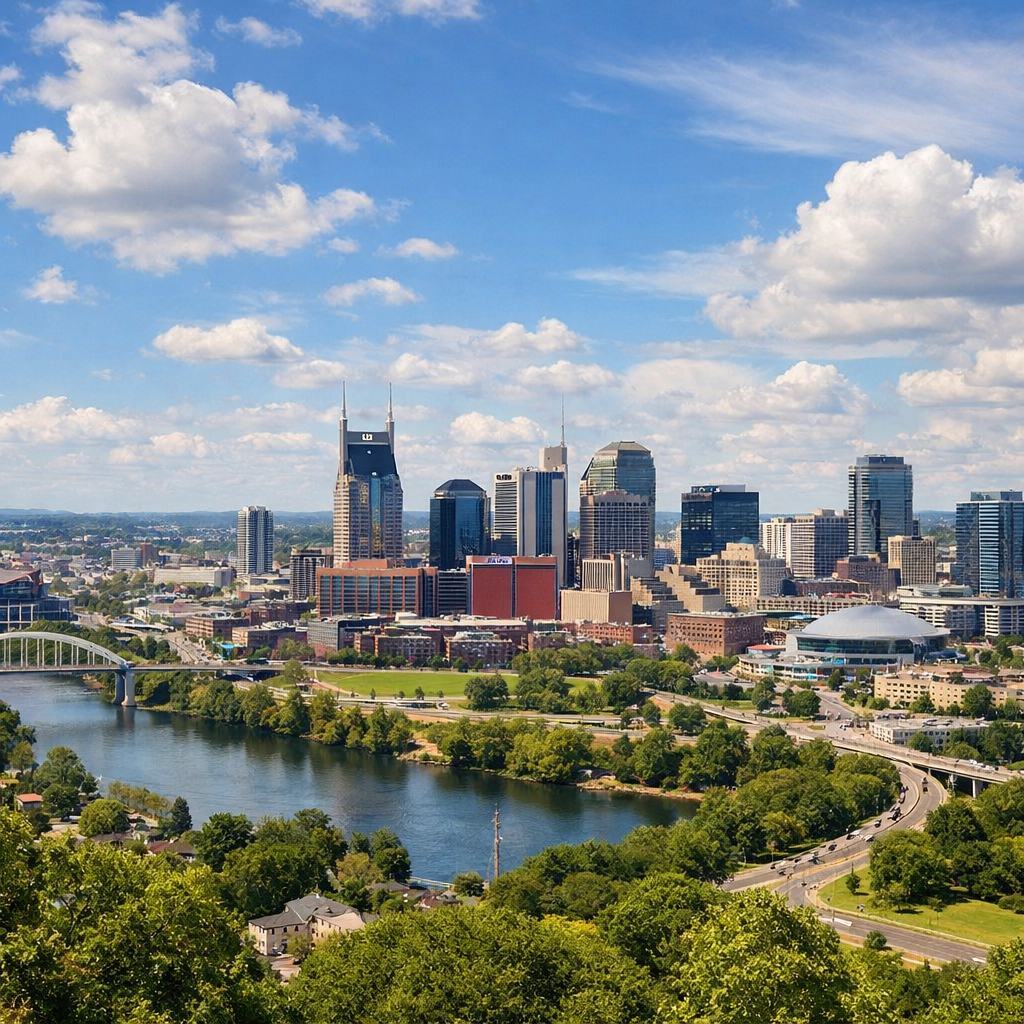
Nashville, Tennessee, experiences a humid subtropical climate characterized by hot, humid summers and mild to cool winters. This diverse climate offers residents and visitors a variety of seasonal experiences, each with its unique weather patterns and environmental considerations.
Seasonal Weather Patterns
Spring (March to May)
Spring in Nashville brings gradually warming temperatures and increased rainfall. Average high temperatures rise from the low 60s°F (around 16°C) in March to the upper 70s°F (around 25°C) by May. This season is marked by blooming flora and is ideal for outdoor activities.
Summer (June to August)
Summers are hot and humid, with average high temperatures in the upper 80s°F to low 90s°F (31-34°C). July is typically the warmest month. The city often experiences afternoon thunderstorms, providing brief respite from the heat.
Autumn (September to November)
Autumn offers cooler temperatures and lower humidity. Highs range from the mid-80s°F (29°C) in September to the low 60s°F (16°C) by November. The fall foliage provides a picturesque backdrop for various outdoor events.
Winter (December to February)
Winters are generally mild, with average highs in the low to mid-50s°F (10-12°C). However, temperatures can occasionally drop below freezing, and the city may experience light snowfall, averaging around 1.7 inches in January.
Environmental Challenges
Urban Heat Islands
Urban development has led to the creation of heat islands—areas with higher temperatures due to infrastructure like buildings and roads absorbing heat. Approximately 71% of Nashville residents live in neighborhoods considered heat islands, which can exacerbate the effects of extreme heat, particularly for vulnerable populations.
Climate Change Impacts
Climate change poses significant challenges for Nashville, including increased frequency of extreme heat events, severe storms, and flash flooding. The city has developed a Climate Adaptation and Resilience Plan to address these issues and enhance the community’s ability to withstand climate-driven disruptions.
Staying Informed
Understanding Nashville’s climate and environmental challenges is essential for residents and visitors alike. Staying informed about weather forecasts and participating in community resilience efforts can help mitigate the impacts of adverse weather conditions and contribute to a more sustainable future for the city.