

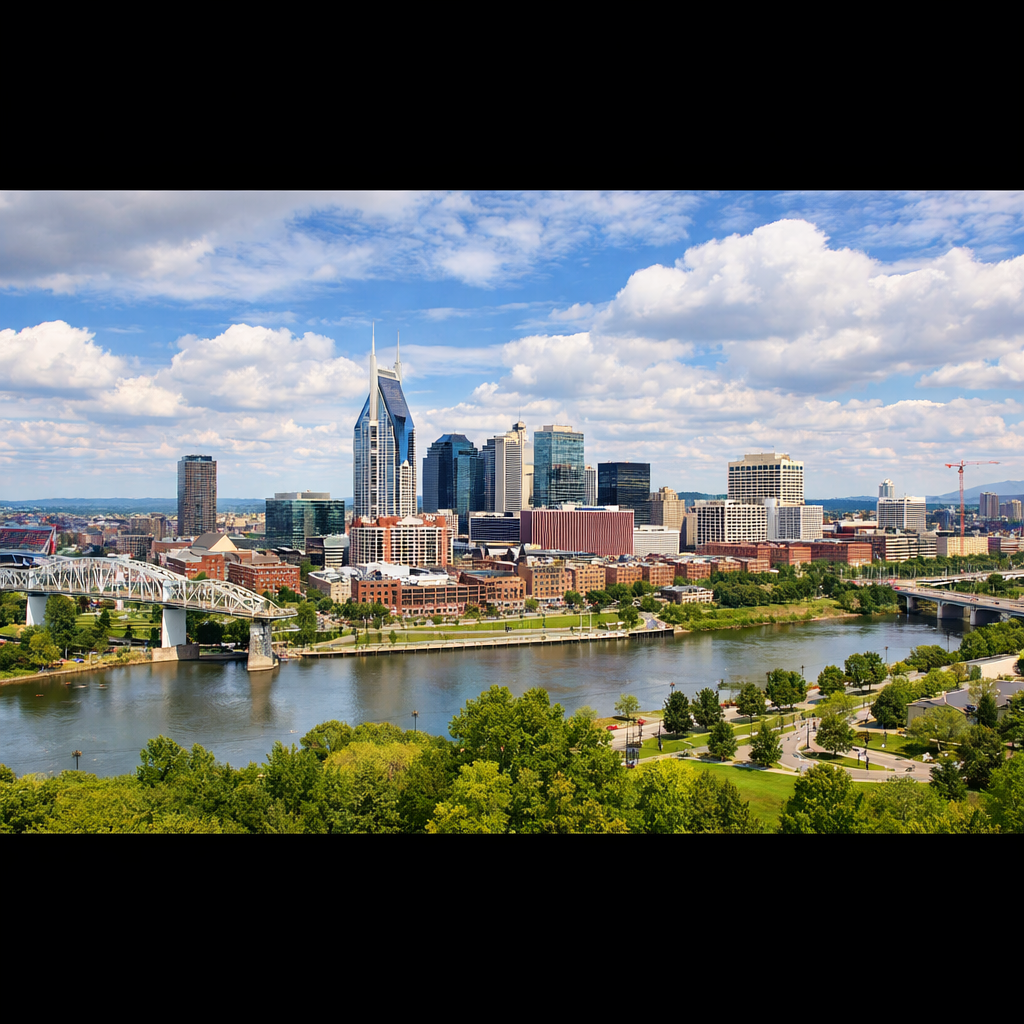
Nashville, Tennessee, experiences a humid subtropical climate, characterized by hot, humid summers and mild to cool winters. This climate influences various aspects of daily life, from outdoor activities to energy consumption.
Seasonal Temperature Variations
Throughout the year, Nashville’s temperatures fluctuate significantly. The hottest month is July, with average highs around 89°F (31.3°C), while January is the coldest, averaging lows near 30.6°F (-0.8°C). These variations necessitate seasonal adjustments in lifestyle and infrastructure.
Precipitation Patterns
Rainfall is fairly evenly distributed across the year, totaling about 54 inches annually. May typically records the highest precipitation, averaging 5.38 inches, whereas November sees the least, with around 3.79 inches. Snowfall is occasional, averaging about 2 inches per year, primarily between November and February.
Environmental Considerations
Recent studies indicate that Nashville’s heat waves have become more frequent and longer in duration. Since the 1960s, the city has experienced an average increase of three heat waves per year, each lasting nearly one day longer. This trend underscores the importance of addressing climate change impacts and implementing strategies to mitigate heat-related health risks.
Additionally, urban heat islands—areas with higher temperatures due to infrastructure and reduced green spaces—affect a significant portion of Nashville’s population. Approximately 71% of residents live in these heat-prone neighborhoods, highlighting the need for urban planning that incorporates more green spaces and reflective materials to combat rising temperatures.
Understanding Nashville’s climate patterns is essential for residents and policymakers alike. By staying informed about seasonal changes and environmental challenges, the community can better prepare for and adapt to the city’s evolving climate.