

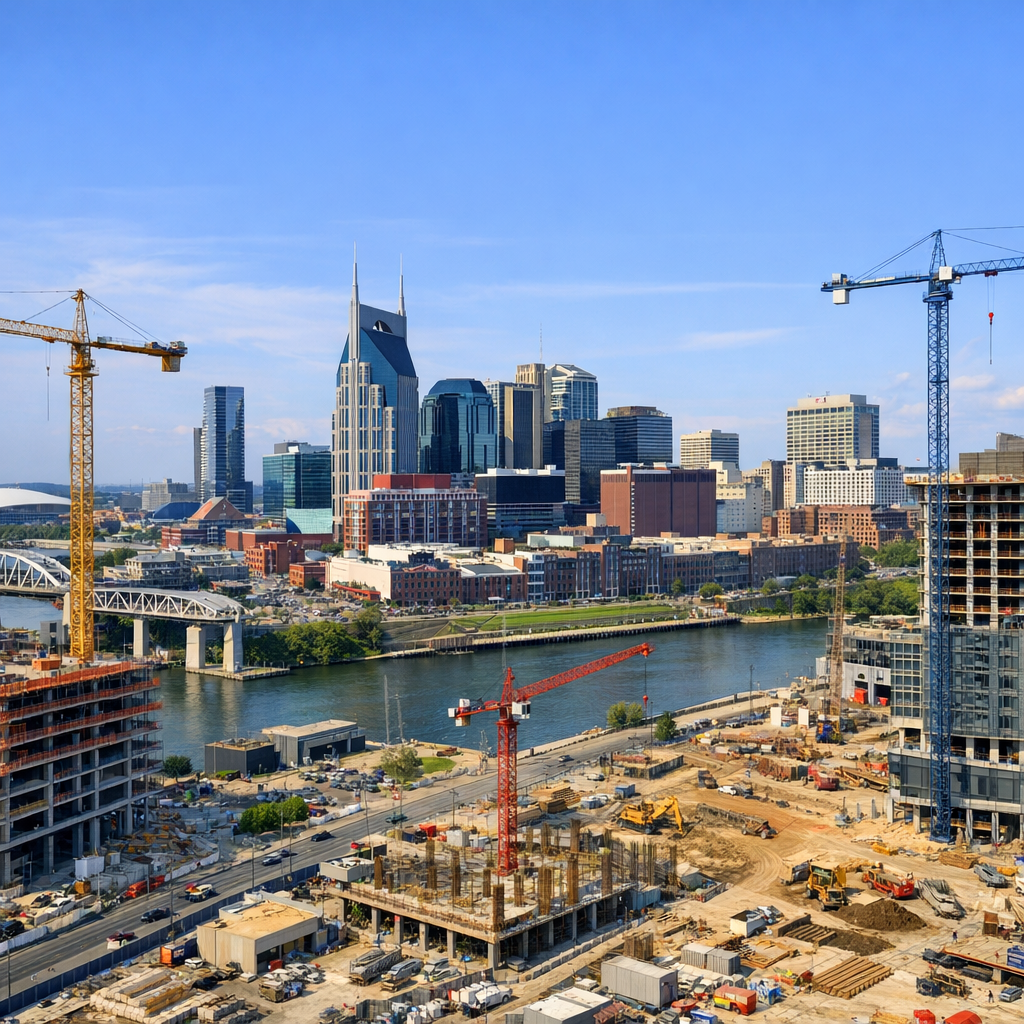
Nashville’s real estate market is experiencing notable shifts, presenting both challenges and opportunities for buyers and sellers alike. Understanding these changes is crucial for making informed decisions in this dynamic environment.
Market Trends
As of June 2026, the average home value in Nashville stands at $436,603, reflecting a 3.3% decrease over the past year. Homes are typically going under contract in approximately 25 days, indicating a brisk market pace. The median sale price is $458,333, with a median list price of $499,900. Notably, 14.8% of sales are closing above the list price, while 61.6% are below, suggesting a competitive yet varied market landscape.
Inventory and Sales
The housing inventory has seen a significant uptick, with 4,482 properties available for sale as of June 30, 2026. This increase provides buyers with more options and has contributed to the slight decline in home values. In May 2026, home sales in Nashville reached 3,216 transactions, marking a 1.1% increase from the previous year. Suburban areas such as Murfreesboro, Lebanon, Gallatin, and Mount Juliet have been particularly active, as buyers seek more space and affordability outside the urban core.
Rental Market
The rental market remains relatively stable, with the average rent in Nashville at $1,825 as of June 30, 2026. This figure is slightly below the national average of $1,965. The month-over-month change is a modest 0.5%, and the year-over-year change is -0.2%, indicating a steady rental environment.
Development Projects
Several significant development projects are underway, reshaping Nashville’s landscape. The East Bank redevelopment has made substantial progress, with key milestones including construction advances on the new Titans stadium and plans for a new riverfront arts center. Additionally, the Belle Meade Plaza is set to host a luxury residential project named 1 Iris Lane, featuring upscale condos starting at $2.5 million. This development is part of a larger redevelopment initiative that includes a boutique hotel and public green spaces.
Conclusion
Nashville’s real estate market is in a state of flux, characterized by decreasing home values, increased inventory, and significant development projects. For potential buyers, the current market offers more choices and negotiating power. Sellers, on the other hand, may need to adjust pricing strategies to align with the evolving market conditions. Staying informed about these trends is essential for anyone looking to navigate Nashville’s real estate landscape effectively.