

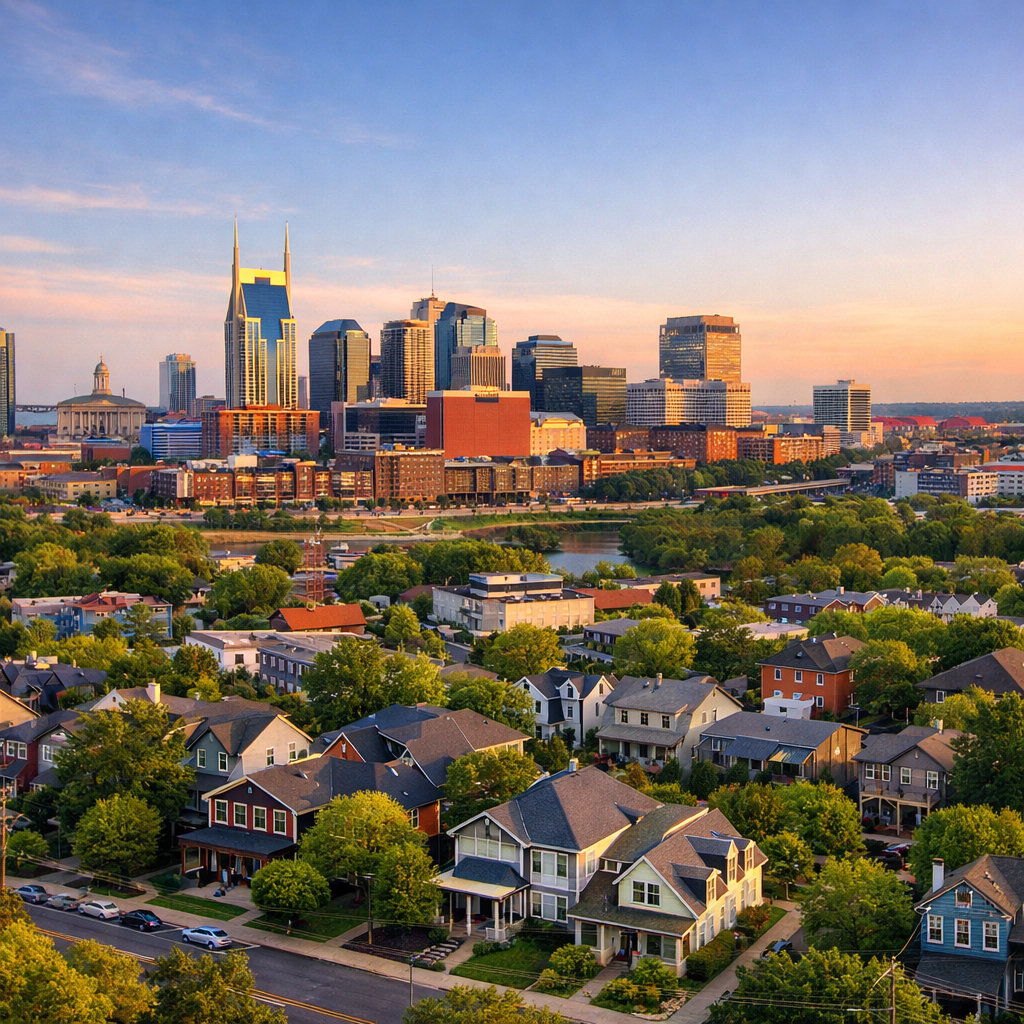
Nashville’s real estate market continues to evolve, presenting both challenges and opportunities for buyers and sellers alike. Recent data indicates a shift towards a more balanced market, with increased inventory and moderated price growth.
Market Trends
As of May 2026, the median sale price of homes in Nashville stands at $475,000, reflecting a modest 0.5% increase from the previous year. Homes are spending an average of 70 days on the market, up from 58 days last year, suggesting a slight cooling in the market’s pace. Additionally, the number of homes sold in May reached 2,831, marking a 3.7% year-over-year increase.
Inventory and Buyer Dynamics
The housing inventory has seen a notable uptick, providing buyers with more options. In March 2026, active listings rose by 9.8% compared to the previous year, totaling 2,642 properties. This increase in supply, coupled with slightly longer days on the market, has granted buyers greater negotiating power.
Neighborhood Highlights
Antioch (ZIP code 37013) continues to lead in home sales, recording 1,121 transactions in 2025. This marks the third consecutive year Antioch has topped the list, underscoring its rapid growth and appeal. The area’s affordability and new amenities, such as the Tanger Outlets, contribute to its popularity.
In contrast, luxury developments are reshaping other parts of the city. The upcoming 1 Iris Lane project in Belle Meade Plaza will feature upscale condos starting at $2.5 million, catering to the high-end market segment.
Development Projects
The East Bank redevelopment has made significant strides, with the construction of a new Titans stadium and plans for a riverfront arts center. These projects aim to transform the area into a vibrant, multi-use urban hub, enhancing Nashville’s appeal and potentially impacting surrounding property values.
Conclusion
Nashville’s real estate market is experiencing a period of adjustment, with increased inventory and moderated price growth. Buyers have more options and negotiating power, while sellers may need to adopt strategic pricing and marketing approaches. Staying informed about neighborhood trends and ongoing developments will be crucial for navigating this dynamic landscape.