

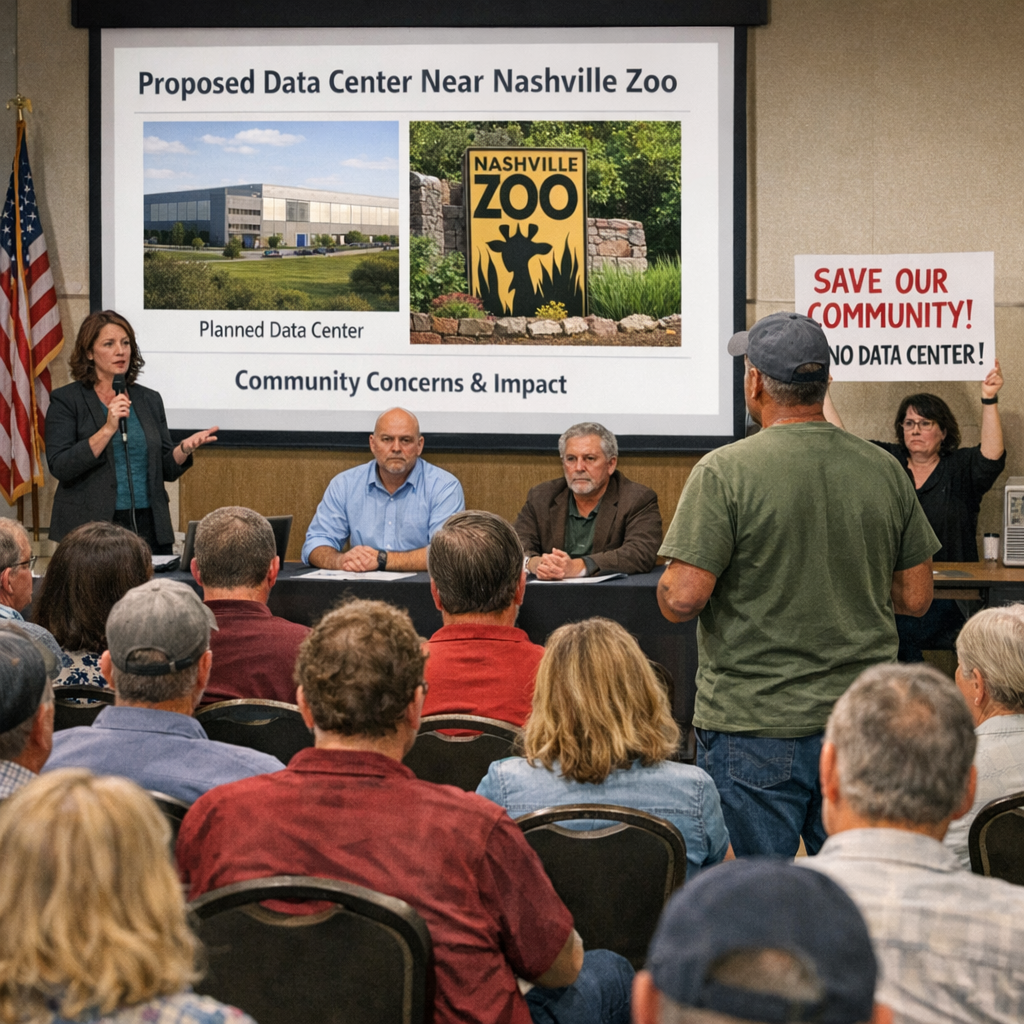
Recent developments in Nashville have brought data center construction into the spotlight, particularly concerning projects near the Nashville Zoo and Fisk University. These initiatives have ignited discussions about their potential impact on the community and environment.
Community Concerns and Legislative Actions
Residents and local leaders have expressed apprehension regarding the proximity of these data centers to key community landmarks. The proposed facility adjacent to the Nashville Zoo has been a focal point, with worries about increased traffic, noise, and environmental effects. In response, the Metro Council has advanced an ordinance to impose a temporary moratorium on new data centers, aiming to assess and regulate such developments more effectively. This motion passed its initial reading with significant support, indicating a collective desire to address these concerns.
Mayoral Intervention
Mayor Freddie O’Connell has taken proactive steps by filing eminent domain legislation to halt the construction of the data center near the zoo. This move underscores the administration’s commitment to preserving community spaces and addressing public unease. The proposed legislation would enable the city to acquire the land for public use, reflecting a strategic approach to urban planning and development.
Broader Implications
The debate extends beyond individual projects, prompting a city-wide examination of zoning laws and the integration of large-scale facilities within residential and cultural areas. The Metro Council’s actions, including the proposed moratorium and scrutiny of zoning approvals, highlight a concerted effort to balance technological advancement with community well-being.
Looking Ahead
As Nashville continues to grow, the outcomes of these legislative and executive measures will likely set precedents for future developments. The city’s approach to managing data center construction will serve as a case study in harmonizing economic growth with the preservation of community integrity and environmental stewardship.