

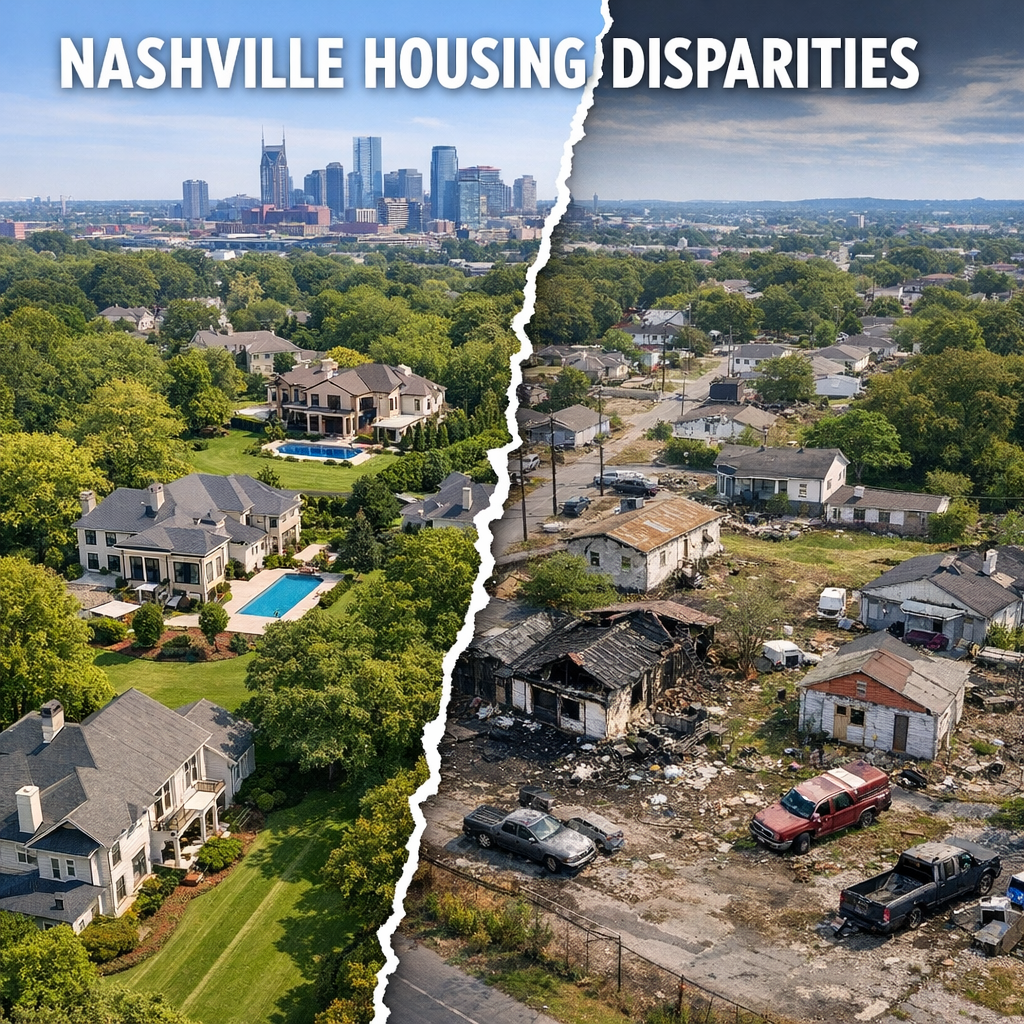
Nashville’s rapid growth has brought prosperity to many, but it has also intensified housing affordability challenges for a significant portion of its residents. Recent studies and surveys highlight the depth of this crisis and its disproportionate impact on minority communities.
Widespread Affordability Concerns
A Vanderbilt University poll reveals that 82% of Nashville residents feel they cannot afford to purchase a home in Davidson County. This sentiment reflects the city’s escalating housing costs, which have outpaced income growth for many residents.
Disproportionate Impact on Minority Communities
The affordability crisis is particularly acute for Black and Hispanic families. A housing and infrastructure study found that these families can afford median-valued homes in less than 1% of Nashville’s 481 neighborhoods—specifically, just 0.8% for Black families and 0.6% for Hispanic families. This stark disparity underscores the enduring effects of historical discriminatory practices and the ongoing challenges in achieving equitable housing opportunities.
City Initiatives and Community Responses
In response to these challenges, local leaders have initiated efforts to increase affordable housing supply. Mayor Freddie O’Connell has emphasized the Unified Housing Strategy, aiming to boost the availability of affordable units. In fiscal year 2025, city funding supported the construction and preservation of nearly 1,800 affordable housing units. Despite these efforts, residents remain concerned, with many prioritizing economic issues and job creation to address the affordability gap.
Community organizations are also stepping up to address related issues. For instance, The Nashville Food Project has launched initiatives to combat food insecurity, recognizing that housing affordability and access to basic necessities are interconnected challenges.
Looking Ahead
As Nashville continues to grow, addressing the housing affordability crisis remains a pressing priority. Collaborative efforts between city officials, community organizations, and residents are essential to develop sustainable solutions that ensure all Nashvillians have access to affordable and equitable housing opportunities.