

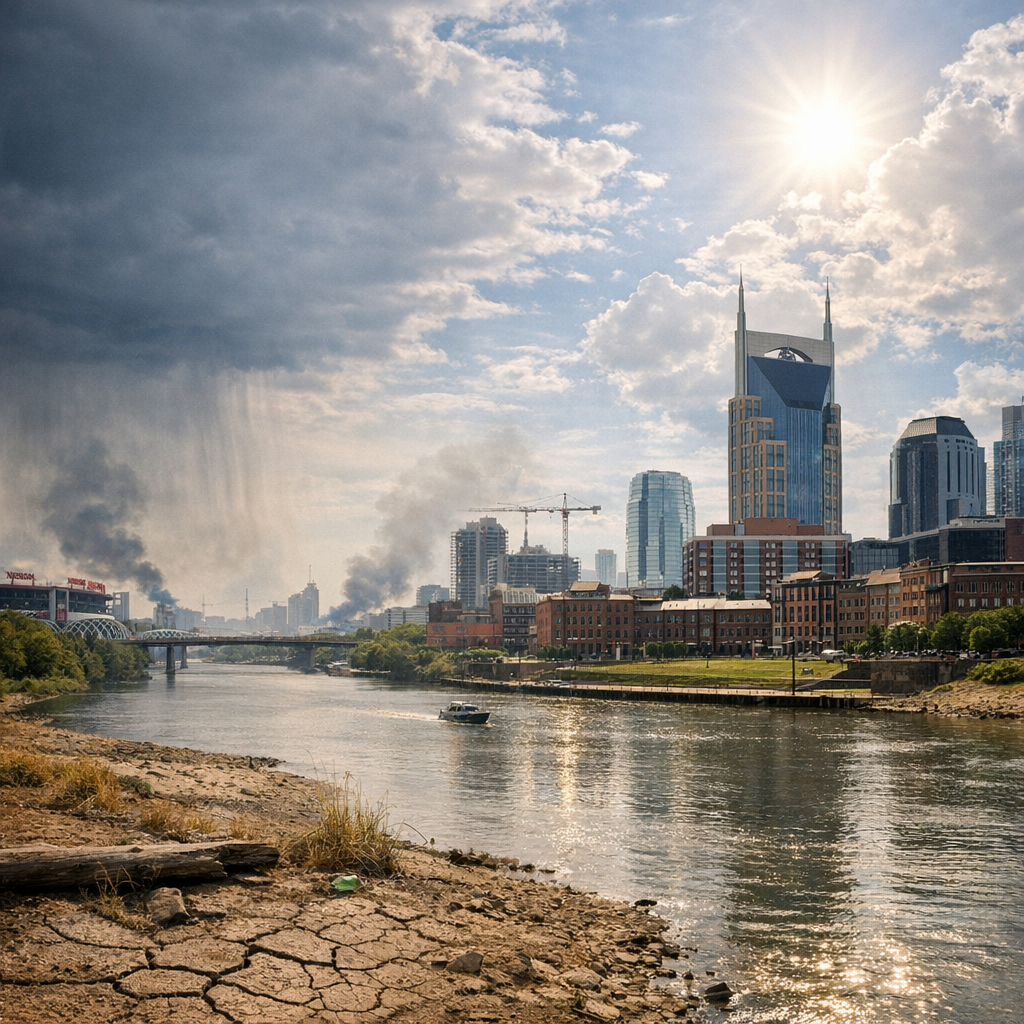
Nashville’s climate is undergoing noticeable changes, affecting our daily lives and the environment. Understanding these shifts is crucial for our community’s well-being and future planning.
Rising Temperatures
Over the past decades, Nashville has experienced a significant increase in average temperatures. Since 1948, the city has warmed by approximately 2.4°F. This warming trend contributes to longer and more intense heatwaves, posing health risks, especially to vulnerable populations.
Increased Rainfall Intensity
Alongside rising temperatures, Nashville has seen a 12% increase in hourly rainfall intensity between 1970 and 2024. This escalation leads to more frequent and severe flash floods, challenging our infrastructure and safety measures.
Air Quality Concerns
Air quality is another pressing issue. The Nashville–Davidson–Murfreesboro metro area received an ‘F’ grade for ground-level ozone, ranking 66th worst in the nation. This poor air quality affects respiratory health and overall quality of life.
Community Resilience Efforts
In response to these challenges, Nashville is actively working on climate resilience strategies. The city has invested over $400 million in flood mitigation projects, including property buyouts and infrastructure improvements. Additionally, efforts are underway to enhance green spaces and reduce urban heat islands, aiming to mitigate the effects of rising temperatures and improve air quality.
As residents, staying informed and engaged with these initiatives is vital. By understanding the evolving climate patterns and supporting local resilience efforts, we can collectively work towards a sustainable and healthy Nashville.