

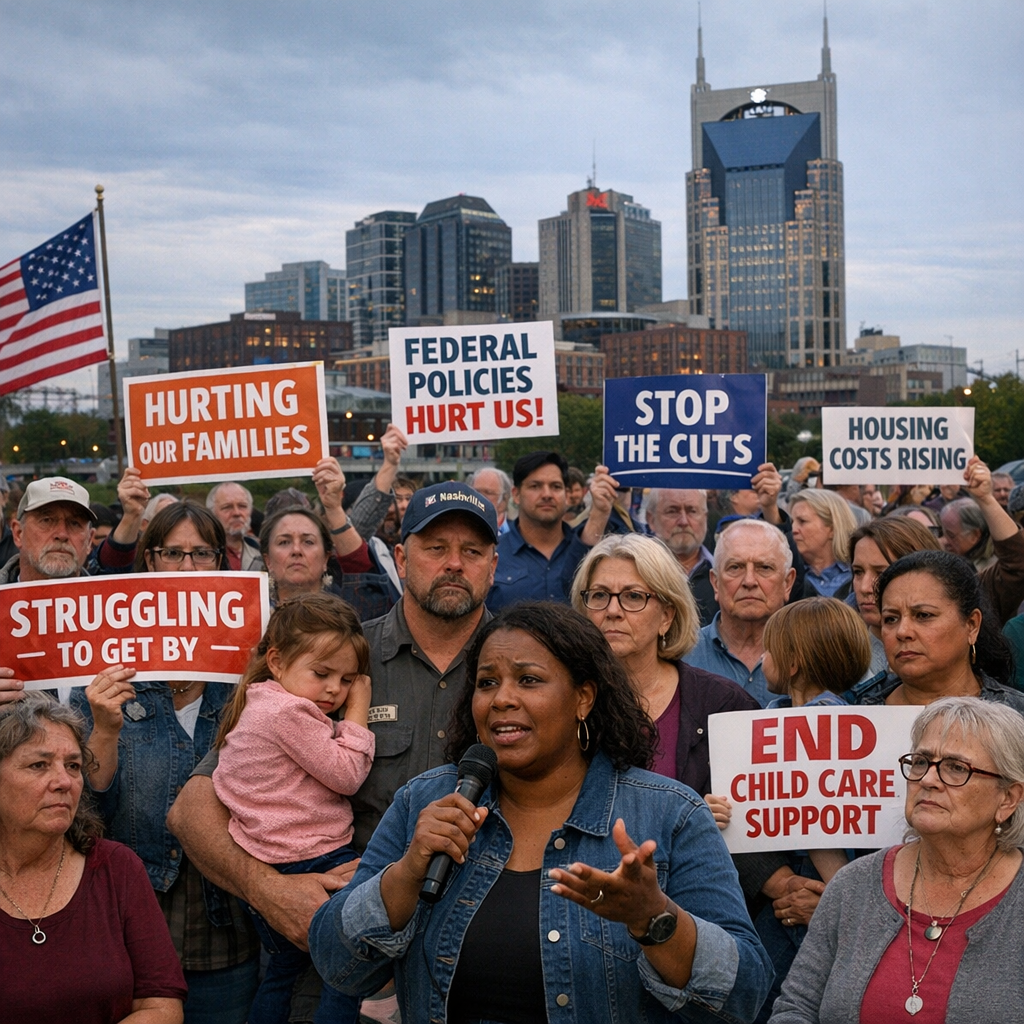
Federal policies often have far-reaching effects that extend beyond their initial targets, influencing local communities in profound ways. In Nashville, recent federal actions on immigration enforcement, trade tariffs, and public safety have left noticeable imprints on the city’s economy, education system, and social fabric.
Immigration Enforcement and Community Impact
In 2025, coordinated operations between U.S. Immigration and Customs Enforcement (ICE) and the Tennessee Highway Patrol led to nearly 200 arrests in Nashville. These actions have instilled fear among immigrant communities, resulting in increased absenteeism in schools and a decline in patronage at local businesses.
Metro Nashville Public Schools (MNPS) reported a significant rise in student absences following the raids. Teachers observed that students from immigrant families were staying home due to concerns about their safety during commutes. This trend has disrupted learning and heightened anxiety among students.
Local businesses, particularly in South Nashville, have also felt the repercussions. Establishments along Nolensville Pike, a hub for immigrant-owned businesses, experienced a sharp decline in customers. Business owners reported that their clientele, fearing potential encounters with law enforcement, chose to stay home, leading to substantial revenue losses.
Trade Tariffs and Economic Consequences
The trade tensions between the United States and Canada have had unintended consequences for Nashville’s tourism industry. Approximately half of the city’s international visitors hail from Canada. However, the imposition of tariffs and strained diplomatic relations have led to a noticeable decrease in Canadian tourists.
Local businesses that rely on tourism have reported declines in revenue. The reduction in visitors not only affects hotels and restaurants but also impacts the broader economy, including retail and entertainment sectors that cater to tourists.
Public Safety Policies and Crime Perception
In 2025, U.S. Representative Andy Ogles called for the deployment of the National Guard to Nashville, citing concerns over violent crime. This call came despite data from the Metro Nashville Police Department indicating a significant decrease in violent crime rates, including a 30.8% reduction in fatal shootings and a 12.5% overall drop in violent crime.
The juxtaposition of declining crime statistics and heightened political rhetoric has sparked debates within the community about the perception of safety and the appropriate allocation of resources. While some residents support increased security measures, others question the necessity and potential implications of such actions.
Conclusion
Nashville’s experience underscores the complex interplay between federal policies and local realities. Immigration enforcement, trade disputes, and public safety initiatives, while national in scope, have tangible effects on the city’s economy, education system, and community cohesion. As Nashville continues to navigate these challenges, it highlights the importance of considering local contexts when implementing and responding to federal policies.