

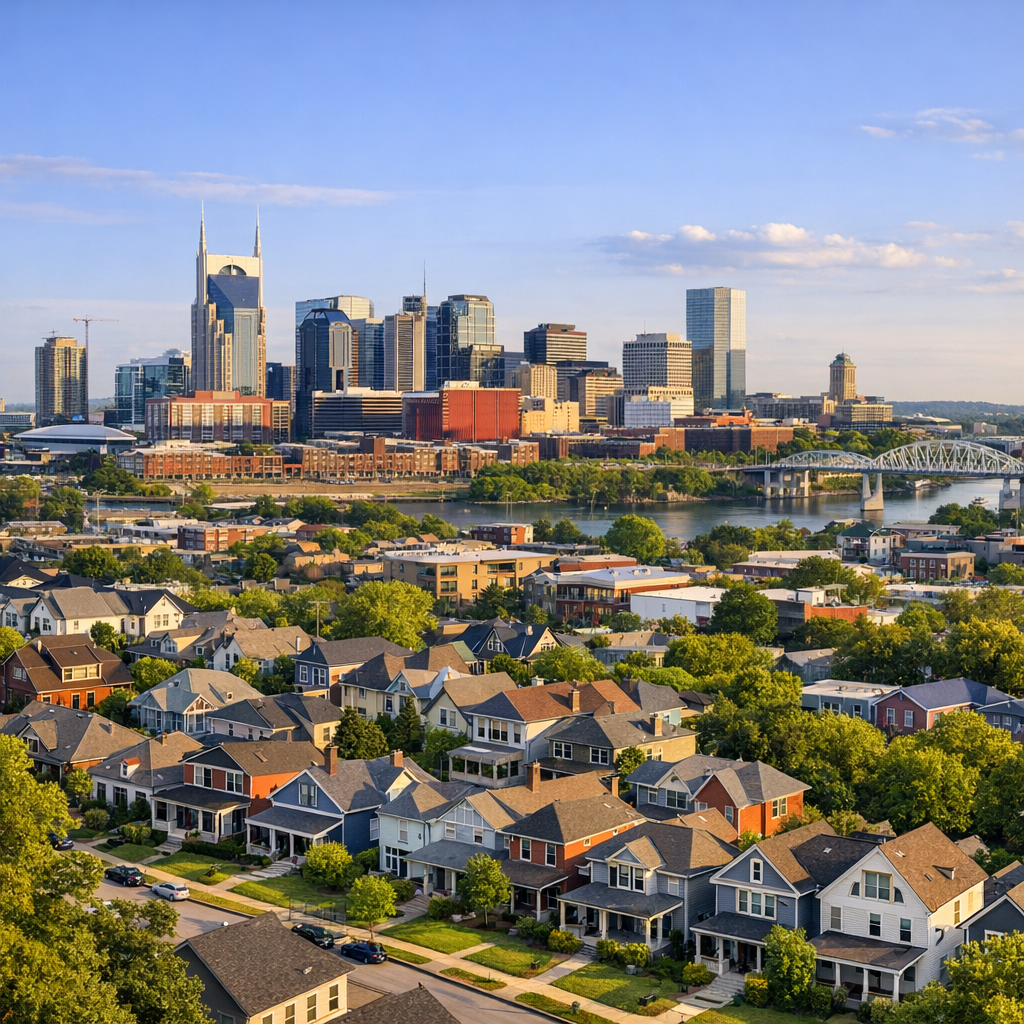
Nashville’s real estate market is experiencing notable shifts, presenting both challenges and opportunities for buyers and sellers. Understanding these changes is crucial for making informed decisions.
Market Trends
Recent data indicates a slight increase in home prices. Over the three months ending May 2026, the median sale price of a home in Nashville was $475,000, up 0.5% compared to the same period last year. However, homes are taking longer to sell, with an average of 70 days on the market, up from 58 days the previous year. This suggests a cooling market, offering buyers more negotiating power.
Inventory and Demand
The housing inventory has expanded, providing buyers with more options. In March 2026, active listings reached 2,642, a 9.8% increase from the previous year. This growth surpasses the national inventory increase of 6.2%, indicating a more balanced market in Nashville.
Neighborhood Highlights
Antioch (ZIP code 37013) continues to lead in home sales, with 1,121 transactions in 2025, marking its third consecutive year at the top. This area’s affordability and new amenities, such as the Tanger Outlets, attract many buyers. Conversely, property values on Lower Broadway have surged, with some venues experiencing appraisal increases of over 140% in four years, reflecting the area’s commercial appeal.
New Developments
Several projects aim to address housing needs and community growth. The Opaline, a 251-unit affordable, mixed-use development on Dickerson Pike, will offer affordable housing, creative spaces, childcare facilities, retail, and a future transit center. Additionally, Metro Nashville’s Housing Division provides resources like the Barnes Housing Trust Fund and the Connecting Housing to Infrastructure Program (CHIP) to support housing development.
Legal and Environmental Considerations
Recent legal actions highlight the complexities of development in Nashville. A lawsuit seeks to halt the construction of a new parking structure at Cheekwood Estate & Gardens, citing concerns over traffic and land use. Similarly, plans for a data center near the Nashville Zoo face opposition due to potential environmental impacts, leading to proposed eminent domain legislation to block the project.
As Nashville’s real estate landscape evolves, staying informed about market trends, neighborhood dynamics, and development projects is essential for navigating the market effectively.