

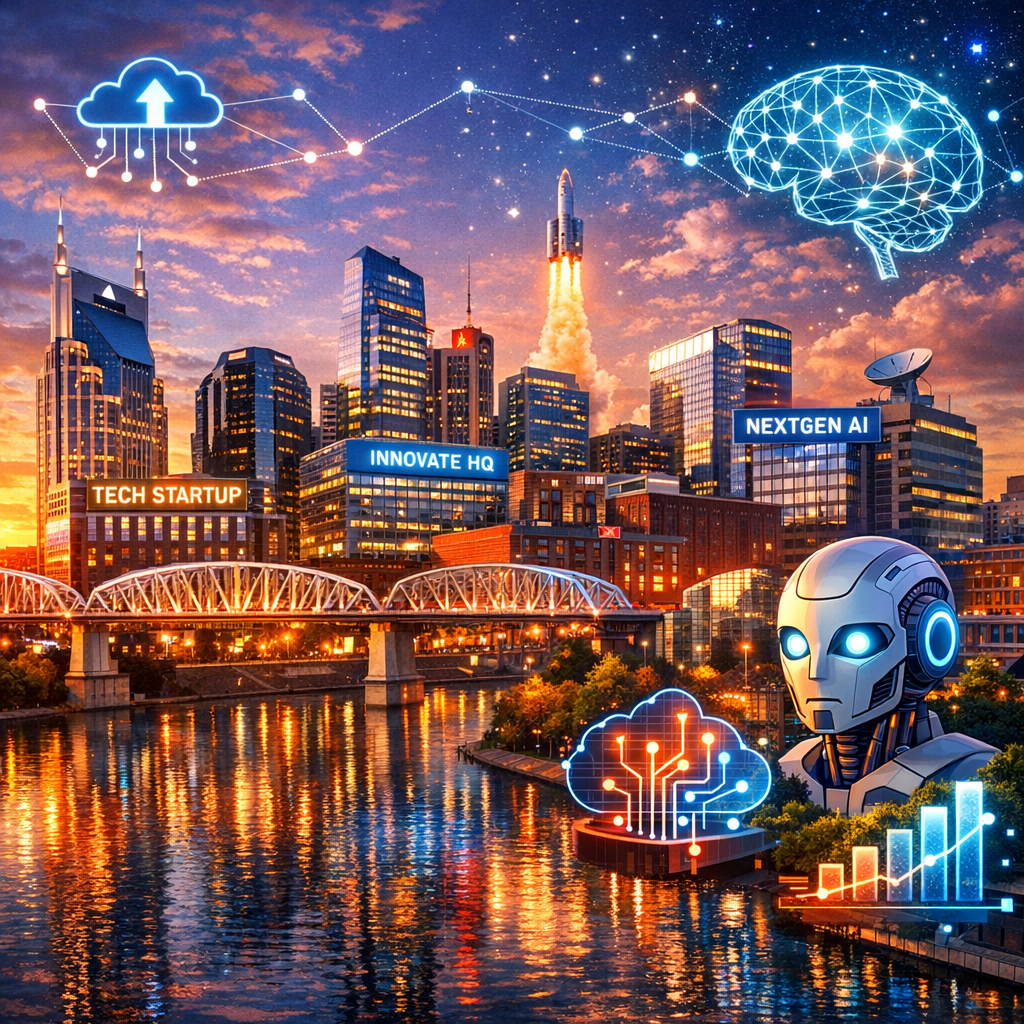
Nashville, traditionally celebrated for its rich musical heritage and robust healthcare sector, is now gaining recognition as a burgeoning hub for artificial intelligence (AI). This transformation is driven by a dynamic ecosystem of startups, educational institutions, and community initiatives that are integrating AI into various facets of daily life.
Emerging AI Startups
The city’s startup scene is witnessing a surge in AI-focused companies. For instance, UnityAI, founded by former HCA Healthcare leaders, has developed an ‘Agentic Workforce’ that automates tasks such as patient scheduling and staff coordination by integrating directly into clinical workflows. Their agents manage over 300,000 patient interactions monthly, showcasing the practical applications of AI in healthcare.
Another notable startup, ViNIL, addresses the growing concern of deepfake content. Launched at the SXSW festival, ViNIL’s platform allows musicians and celebrities to certify AI-generated media created with their consent, helping differentiate authentic content from unauthorized deepfakes.
Community Initiatives and Events
Community-driven events like Nashville AI Week play a pivotal role in fostering AI awareness and collaboration. This ‘unconference’ brings together local, regional, and national leaders to explore the future of AI in the Nashville region. The event features keynote speakers, panels, workshops, and networking opportunities, emphasizing topics such as responsible AI, AI readiness, and innovation.
Educational Institutions and Workforce Development
Recognizing the importance of preparing the workforce for an AI-driven future, Nashville’s educational institutions are adapting their curricula. Lipscomb University, for example, views the AI surge as both a disruption and a transformative opportunity for the workforce, reflecting a proactive approach to integrating AI education.
Challenges and Community Responses
Despite the positive momentum, challenges persist. A proposed data center near the Nashville Zoo has sparked community opposition due to concerns about noise and light affecting sensitive species. Over 331,000 people have signed a petition against the project, highlighting the need for balanced development that considers environmental and community impacts.
Furthermore, while Nashville is positioning itself for an anticipated boom in AI, the city currently lags behind top contenders like New York in AI-related job growth. This underscores the importance of continued investment in education, infrastructure, and community engagement to fully realize Nashville’s potential as an AI hub.
In conclusion, Nashville’s AI landscape is a testament to the city’s adaptability and innovative spirit. By nurturing startups, hosting community events, and investing in education, Nashville is laying the groundwork for a future where AI plays a central role in enhancing everyday life.