

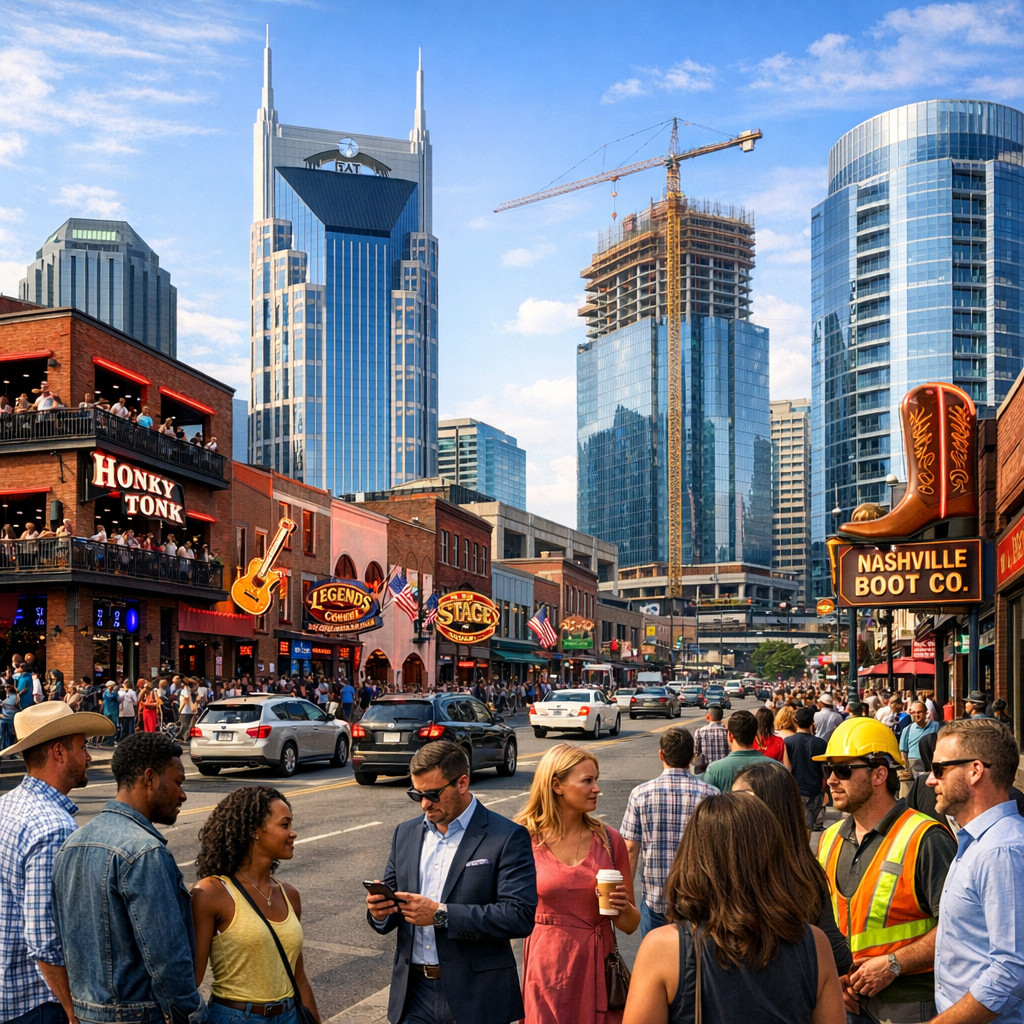
Nashville’s economic landscape has undergone significant transformation in recent years, reflecting broader national trends in urban development, population growth, and economic diversification. This evolution positions the city as a microcosm of the United States’ economic trajectory.
Population Growth and Urban Expansion
In recent years, Nashville, particularly Davidson County, has been a primary driver of Tennessee’s population growth. The city added nearly 9,300 residents in a single year, the highest increase among the state’s 95 counties. This surge underscores challenges such as rising home prices, increased traffic, and extensive construction projects, while also presenting opportunities in innovation and new business ventures.
Educational Attainment and Income Disparities
Data from the U.S. Census Bureau indicates a strong correlation between higher education and income levels in Nashville. Adults aged 25 or older without a college education earned a median income of $41,393, highlighting the wage gap between high school graduates and those with higher education. This trend aligns with national patterns emphasizing the economic value of higher education.
Housing Market Dynamics
The COVID-19 pandemic significantly reshaped Nashville’s housing market, leading to soaring home prices due to low borrowing costs and the rise of remote work. Middle Tennessee experienced some of the sharpest price increases, with areas like East Nashville seeing home values increase by 50% since 2020. This mirrors national real estate trends observed over the past five years.
Economic Contributions of Major Institutions
Vanderbilt University and Vanderbilt University Medical Center have made substantial economic contributions to Nashville and Tennessee. Between 2019 and 2024, these institutions generated approximately 120,000 jobs in Nashville, accounting for more than 10% of the area’s employment. Their combined direct spending reached $10 billion in a single year, underscoring their significant role in the city’s financial health.
Infrastructure and Transportation Initiatives
In October 2025, Mayor Freddie O’Connell announced $104 million in funding for transit projects under the ‘Choose How You Move’ program. This initiative includes sidewalk improvements, smart signals at over 100 intersections, and enhancements to public transportation. By January 2026, WeGo Public Transit added 12 new buses to their fleet, resulting in a 7.3% increase in ridership from the previous year.
Nashville’s economic growth and development reflect broader national trends, highlighting the city’s integral role in the United States’ economic landscape.