

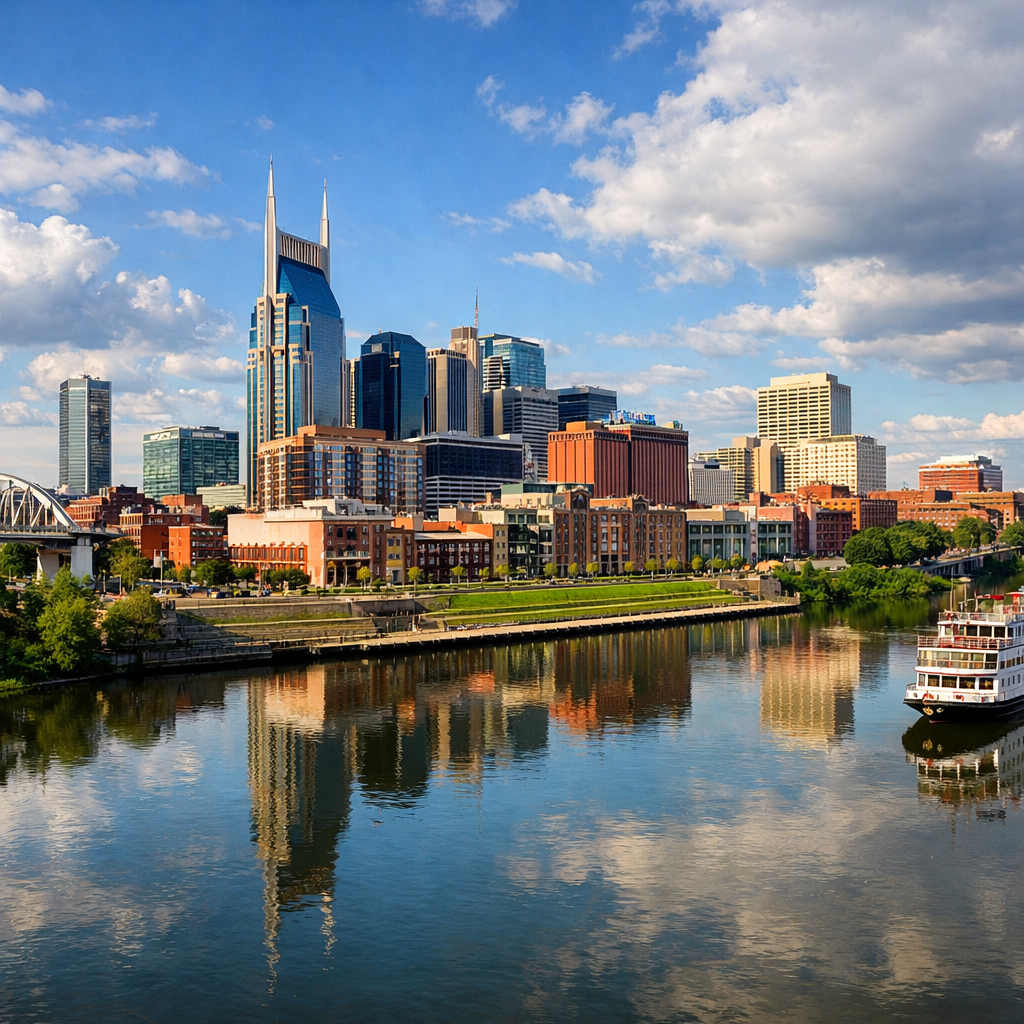
Nashville, Tennessee, experiences a humid subtropical climate characterized by hot summers, mild winters, and significant seasonal variations. Understanding these patterns is essential for residents and visitors alike.
Seasonal Weather Patterns
Spring (March – May)
Spring in Nashville is marked by fluctuating temperatures and increased rainfall. Average temperatures rise from the low 60s°F (16°C) in March to nearly 80°F (27°C) by late May. This season is also the wettest, with May typically being the rainiest month. Additionally, Nashville’s location within “Dixie Alley” makes it prone to severe thunderstorms and tornadoes during this period.
Summer (June – August)
Summers are hot and humid, with average high temperatures peaking around 88.3°F (31.3°C) in July. High humidity levels can make it feel even warmer. The city often experiences heat advisories during this time, emphasizing the importance of staying hydrated and limiting outdoor activities during peak heat hours.
Fall (September – November)
Fall brings cooler temperatures and reduced humidity. September starts with highs around 80°F (27°C), gradually decreasing to the mid-50s°F (13°C) by November. This season is generally drier, offering pleasant conditions for outdoor activities.
Winter (December – February)
Winters are mild compared to northern regions, with average lows around 30.6°F (-0.8°C) in January. Snowfall is infrequent but possible, and occasional cold snaps can bring freezing temperatures.
Environmental Challenges
Extreme Heat
In recent years, Nashville has experienced an increase in extreme heat events. The average spring temperature has risen by approximately 2.4°F since 1970, leading to longer allergy seasons and higher wildfire risks. Urban heat islands, areas with higher temperatures due to infrastructure and limited green spaces, affect about 71% of Nashville residents, particularly in historically low-income neighborhoods.
Intense Rainfall and Flooding
Climate change has led to more intense rainfall in Nashville. Between 1970 and 2024, hourly rainfall intensity increased by 12%, raising the risk of flash flooding and associated hazards. The city’s topography and development patterns contribute to these challenges, necessitating ongoing flood mitigation efforts.
Air Quality Concerns
Nashville faces air quality issues, particularly concerning ground-level ozone. The metro area received an F grade for ozone levels, ranking 66th worst in the nation. Major pollution sources include vehicle emissions, industrial activities, and seasonal factors like wildfires. Residents are advised to monitor air quality indices, especially during summer months when ozone levels tend to rise.
Understanding Nashville’s climate and environmental challenges is crucial for preparedness and resilience. Staying informed about weather patterns and taking proactive measures can help mitigate risks associated with extreme heat, intense rainfall, and air quality issues.