

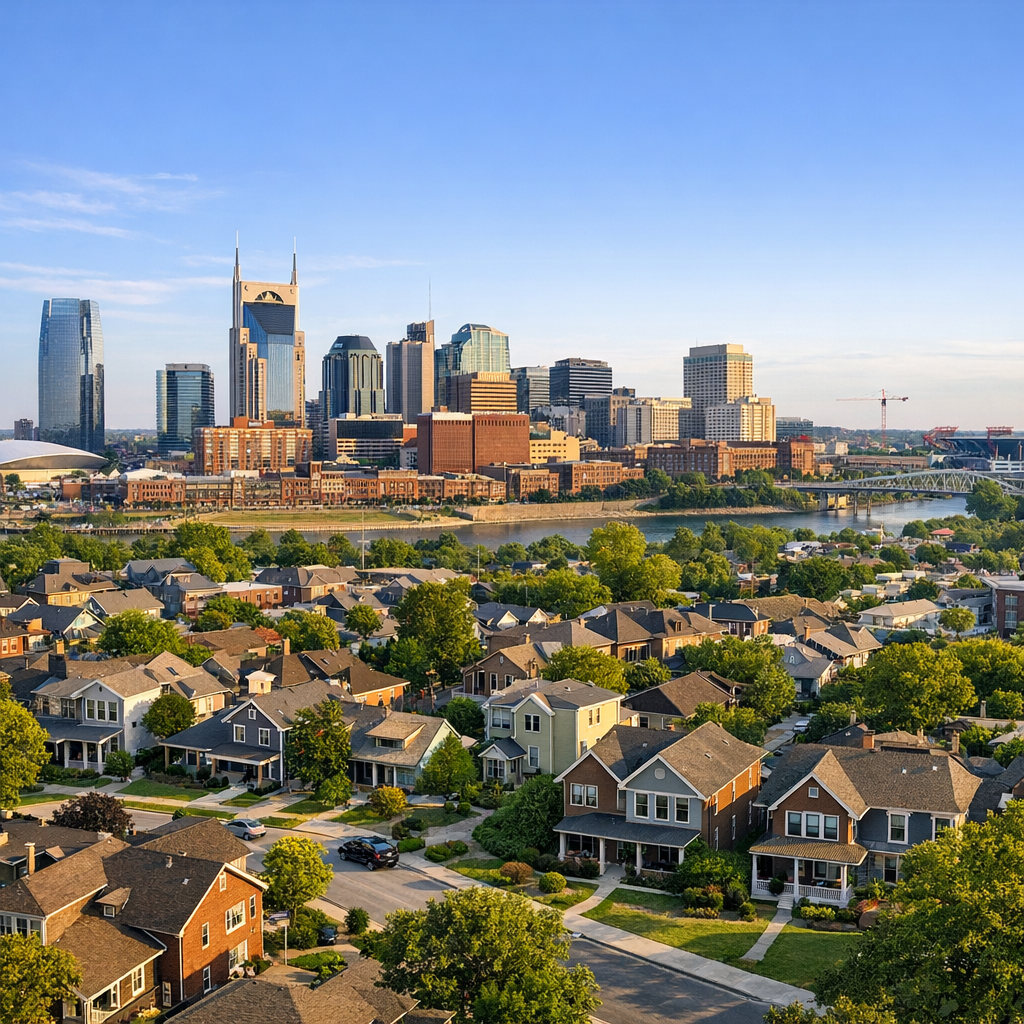
Nashville’s real estate market is experiencing notable shifts, presenting both challenges and opportunities for buyers and sellers alike. Understanding these trends is crucial for making informed decisions in this dynamic environment.
Market Trends and Home Prices
Recent data indicates a slight decrease in home values. As of May 2026, the average home value in Nashville stands at $436,519, reflecting a 3.3% decline over the past year. Homes are typically going under contract in approximately 22 days, suggesting a market that, while cooling, remains active. [1]
In March 2026, the median sale price was $475,000, marking a modest 0.5% increase compared to the same period last year. However, the median sale price per square foot has decreased by 2.0%, now at $276. [2]
Inventory and Buyer Dynamics
The market is shifting in favor of buyers, with active inventory rising by 12% from the previous year, totaling 12,315 properties available for sale as of March 2026. This increase, coupled with lower interest rates, has enhanced buyers’ negotiating power, prompting sellers to offer incentives to attract offers. [3]
Neighborhood Highlights
Antioch (ZIP code 37013) continues to lead in home sales, recording 1,121 transactions in 2025. This marks the third consecutive year Antioch has topped Nashville’s real estate market, driven by its affordability and new amenities. [4]
Conversely, property values on Lower Broadway have surged dramatically, with appraisals at key venues increasing by at least 140% over the past four years. This rise underscores the area’s transformation into a major commercial hub, though it also brings challenges related to higher property taxes and operational costs for business owners. [5]
Development Projects and Community Impact
Several development projects are shaping Nashville’s landscape. For instance, DC Blox is proceeding with plans to build a 69,000-square-foot data center near the Nashville Zoo, despite significant public and environmental opposition. Over 500,000 individuals have signed a petition against the project, citing potential threats to endangered species in the area. [6]
Similarly, a new lawsuit has been filed against the city by residents aiming to halt the construction of a parking structure at Cheekwood Estate & Gardens. This legal action highlights ongoing disputes over traffic and land use surrounding the historic botanical garden. [7]
Conclusion
Nashville’s real estate market is in a state of flux, influenced by changing home values, increased inventory, and significant development projects. Staying informed about these trends is essential for anyone looking to navigate the local housing market effectively.