

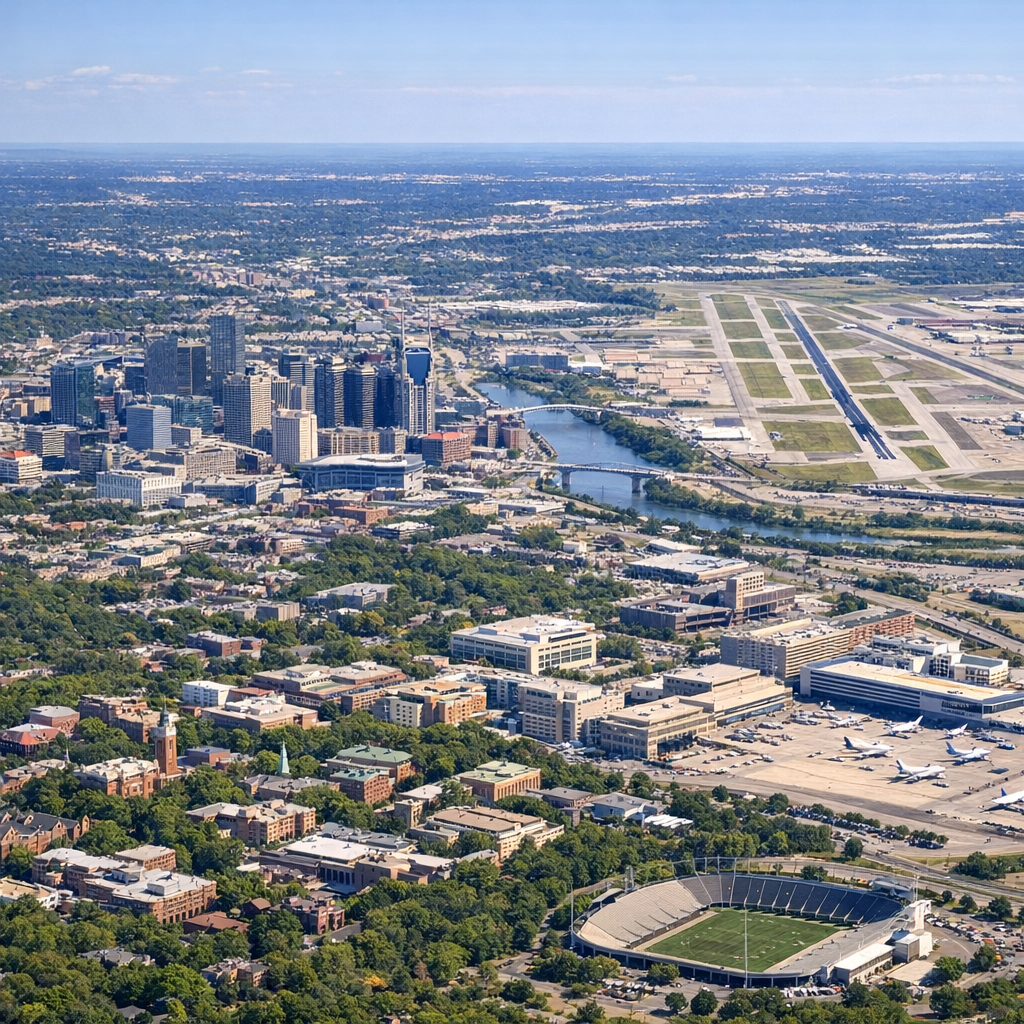
Nashville’s economic landscape has been significantly shaped by national policies and trends, reflecting the city’s resilience and adaptability in a dynamic environment.
Economic Growth and Income Trends
Recent data indicates a notable increase in personal incomes within Davidson County. From 2023 to 2024, personal income grew by 6.6%, culminating in a total countywide income of nearly $72.7 billion. This upward trajectory underscores the city’s robust economic health and its capacity to thrive amidst broader national economic shifts.
Major Institutional Contributions
Key institutions have played pivotal roles in bolstering Nashville’s economy. Vanderbilt University and Vanderbilt University Medical Center collectively contributed $22.13 billion to the Tennessee and Nashville economies between 2019 and 2024. As the largest private employer in the Nashville area and the second-largest in Tennessee, Vanderbilt’s influence extends beyond education and healthcare, significantly impacting the region’s economic vitality.
Similarly, Nashville International Airport (BNA) has emerged as a crucial economic driver. A 2025 economic impact study revealed that BNA contributed $13.8 billion to Tennessee’s economy, supporting 80,000 jobs and generating substantial federal, state, and local tax revenues. This highlights the airport’s essential role in facilitating commerce, tourism, and employment.
Policy Impacts on Local Development
National policies have also influenced local development projects. For instance, the Metropolitan Action Commission (MAC) had to adjust its operations in response to federal funding disruptions. During a federal government shutdown, MAC implemented a contingency plan to sustain essential services, ensuring continued support for vulnerable populations despite financial uncertainties.
Furthermore, the debate over data center developments near the Nashville Zoo illustrates the intersection of local and national interests. Mayor Freddie O’Connell’s administration filed eminent domain legislation to block a proposed data center, citing community concerns and the need for thoughtful urban planning. This move reflects a proactive approach to balancing technological advancement with community well-being.
Conclusion
Nashville’s economic growth is intricately linked to national policies and institutional contributions. The city’s ability to navigate these influences, while prioritizing community interests and sustainable development, positions it as a resilient and forward-thinking urban center.