

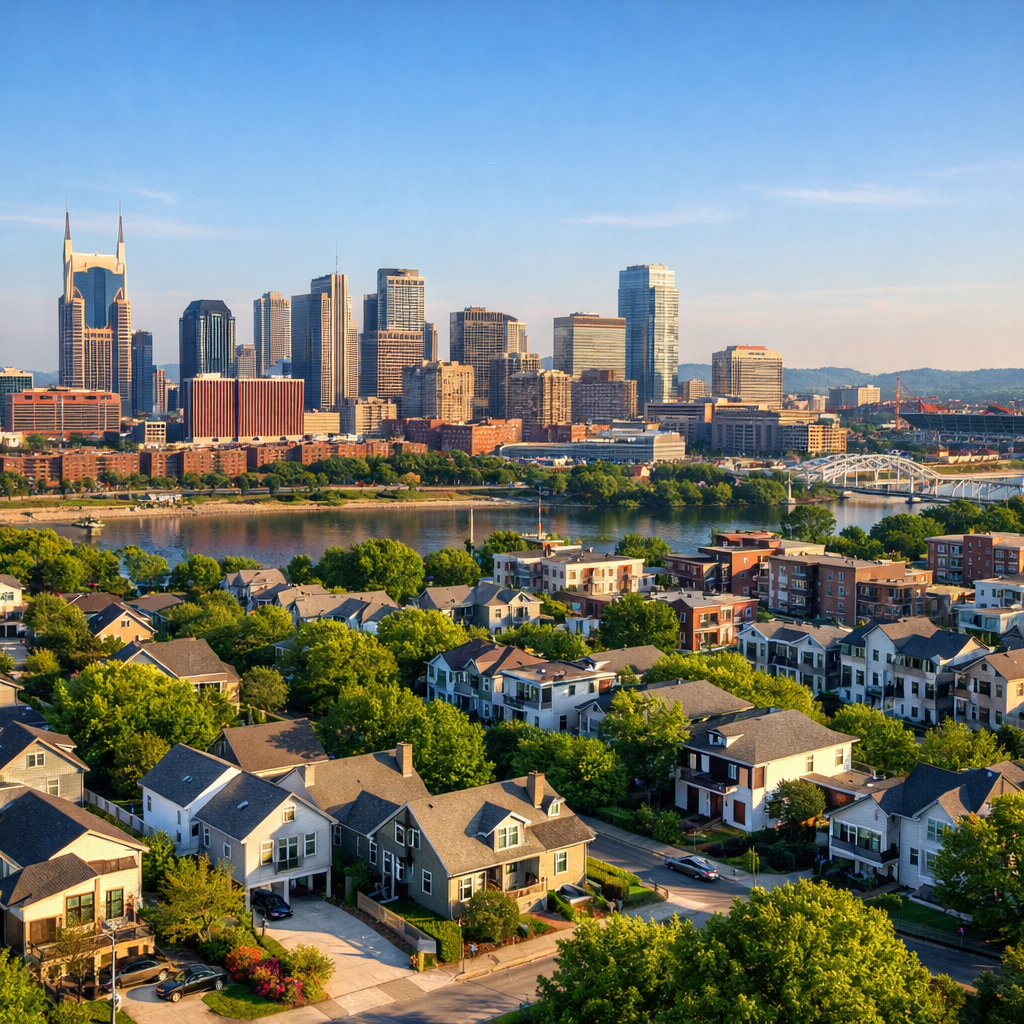
Nashville’s real estate market continues to evolve, presenting both challenges and opportunities for buyers, sellers, and investors. Understanding current trends is essential for making informed decisions.
Market Trends
Recent data indicates a shift toward a more balanced market. The median sale price of homes in Nashville has seen a modest increase, reaching $475,000, up 0.5% from the previous year. However, the average home value has experienced a slight decline of 3.3%, now standing at $436,519. Homes are spending more time on the market, with the median days to pending at 22 days, suggesting a cooling from the rapid sales of previous years.
Neighborhood Highlights
Antioch (ZIP code 37013) remains a focal point in Nashville’s real estate scene, leading the city with 1,121 home sales in 2025. This marks the third consecutive year Antioch has topped the list, emphasizing its rapid growth in southeastern Davidson County. Rising home prices in popular areas like East Nashville have pushed buyers toward more affordable destinations like Antioch, which is also benefiting from new amenities such as Tanger Outlets and an upcoming In-N-Out.
Development Projects
Several development projects are shaping Nashville’s landscape. DC Blox is proceeding with plans to build a 69,000-square-foot data center near the Nashville Zoo, despite significant public and environmental opposition. Over 500,000 individuals have signed a petition against the project, and two environmental organizations have criticized its potential threat to endangered species in the area. While the Metro Planning Commission has approved measures to limit future data center developments, DC Blox remains undeterred. The company insists the project will comply with all regulations concerning light, sound, stormwater, and energy use and emphasizes its commitment to transparency and environmental responsibility. Nonetheless, environmental and community concerns remain key points of contention.
In response, Nashville Mayor Freddie O’Connell is taking a significant step to block the proposed data center by filing eminent domain legislation. The move would grant the city authority to acquire the land, currently owned by MarketStreet Enterprises and under contract to be sold to DC Blox for $23 million. O’Connell stated the city has a legitimate public need for the property and acknowledged widespread community and zoo-related concerns about the project.
Another notable development involves Cheekwood Estate & Gardens. A new lawsuit has been filed against the city of Nashville by a group of residents aiming to halt the construction of a new parking structure at Cheekwood. This legal action escalates a longstanding dispute over traffic and land use surrounding the historic botanical garden, which has grown into a major Nashville attraction. Cheekwood initiated the construction project after receiving Metro approval, prompted by the upcoming expiration of an overflow parking arrangement on Metro Parks property. The lawsuit follows a prior unsuccessful zoning appeal and seeks to enforce zoning, noise, and traffic regulations. In response, Cheekwood has mounted a “Save Cheekwood” campaign, arguing the legal actions threaten visitor access and could potentially shut down the institution. Cheekwood denies intentions of expansion, citing a 15% decline in attendance over the past five years from a pandemic-era high of 435,000 visitors annually.
Conclusion
Nashville’s real estate market is characterized by nuanced shifts in pricing, neighborhood dynamics, and development initiatives. Staying informed about these trends is crucial for navigating the market effectively.