

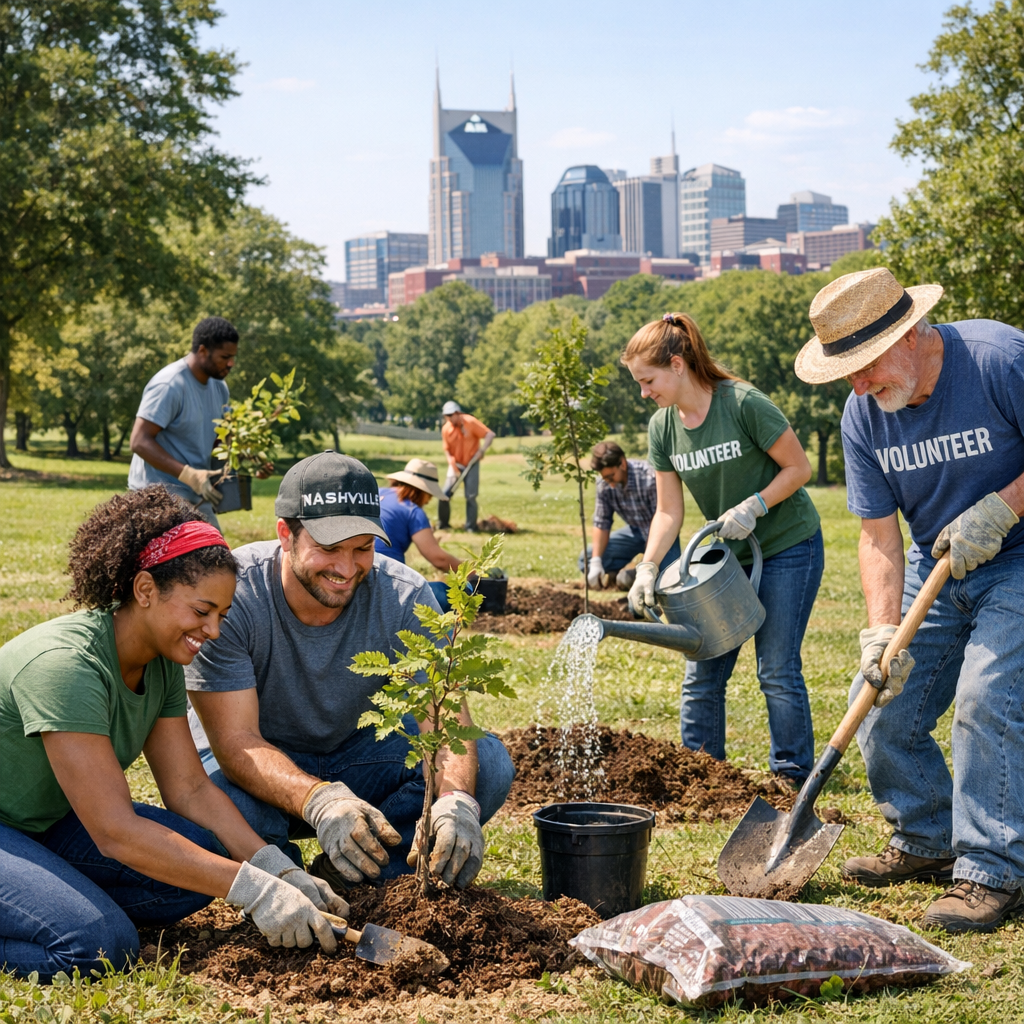
Nashville is witnessing a surge in community-driven environmental initiatives aimed at enhancing the city’s sustainability and resilience. These efforts span various sectors, from urban forestry to waste reduction, reflecting a collective commitment to environmental stewardship.
Urban Forestry and Green Spaces
The Nashville Downtown Arboretum, launched in May 2025, showcases over 3,000 trees along sidewalks and public areas, contributing to the city’s urban canopy. This initiative, managed by the Nashville Downtown Partnership and the Nashville Department of Transportation, underscores the importance of integrating green spaces into urban planning.
Additionally, the Centennial Park Conservancy has been instrumental in environmental conservation. Since 2020, proceeds from the Nashville Earth Day festival have funded the planting of more than 380 trees in various parks and schools, enhancing the city’s green infrastructure.
Waste Reduction and Recycling
In December 2019, Nashville’s Solid Waste Region Board approved a Solid Waste Master Plan aiming for a 90% diversion of waste from landfills. This plan emphasizes reducing, reusing, recycling, and composting to minimize environmental impact. The city’s commitment to waste reduction is further exemplified by partnerships with organizations like Coca-Cola Consolidated, which promotes recycling through initiatives such as the “Refresh. Recycle. Renew.” program.
Climate Resilience and Sustainability Education
Recognizing the challenges posed by climate change, Nashville has developed a Climate Resilience strategy to prepare and adapt communities to withstand severe weather events. This includes assessing the health of natural resources and developing action plans for conservation.
Education plays a pivotal role in these efforts. Urban Green Lab, a local nonprofit, teaches communities how to live sustainably, reaching nearly half of Davidson County’s zip codes with its programs. Similarly, Metro Nashville Public Schools have implemented energy-efficient designs and construction standards, achieving LEED Silver or Gold certification for new buildings and major renovations.
These initiatives reflect a city-wide commitment to environmental stewardship, demonstrating that through collective action, Nashville can build a more sustainable and resilient future.