

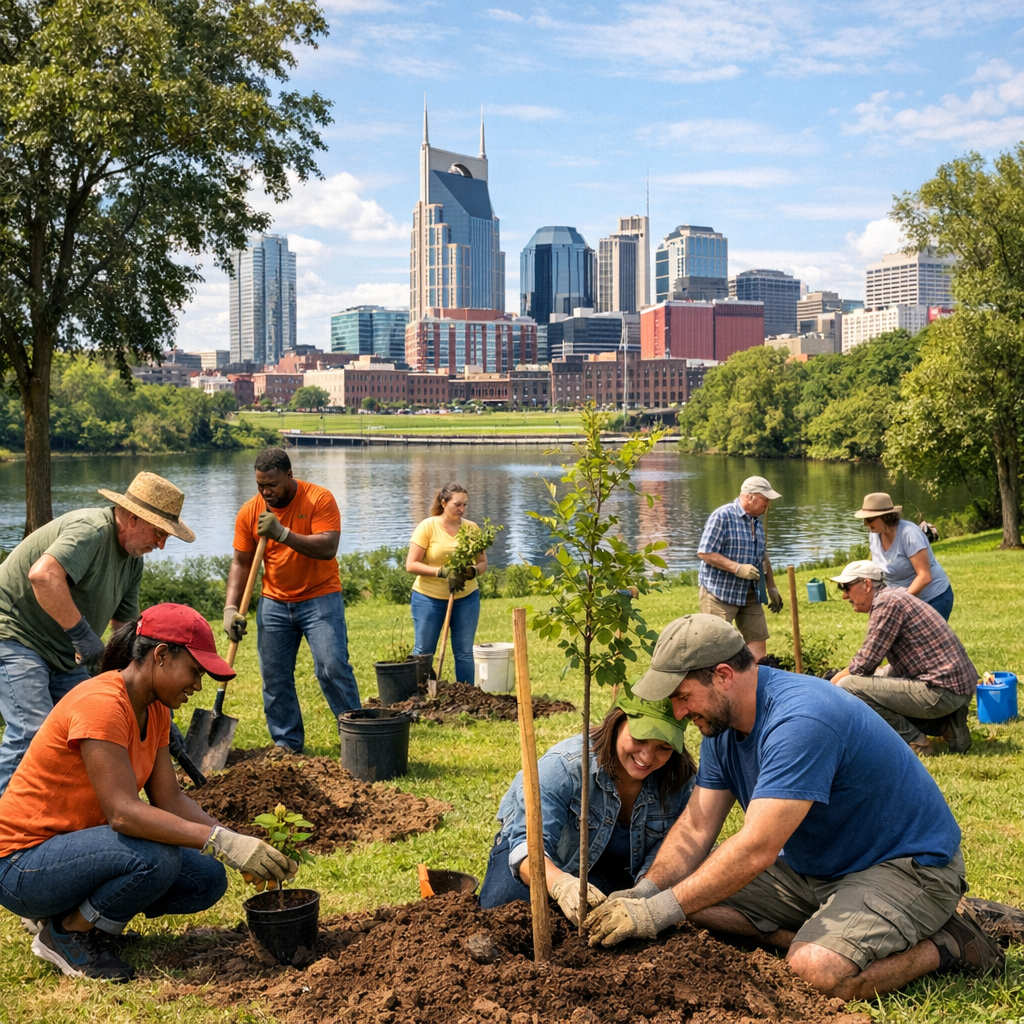
Nashville is witnessing a surge in community-driven environmental initiatives aimed at fostering sustainability and resilience. These efforts encompass a range of projects, from tree planting campaigns to educational programs, all contributing to a greener and more sustainable city.
Root Nashville: Greening the City
One notable initiative is Root Nashville, a public-private campaign led by Metro Nashville and the Cumberland River Compact. The campaign aims to plant 500,000 trees across Davidson County by 2050, enhancing the city’s tree canopy and promoting environmental resilience. Residents can participate by donating, volunteering, or ordering free trees for their properties.
Urban Green Lab: Educating for Sustainability
Urban Green Lab, a local nonprofit, focuses on teaching communities how to live sustainably. Through programs like Sustainable Classrooms, they train educators to incorporate sustainability into their teaching, reaching numerous schools and organizations across Nashville.
Metro Nashville Public Schools: Commitment to Sustainability
Metro Nashville Public Schools (MNPS) is also committed to promoting environmental stewardship. The MNPS Energy Program has achieved a 20% annual reduction in energy consumption over the past three years, equivalent to reducing 260,000 metric tons of carbon emissions. Initiatives include implementing energy-efficient designs, installing solar energy systems, and utilizing geothermal HVAC systems.
Centennial Park Conservancy: Supporting Local Environmental Projects
The Centennial Park Conservancy underscores its commitment to local environmental programs by awarding grants to various initiatives. In 2025, the Conservancy donated $48,000 to fund 17 environmental projects across the city, supporting efforts like tree planting and pollinator gardens.
Community Involvement: A Collective Effort
These initiatives highlight the collective effort of Nashville’s residents, organizations, and institutions in promoting environmental sustainability. By participating in these programs, the community contributes to a healthier, more resilient city for current and future generations.