

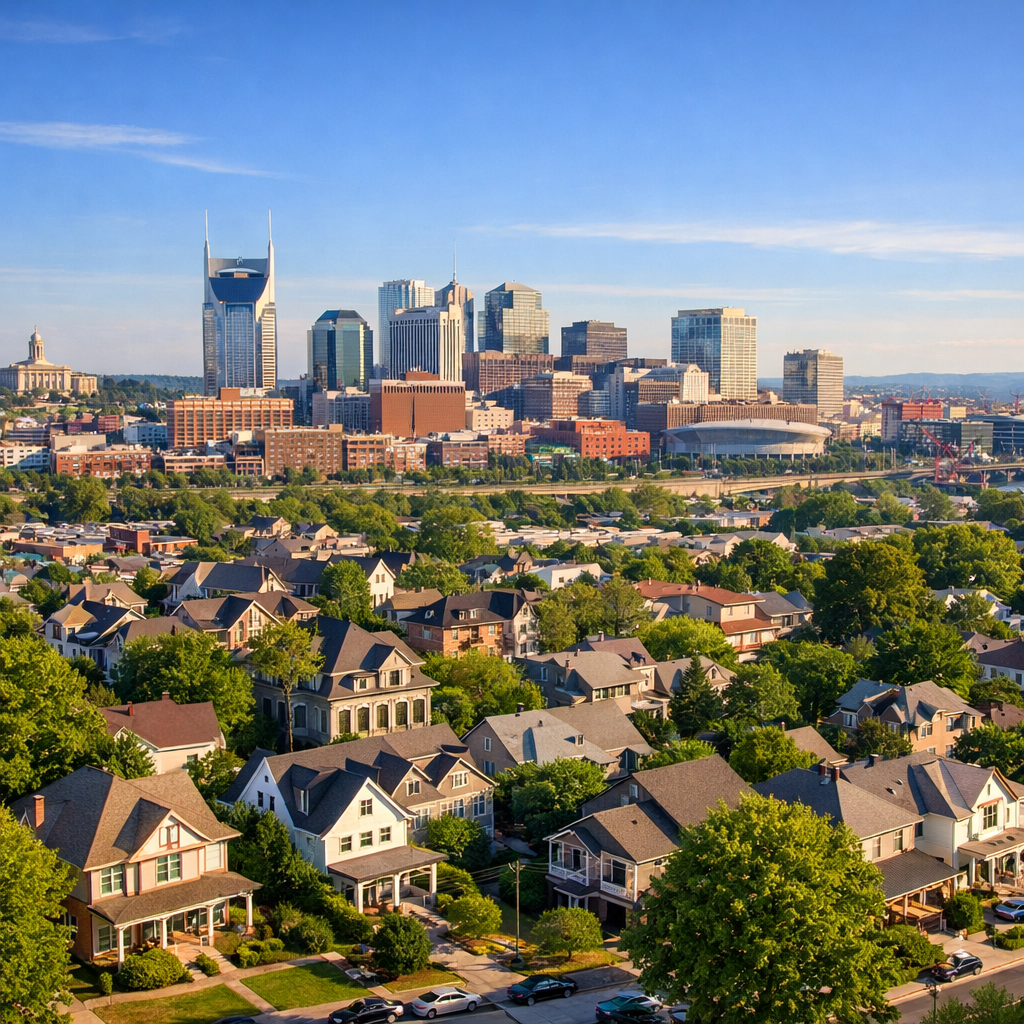
Nashville’s real estate market is experiencing notable shifts, presenting both challenges and opportunities for buyers, sellers, and renters alike.
Market Trends
Recent data indicates a shift toward a buyer-friendly market. Active listings have increased by 12% compared to the previous year, providing more options for prospective homeowners. This rise in inventory, coupled with slightly lower interest rates, has enhanced buyers’ negotiating power. Sellers are responding by offering incentives to attract offers. While home prices have seen a modest decrease—condo prices, for instance, fell from $350,000 in February 2025 to $338,500 in February 2026—overall prices remain significantly higher than in past years, continuing to challenge affordability for some buyers.
Rental Market Dynamics
The rental landscape in Nashville is also evolving. As of June 2026, the average rent stands at $1,975 per month, reflecting a 1.2% decrease from the previous year. This decline suggests a cooling rental market, offering some relief to tenants. However, rental prices vary across the city, with neighborhoods like Inglewood experiencing a 48.3% increase in rents, while areas such as Banbury Crossing have seen a 62.3% decrease, highlighting the importance of localized market research for renters.
Neighborhood Developments
Antioch (ZIP code 37013) continues to lead Nashville’s real estate market, recording 1,121 home sales in 2025. This marks the third consecutive year Antioch has topped the list, underscoring its rapid growth in southeastern Davidson County. The area’s appeal is bolstered by new amenities, including the Tanger Outlets and an upcoming In-N-Out Burger, attracting buyers seeking affordability and convenience.
Conversely, a recent housing and infrastructure study revealed that Black and Hispanic families can afford median-valued homes in less than 1% of Nashville’s 481 neighborhoods—specifically, just 0.8% for Black families and 0.6% for Hispanic families. This finding highlights ongoing affordability challenges and underscores the need for inclusive housing policies to address disparities in homeownership opportunities.
Looking Ahead
As Nashville’s real estate market continues to evolve, staying informed about these trends is crucial for making well-informed decisions. Whether you’re considering buying, selling, or renting, understanding the current dynamics will help you navigate the market effectively.