

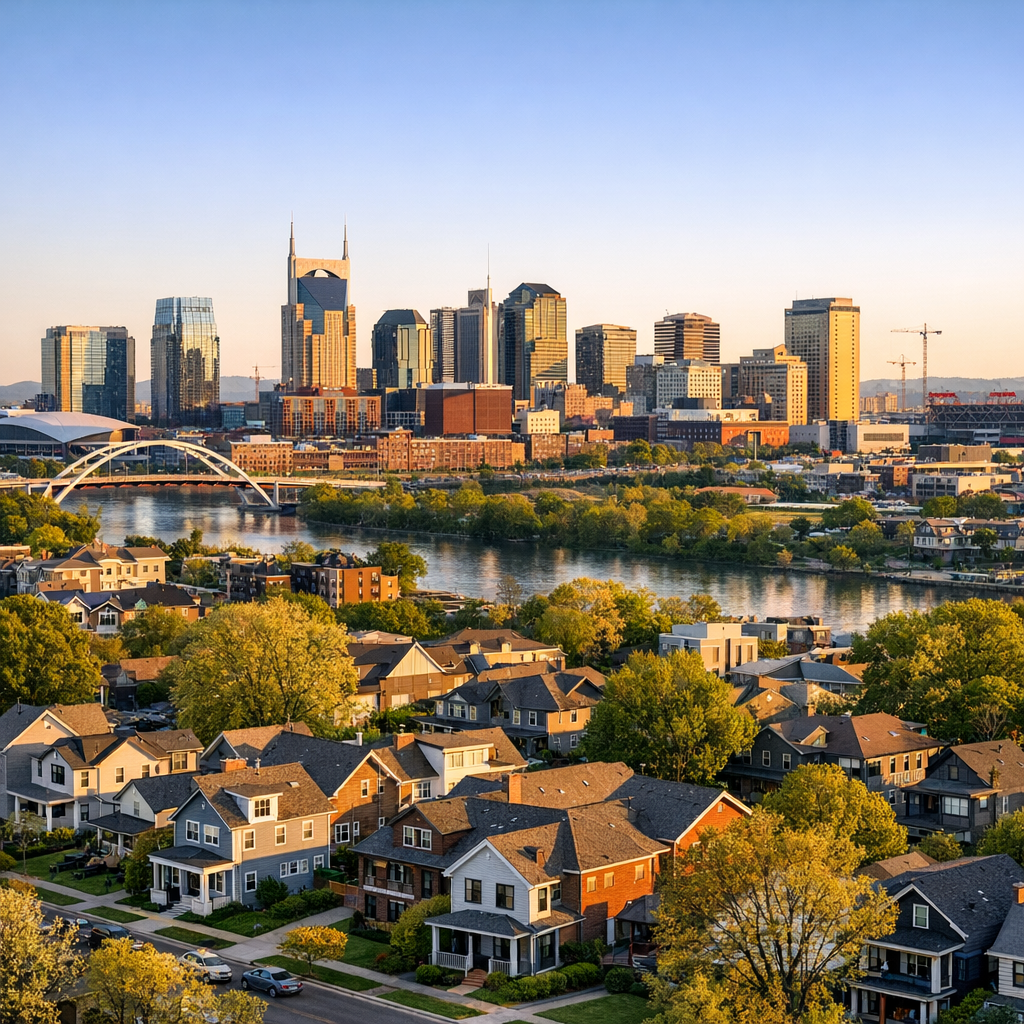
Nashville’s real estate market is undergoing significant changes, presenting both challenges and opportunities for residents and investors alike.
Market Trends
Recent data indicates a shift toward a more balanced market. As of March 2026, active listings increased by nearly 10% year-over-year, providing buyers with more options and negotiating power. Concurrently, the median list price decreased by 4.6%, suggesting a cooling from the previously heated market. Homes are also spending more time on the market, with the average days on market extending to 98 days, up from 64 days the previous year.
Affordability Concerns
Despite these shifts, affordability remains a pressing issue. A recent Vanderbilt University poll revealed that 82% of Nashville residents feel they cannot afford to purchase a home in Davidson County. This sentiment underscores the need for continued efforts to address housing affordability in the region.
Development Initiatives
In response to these challenges, Metro Nashville has introduced several initiatives aimed at increasing affordable housing. The Barnes Housing Trust Fund, for instance, provides grants to nonprofit developers to create and preserve affordable housing units. Additionally, the Connecting Housing to Infrastructure Program (CHIP) offers support to developers connecting affordable housing projects to enhanced infrastructure investments.
Neighborhood Dynamics
Neighborhoods like Antioch continue to experience significant growth, leading the city with 1,121 home sales in 2025. This trend highlights the area’s appeal to buyers seeking more affordable options within the Nashville metropolitan area.
As Nashville’s real estate landscape evolves, staying informed about market trends, affordability initiatives, and neighborhood developments is crucial for making informed decisions in this dynamic environment.