

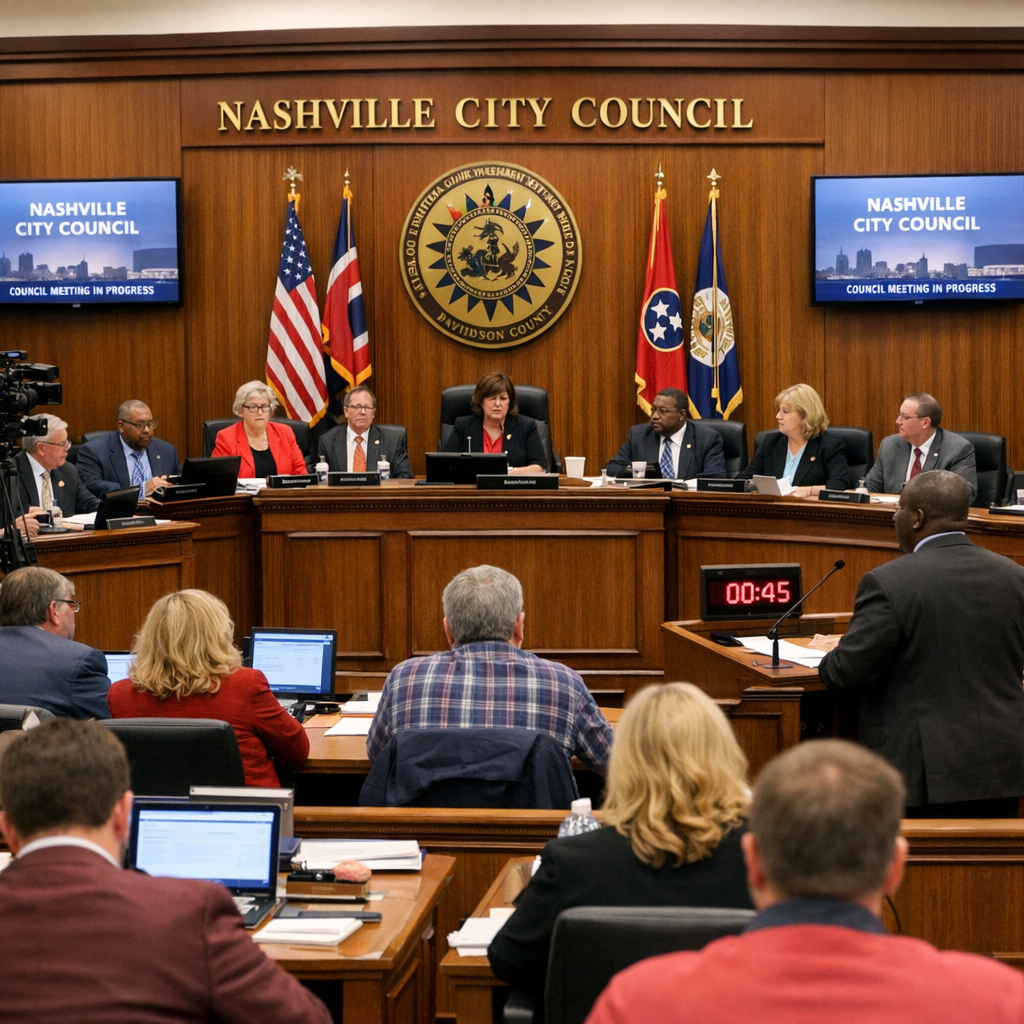
Nashville’s financial landscape has been a topic of discussion among city officials and residents alike. Metro Finance Director Jenneen Reed recently expressed confidence in the city’s financial health, even as revenue growth remains modest. The Metro Council is preparing to vote on a $3.8 billion operating budget, which includes a proposal to eliminate the city’s grocery tax. Reed highlighted a new fiscal policy requiring Nashville to maintain 17% of all operating funds and 50% of debt service obligations in reserve, indicating a conservative approach to financial management amid uncertain global economic conditions. Despite relatively flat key revenue streams, the O’Connell administration has successfully navigated the city’s budget. However, the city’s tax policy has faced criticism, particularly regarding property tax bills that have impacted homeowners and businesses, including prominent venues such as Acme Feed & Seed. The Council is expected to finalize and vote on the budget plan on Tuesday evening.
In other developments, a proposed data center near the Nashville Zoo has elicited pushback from the community, the Metro Council, Mayor Freddie O’Connell, and Senator Marsha Blackburn. The project by DC Blox has sparked controversy due to its proximity to the zoo, which Blackburn highlighted as a key educational and economic asset for the community. Though supportive of data centers for their role in Tennessee’s economic development, Blackburn emphasized the importance of careful site selection. Her stance carries weight as she is a leading candidate for governor and would have influence over future data center policies in the state. Blackburn also revealed her past involvement with the zoo as a former board member. The dispute has escalated with zoning appeals filed by a local official and the zoo’s attorney aimed at halting the project.
Additionally, a recent report from the Gensler Research Institute reveals that Downtown Nashville is not particularly “sticky” for local residents, meaning many tend to avoid the area regularly and do not linger when they do visit. The “stickiness” metric used in the report measures how frequently residents go downtown and how long they stay. In contrast, Detroit ranked as the “stickiest” downtown among 34 U.S. cities surveyed. Despite serving as a major tourism hub known for its entertainment and socializing venues, Downtown Nashville faces issues with public safety, including concerns over excessive drinking and crime, which likely contribute to locals’ hesitancy. However, the area still received positive feedback for its vibrancy, authenticity, and memorability. The study gathered input from 35,000 residents across 75 cities worldwide between July and November 2025, indicating a broader trend: fewer than half of residents surveyed in all cities visited their downtown areas weekly, and less than a third spent leisure time there. Efforts by tourism promoters are underway to address the rowdy atmosphere in hopes of making Downtown Nashville more appealing to its residents.
These developments highlight the ongoing challenges and opportunities within Nashville’s financial and community landscape. As the city continues to grow and evolve, it is crucial for residents and officials to stay informed and engaged in shaping its future.