

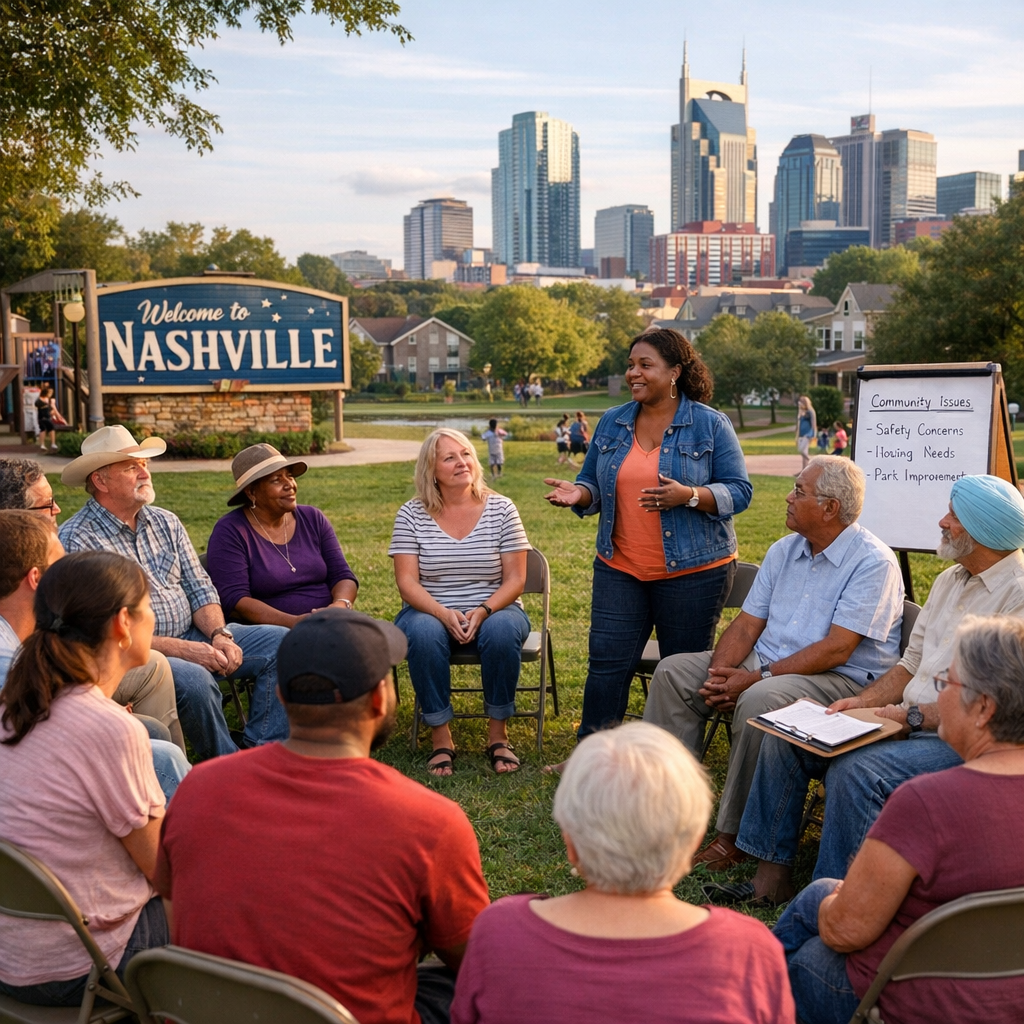
Nashville’s rapid growth has brought both opportunities and challenges, prompting residents and leaders to address pressing issues such as affordability, community engagement, and urban development.
Affordability Challenges
Recent reports highlight significant affordability concerns among Nashville’s African American residents. The 17th annual Community Needs Evaluation by Metro Social Services reveals that the poverty rate for African Americans in Davidson County stands at 18%, compared to the overall rate of 11.9%. Additionally, the unemployment rate for African Americans is 5.5%, nearly three times that of white residents at 2.0%. These disparities underscore the need for targeted economic and housing policies to bridge the wealth gap and ensure equitable growth.
Community Engagement
Amid national trends of declining neighborhood interactions, many Nashvillians are fostering community connections through grassroots initiatives. Residents have organized casual gatherings like “Wine Wednesday” and neighborhood meet-ups, emphasizing that building community often starts with simple, informal interactions. These efforts counteract social isolation and contribute to a stronger sense of belonging.
Urban Development and Public Sentiment
Public sentiment regarding Nashville’s development is mixed. A Vanderbilt Poll indicates that 79% of residents believe the city’s population is growing too quickly, with 48% stating that recent changes have worsened their daily lives. Concerns include heavy traffic and the pace of population growth. Additionally, a report from the Gensler Research Institute found that Downtown Nashville is not particularly “sticky” for local residents, meaning many tend to avoid the area regularly and do not linger when they do visit. Despite being a major tourism hub, issues such as public safety and excessive drinking contribute to locals’ hesitancy.
Leadership and Infrastructure
In response to these challenges, Mayor Freddie O’Connell’s administration has announced over $100 million in “Choose How You Move” capital projects aimed at improving transportation options citywide. These investments focus on enhancing sidewalks, signals, and safety measures to facilitate better mobility for all residents. Additionally, the administration is celebrating key progress through an interactive story map highlighting departmental achievements.
As Nashville continues to evolve, addressing affordability, fostering community engagement, and implementing thoughtful urban development strategies remain crucial for ensuring a vibrant and inclusive future for all residents.