

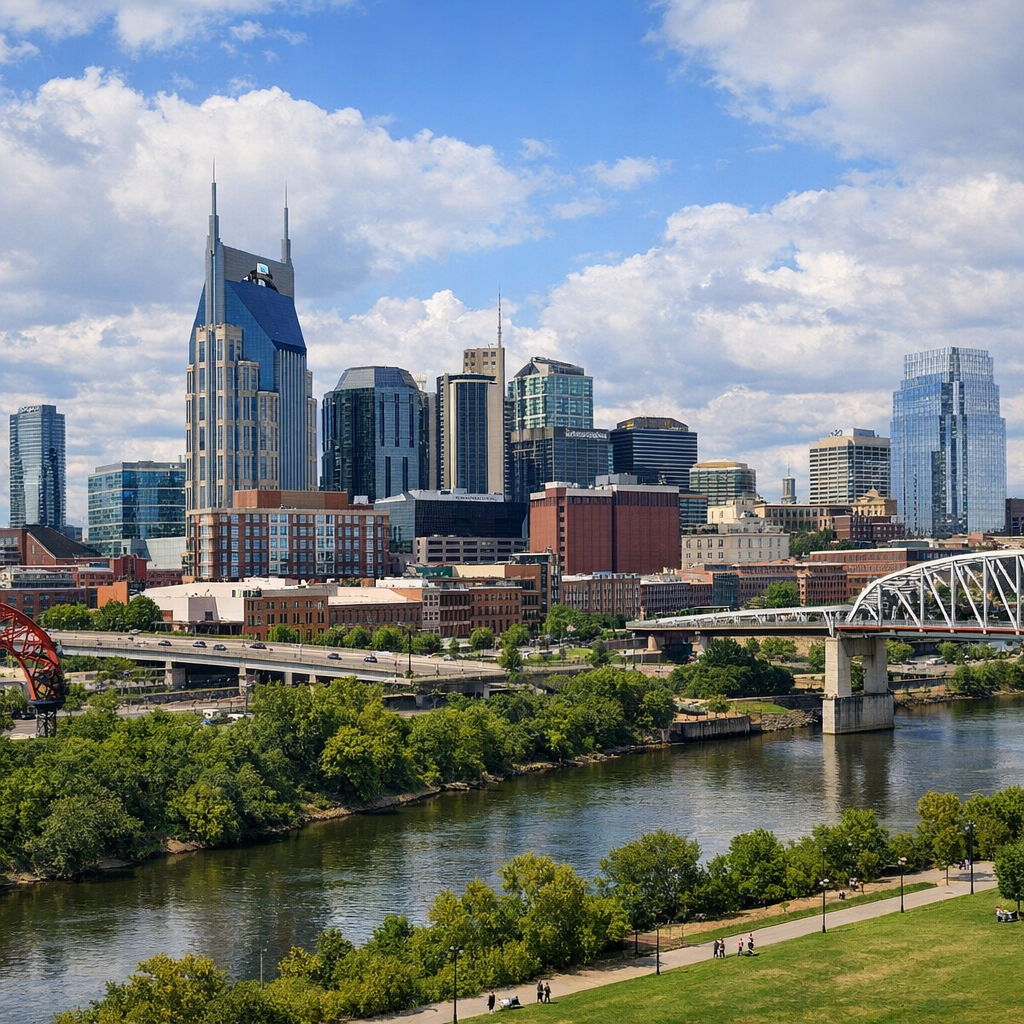
Nashville, Tennessee, experiences a humid subtropical climate characterized by hot, humid summers and mild to cool winters. The city’s weather patterns are influenced by its geographical location in the southeastern United States, leading to a diverse range of seasonal conditions.
Seasonal Weather Patterns
Summers in Nashville are typically hot and muggy, with average high temperatures around 89°F (32°C) in July. Winters are generally mild, with average lows around 31°F (-1°C) in January. The city receives an average annual rainfall of approximately 47 inches, distributed fairly evenly throughout the year.
Climate Change and Its Impact
Recent years have seen a noticeable shift in Nashville’s climate patterns. The frequency and intensity of extreme weather events, such as heatwaves and heavy rainfall, have increased. For instance, the number of days with temperatures exceeding 95°F (35°C) is projected to rise significantly by 2050. Additionally, urban heat islands—areas with higher temperatures due to dense infrastructure and limited green spaces—affect about 71% of Nashville residents, exacerbating heat-related health risks.
Resilience and Adaptation Efforts
In response to these challenges, Nashville has developed the Climate Adaptation and Resilience Plan (CARP). This plan focuses on preparing the city for climate-related disruptions by enhancing infrastructure, preserving natural resources, and promoting sustainable practices. Key initiatives include increasing urban tree canopy coverage, improving stormwater management systems, and implementing heat mitigation strategies in vulnerable neighborhoods.
Understanding Nashville’s climate and the ongoing efforts to address its challenges is crucial for residents and policymakers alike. Staying informed and engaged with local resilience initiatives can help ensure the city’s sustainability and livability for future generations.