

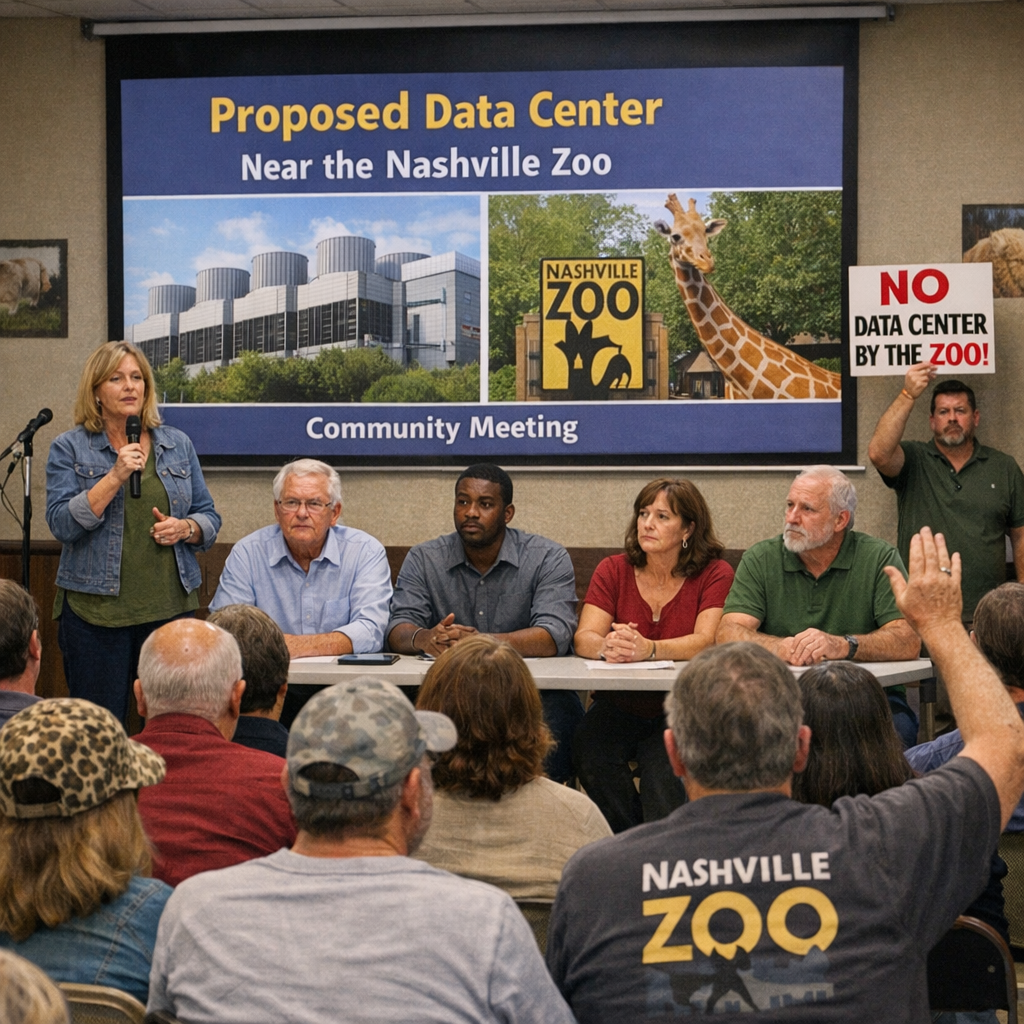
In recent weeks, Nashville has been at the center of a heated discussion regarding the proposed construction of a data center near the Nashville Zoo. This development has raised questions about the balance between economic growth and preserving community assets.
Community and Political Response
The proposed data center has garnered significant opposition from various community members and political figures. U.S. Senator Marsha Blackburn, a leading gubernatorial candidate and former zoo board member, has expressed concerns about the project’s proximity to the zoo, emphasizing its importance as an educational and economic asset for the community. While acknowledging the role of data centers in economic development, Blackburn stressed the need for careful site selection to avoid adverse impacts on existing community resources.
Mayor Freddie O’Connell has also taken a stand by signing an executive order directing Metro departments to study the potential impacts of large-scale data centers. He supports the Metro Council’s efforts to pause permits for such facilities, indicating a cautious approach to their development.
Legislative Actions
Reflecting these concerns, the Metro Council has passed a near-unanimous moratorium on data center development in its first reading. This 18-month pause aims to allow local governments to assess critical factors such as electrical grid capacity, water usage, noise, and environmental and community impacts before granting permits. Similar measures have been enacted in other Tennessee counties, including McMinnville in Warren County and Coffee County, indicating a broader trend of communities reevaluating the placement and impact of data centers.
Broader Implications
The debate over the data center near the Nashville Zoo highlights the challenges cities face in balancing economic development with community preservation. As Nashville continues to grow, it becomes increasingly important to consider the long-term impacts of such developments on the city’s cultural and environmental landscape. The current moratorium provides an opportunity for comprehensive assessment and planning to ensure that future projects align with the community’s values and needs.