

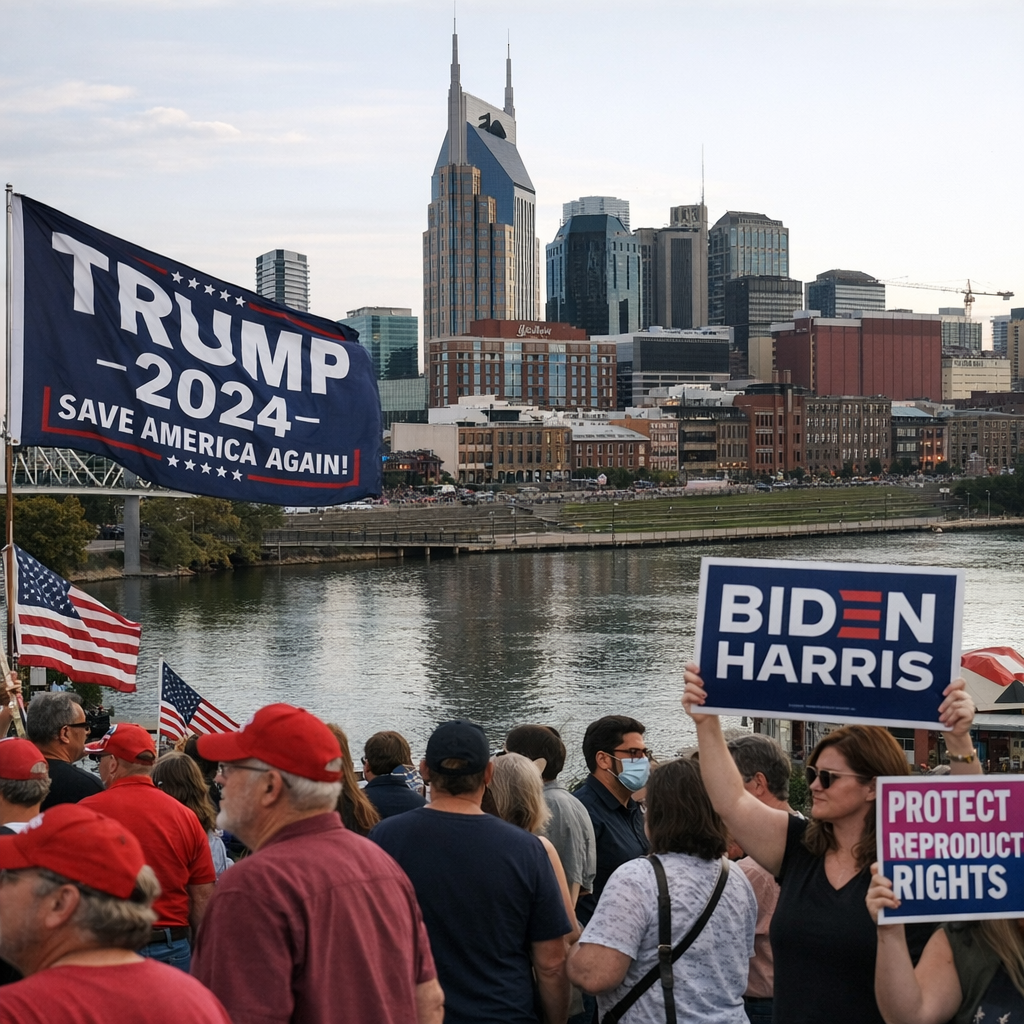
Nashville, Tennessee, has long been recognized as a Democratic stronghold within a predominantly Republican state. This unique political positioning has led to a dynamic interplay between local and state governance, especially in light of recent national political developments.
Redistricting and Its Impact
In 2022, the Republican-controlled state legislature implemented a redistricting plan that divided Davidson County into three separate congressional districts. This move effectively diluted the Democratic voting power of Nashville residents by merging parts of the city with predominantly Republican rural areas. As a result, all three districts are now represented by Republicans, marking a significant shift in the city’s federal representation.
State Preemption of Local Policies
The tension between Nashville’s local government and the state legislature has been further exemplified by the use of preemption laws. These laws have been employed to override local decisions on various issues, including the size of the Metro Council and the establishment of a Community Oversight Board for police accountability. Such actions underscore the challenges Nashville faces in maintaining local autonomy amid state-level interventions.
Economic Contributions and Challenges
Despite these political challenges, Nashville continues to make substantial economic contributions to the state. Between 2019 and 2024, Vanderbilt University and Vanderbilt University Medical Center generated an economic impact of $22.13 billion on Nashville and Tennessee. This economic activity underscores the city’s vital role in the state’s financial health.
Looking Ahead
As Nashville navigates these complex political dynamics, the city’s leaders and residents remain committed to fostering a community that reflects their values and priorities. The interplay between local initiatives and state policies will continue to shape the city’s trajectory in the years to come.