

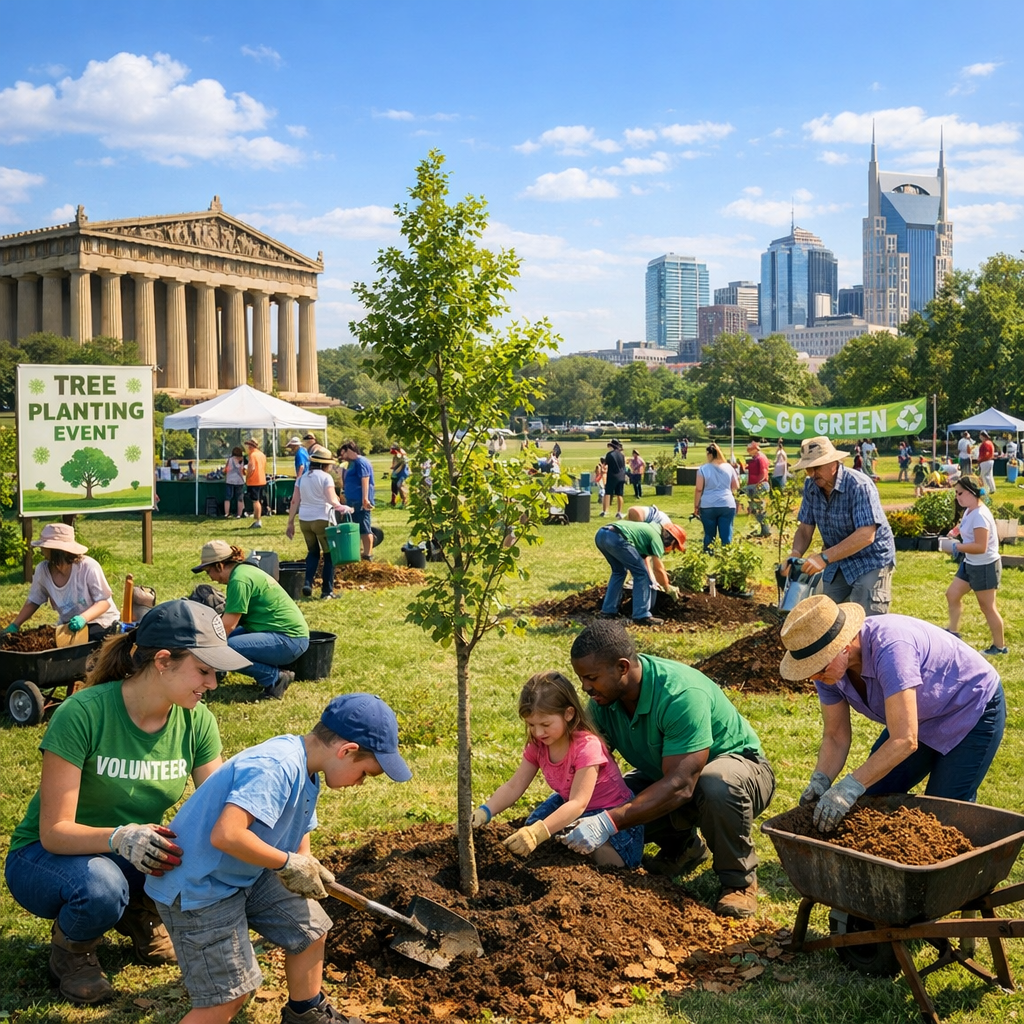
Nashville’s dedication to environmental sustainability is evident through various initiatives aimed at preserving natural resources and promoting eco-friendly practices. The city’s approach encompasses governmental policies, community programs, and educational efforts, all contributing to a greener future.
Government Initiatives
The Mayor’s Office has established a comprehensive framework focusing on sustainability, resilience, and environmental stewardship. This includes:
- Sustainability: Efforts to minimize the consumption of finite resources and ensure future generations thrive.
- Resilience: Preparing communities and infrastructure to withstand severe weather events.
- Environmental Stewardship: Preserving and protecting natural assets like green spaces, waterways, and native species.
Key legislative actions include the establishment of a fleet electrification program aiming for a 100% zero-emission Metro government fleet by 2050 and the development of a strategic energy management plan to reduce energy and water use across Metro-owned buildings. Additionally, Nashville’s participation in the Global Covenant of Mayors for Climate & Energy underscores its commitment to reducing greenhouse gas emissions and enhancing community resilience.
Community Programs
Local organizations play a pivotal role in promoting sustainability. Urban Green Lab, a nonprofit based in Nashville, educates communities on sustainable living practices. Their programs have reached numerous educators and organizations, fostering a culture of environmental responsibility.
Another significant initiative is the annual Nashville Earth Day celebration, organized by the Centennial Park Conservancy. This event brings together the community to celebrate the planet and support sustainable businesses and nonprofits. Proceeds from the event fund environmental projects across the city, including tree planting and pollinator garden installations.
Educational Efforts
Metro Nashville Public Schools (MNPS) are committed to environmental stewardship through various projects and programs. The MNPS Energy Program has achieved a 20% annual reduction in energy consumption over the past three years. Schools have implemented energy-efficient designs, installed solar energy systems, and utilized geothermal HVAC systems to enhance sustainability.
Additionally, MNPS has incorporated green infrastructure projects, such as the green roof at James Lawson High School, which contributes to energy savings and provides a unique learning environment for students.
Looking Ahead
Nashville continues to develop strategies to balance growth with environmental preservation. The Ecological Conservation Strategy, launched by Metro Planning, aims to understand the effects of recent growth on the county’s landscape and develop recommendations to protect and connect natural spaces. This 18-month planning effort involves assessing the health of natural resources and creating an action plan that includes conservation priorities and policy recommendations.
Through these combined efforts, Nashville demonstrates a strong commitment to environmental sustainability, ensuring that the city’s growth aligns with the preservation of its natural resources and the well-being of its residents.