

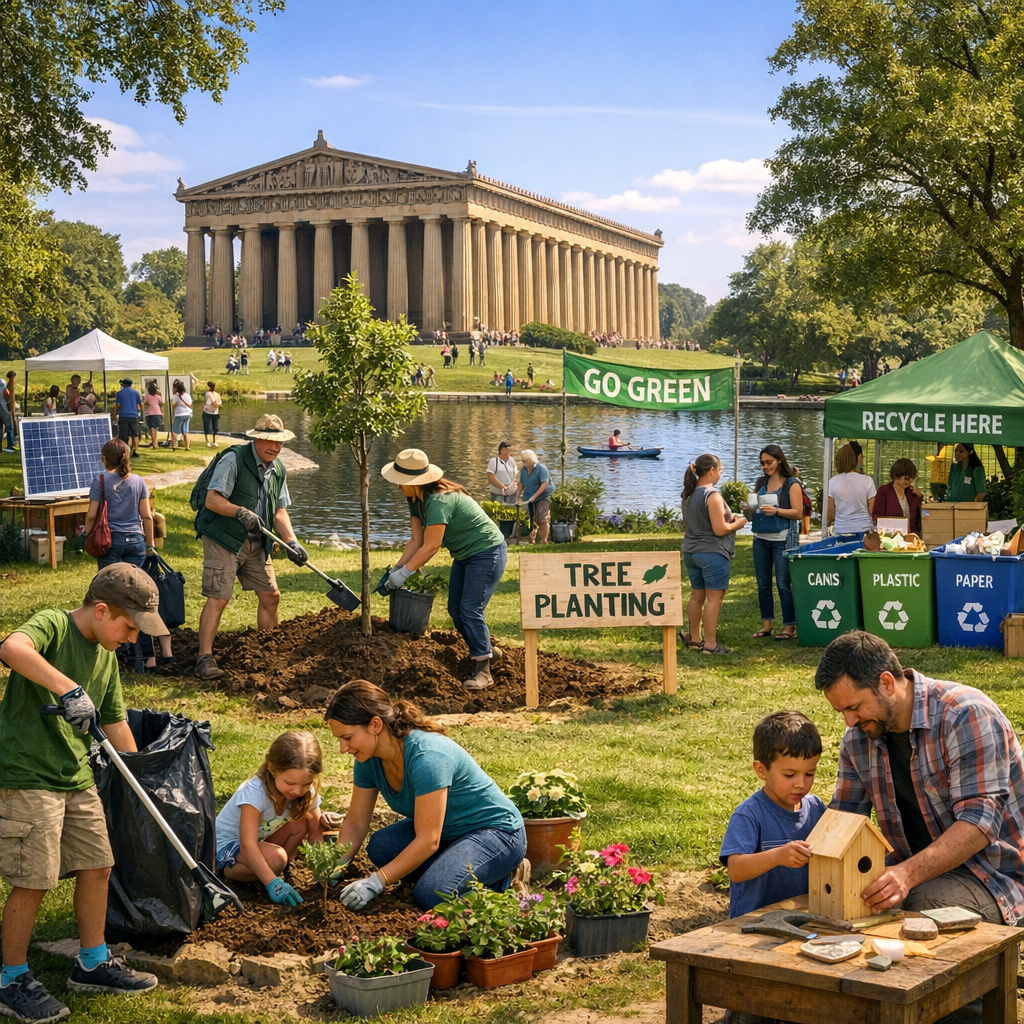
Nashville’s dedication to environmental sustainability is evident through various community-driven initiatives and city-led programs. These efforts aim to preserve natural resources, promote green infrastructure, and foster a culture of environmental stewardship among residents.
City-Led Sustainability Initiatives
The Mayor’s Office has been proactive in implementing strategies to enhance Nashville’s environmental resilience. Key initiatives include:
- Climate Action Plan (CAP): Developed in 2021, the CAP outlines goals for reducing greenhouse gas emissions and promoting sustainable practices across the city.
- Climate Adaptation and Resilience Plan (CARP): Launched in September 2024, CARP focuses on preparing Nashville for climate-related challenges by assessing vulnerabilities and developing actionable strategies.
- Zero Waste Nashville: Approved in December 2019, this Solid Waste Master Plan aims to divert 90% of the city’s waste from landfills through reduction, reuse, recycling, and composting.
Community Engagement and Education
Local organizations play a crucial role in promoting sustainability education and community involvement:
- Urban Green Lab: This nonprofit teaches communities how to live sustainably, offering programs that have reached nearly half of Davidson County’s zip codes.
- Nashville Earth Day: Organized by the Centennial Park Conservancy, this annual event brings together over 75 exhibitors and vendors to celebrate Earth Day, featuring live demonstrations, music, and educational activities.
Green Infrastructure and Conservation Efforts
Nashville has made significant strides in enhancing its green infrastructure:
- Downtown Arboretum: Launched in May 2025, this project features over 3,000 trees planted along sidewalks and public spaces, contributing to the city’s urban canopy.
- Donelson Branch Library: Opened in June 2024, this LEED Gold-certified facility incorporates geothermal wells, solar power, and native landscaping, serving as a model for sustainable building practices.
Educational Institutions Leading by Example
Metro Nashville Public Schools (MNPS) are integrating sustainability into their operations:
- Energy Program: Over the past three years, MNPS has achieved a 20% annual reduction in energy consumption by implementing energy-efficient designs and installing solar energy systems.
- Green Infrastructure Projects: Initiatives like the green roof at James Lawson High School contribute to energy savings and provide unique learning environments for students.
Through these collective efforts, Nashville continues to demonstrate a strong commitment to environmental sustainability, fostering a healthier and more resilient community for future generations.