

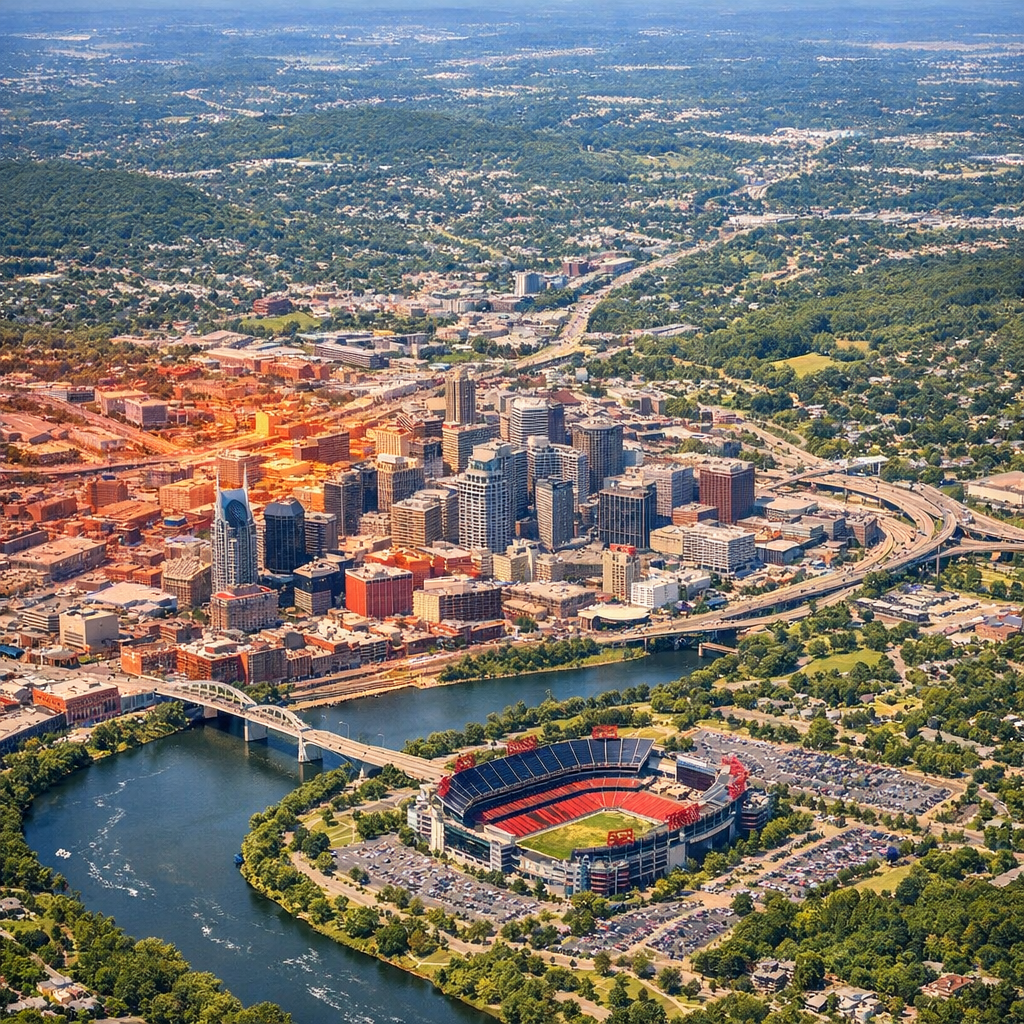
Nashville, Tennessee, experiences a humid subtropical climate characterized by hot, humid summers and mild winters. This climate influences various environmental factors, including weather patterns and ecological challenges.
Seasonal Weather Patterns
Throughout the year, Nashville’s temperatures fluctuate significantly. Summers often see temperatures exceeding 90°F, while winters are generally mild, with average lows around 30°F. The city receives approximately 49 inches of rainfall annually, with precipitation distributed fairly evenly across the months. Snowfall is relatively rare, averaging about 4 inches per year.
Urban Heat Islands
A significant environmental concern in Nashville is the prevalence of urban heat islands—urbanized areas that experience higher temperatures due to infrastructure like roads and buildings and fewer green spaces. Approximately 71% of Nashville residents live in neighborhoods considered heat islands. This phenomenon disproportionately affects historically lower-income areas, where residents may lack access to air conditioning, exacerbating health risks during heat waves.
Flooding Risks
Nashville’s geography, situated in the Cumberland River basin, makes it susceptible to flooding. The May 2010 flood serves as a stark reminder, with over 13 inches of rain falling in 48 hours, causing the Cumberland River to rise significantly above flood stage. Such events highlight the importance of effective stormwater management and urban planning to mitigate future risks.
Air Quality Concerns
Air pollution in Nashville stems from various sources, including vehicular emissions, industrial activities, and seasonal factors like wildfires. The city’s air quality varies seasonally, with ozone levels peaking during hot summer months and particulate matter increasing in winter due to factors like wood burning and temperature inversions.
Environmental Initiatives
In response to these challenges, Nashville has undertaken several initiatives aimed at enhancing climate resilience and sustainability. The forthcoming 2024 Climate Adaptation and Resilience Plan (CARP) focuses on addressing the city’s primary climate hazards—flooding, tornadoes, extreme heat, extreme cold, and thunderstorms. This plan aims to inform future investments and programs to build adaptive capacity across Nashville’s built and natural environments, communities, economic systems, and public services.
Understanding Nashville’s climate and environmental challenges is crucial for residents and policymakers alike. By staying informed and proactive, the community can work together to create a more resilient and sustainable city.