

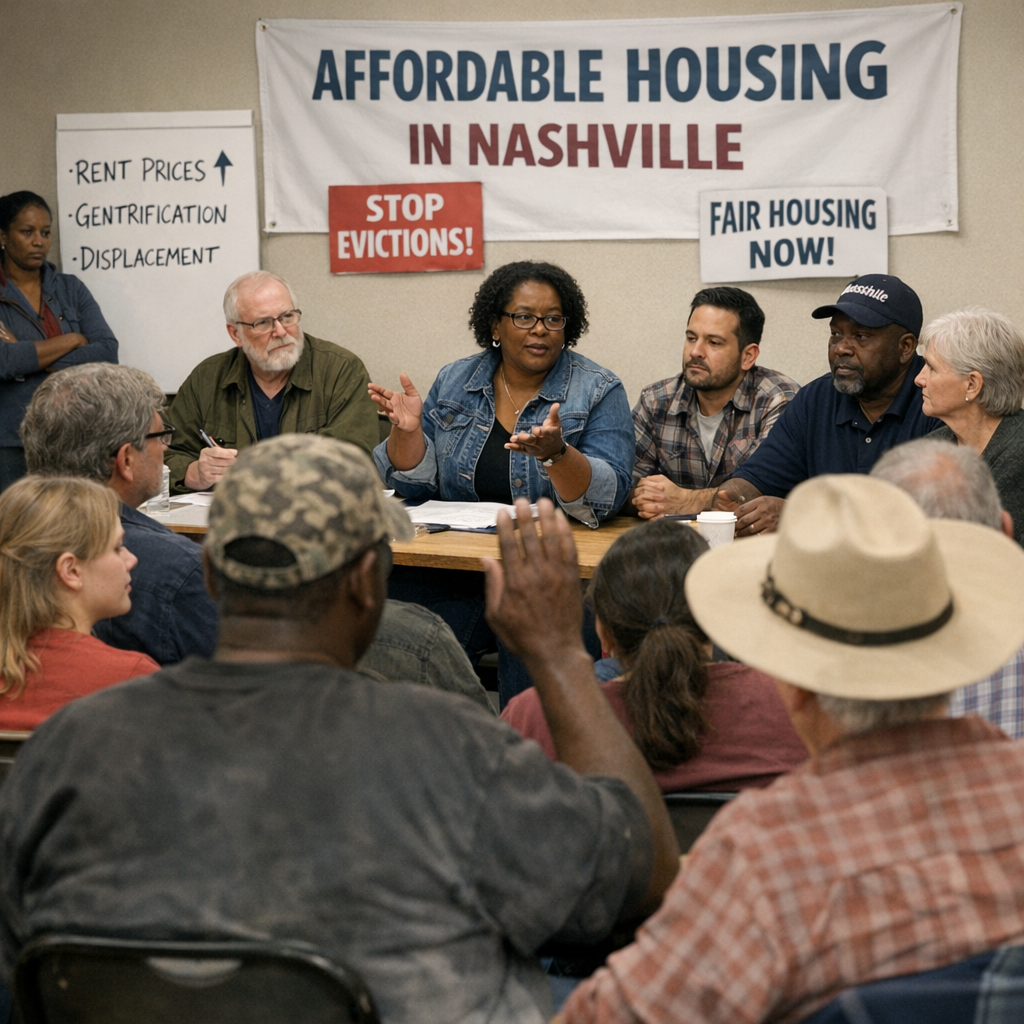
Nashville is grappling with a significant housing affordability crisis. A recent Vanderbilt University poll revealed that 82% of residents feel they cannot afford to purchase a home in Davidson County. This alarming statistic underscores the growing economic challenges faced by many Nashvillians.
In response, local leaders have initiated several measures to address the issue. Mayor Freddie O’Connell has emphasized the importance of increasing the supply of affordable housing. In the fiscal year 2025, city funding supported the construction and preservation of nearly 1,800 affordable housing units. Despite these efforts, the demand continues to outpace supply, leaving many residents in precarious housing situations.
The affordability crisis disproportionately affects certain communities. Metro Social Services’ 17th annual Community Needs Evaluation report highlights that African American residents in Nashville face significant affordability challenges compared to other groups. The report identifies historic and contemporary causes of the wealth gap, current trends, and potential future impacts.
Community organizations are also stepping up to address the crisis. Initiatives like the Nashville Food Project aim to support residents facing food insecurity, a challenge often intertwined with housing instability. By providing essential resources and fostering community connections, these organizations play a crucial role in mitigating the effects of the affordability crisis.
As Nashville continues to grow, addressing housing affordability remains a pressing concern. Collaborative efforts between government agencies, community organizations, and residents are essential to ensure that all Nashvillians have access to safe and affordable housing.