

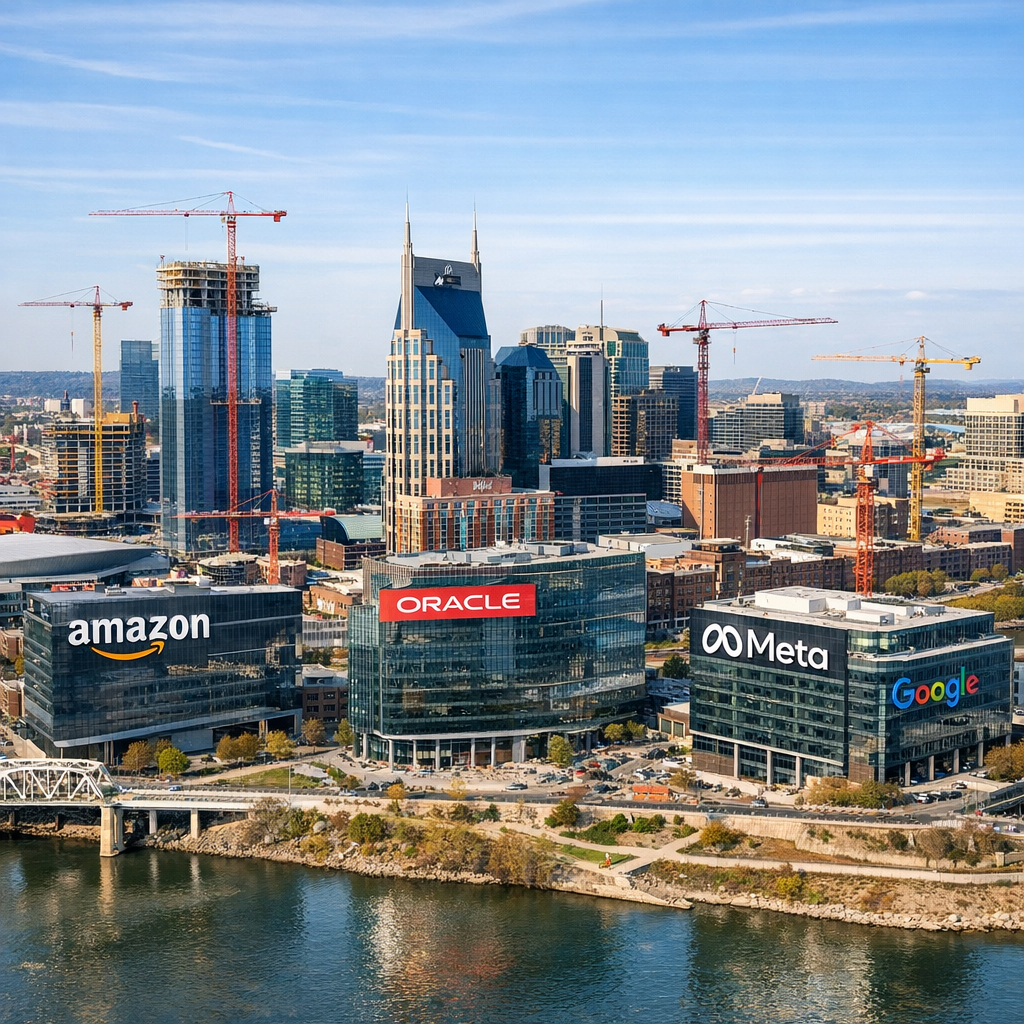
Nashville has experienced significant economic growth in recent years, positioning itself as a burgeoning business hub. This transformation mirrors broader national trends and offers insights into the city’s evolving economic landscape.
Tech Industry Expansion
Major technology companies have made substantial investments in Nashville. For instance, Oracle developed a $1.4 billion campus, and Amazon leased over 1 million square feet of office space downtown. These developments have contributed to a 17% increase in tech jobs between 2017 and 2022, reflecting a nationwide shift towards tech-driven economies.
Population Growth and Housing Market
Nashville’s population has been steadily increasing, with Davidson County adding nearly 9,300 residents in 2025, the highest among Tennessee’s counties. This growth has led to a surge in housing demand, resulting in rising home prices and prompting many to seek more affordable options in suburban areas. These patterns are consistent with national urbanization and housing trends.
Education and Income
Data indicates a strong correlation between higher education and income levels in Nashville. Adults with college degrees consistently out-earn their peers, underscoring the importance of education in economic mobility. This aligns with national data highlighting the value of higher education in achieving financial stability.
Infrastructure and Transportation
In response to its growth, Nashville has invested in infrastructure improvements. The ‘Choose How You Move’ initiative, approved in 2024, aims to enhance transportation options and reduce congestion. This reflects a national emphasis on developing sustainable urban infrastructure to support expanding populations.
Nashville’s economic trajectory exemplifies how local developments can reflect and contribute to broader national trends, highlighting the interconnectedness of local and national economies.