

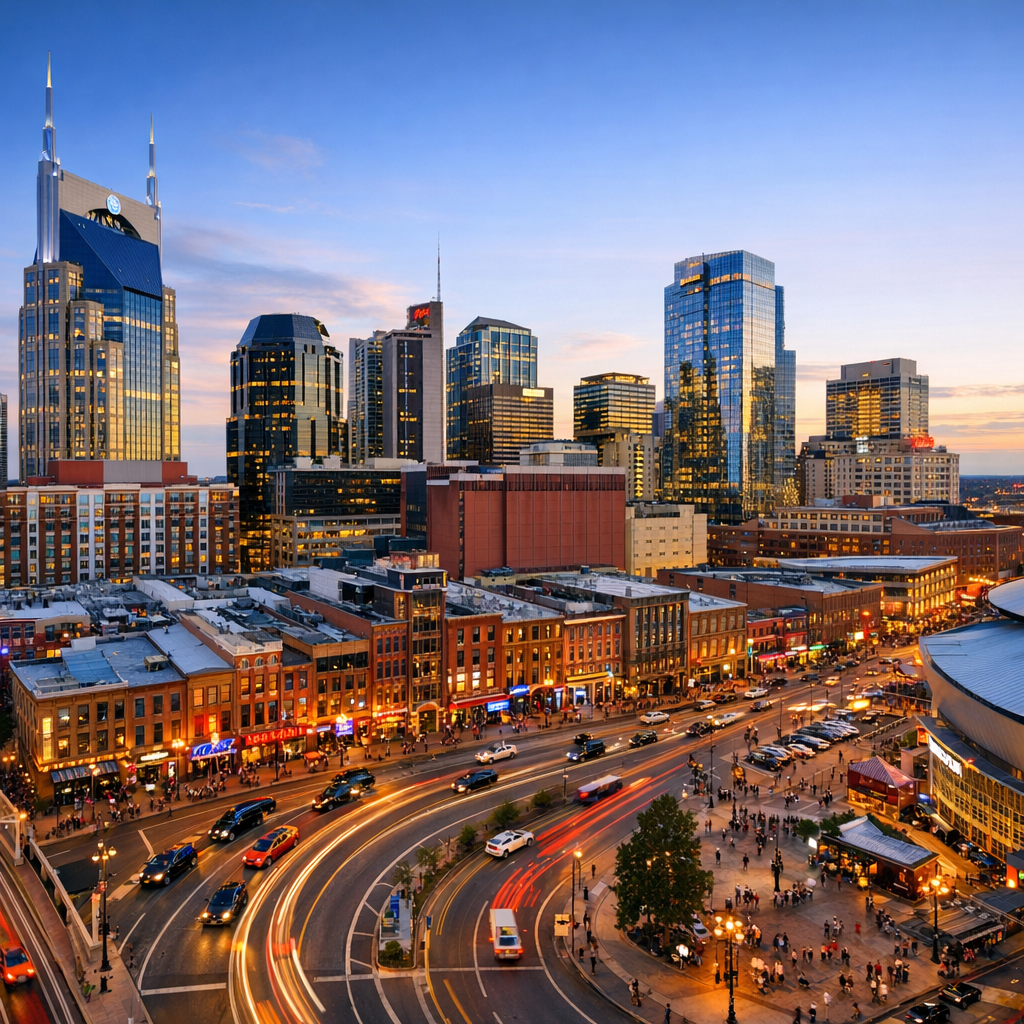
Nashville has experienced remarkable economic growth in recent years, transforming from a city renowned for its musical heritage into a dynamic business hub. This evolution is driven by a combination of population growth, industry diversification, and strategic investments.
Population Growth and Workforce Development
The city’s population has been steadily increasing, with a 1.6% growth over the past year, ranking fifth among major U.S. markets. This influx has bolstered the labor force, which stood at approximately 1.2 million as of March 2026. Notably, nearly 41% of adults aged 25 and older now hold at least a bachelor’s degree, enhancing the city’s appeal to companies seeking a highly skilled workforce.
Key Industries Driving the Economy
Healthcare: Nashville is a leading center for healthcare, with over 900 healthcare companies operating in the region. The sector contributes an estimated $92 billion annually to the local economy, solidifying its status as the city’s economic anchor.
Technology: The tech industry has seen significant growth, attracting major corporations and fostering a vibrant startup ecosystem. Companies like Oracle have expanded their presence, with Oracle signing a 116,000-square-foot lease at the Neuhoff development.
Tourism: The tourism sector continues to thrive, with Nashville welcoming a record 16.8 million visitors in 2023, generating $10.56 billion in visitor spending. This robust tourism industry supports numerous local businesses and contributes significantly to the city’s economic vitality.
Real Estate and Infrastructure Developments
The real estate market reflects the city’s growth, with home sales totaling 2,971 transactions in April 2026, a 1.6% year-over-year increase. Active listings rose by 17.8%, indicating a healthy supply to meet demand. Additionally, the Nashville International Airport (BNA) experienced a record-breaking year, welcoming 24.7 million passengers in the 2024-25 fiscal year, a 4.2% increase from the previous year. This surge underscores the city’s expanding connectivity and appeal.
Challenges and Future Outlook
Despite the positive trajectory, challenges remain. Gas prices have risen to $4 per gallon, up from $2.62 in early 2026, impacting both consumers and businesses. Additionally, while the investment market is rebounding, new construction has slowed, with the development pipeline hitting a decade low. Addressing these challenges will require strategic planning and investment to sustain Nashville’s economic momentum.
In conclusion, Nashville’s economic landscape is characterized by robust growth across multiple sectors, a highly educated workforce, and strategic infrastructure developments. While challenges exist, the city’s diversified economy and proactive initiatives position it well for continued prosperity.