

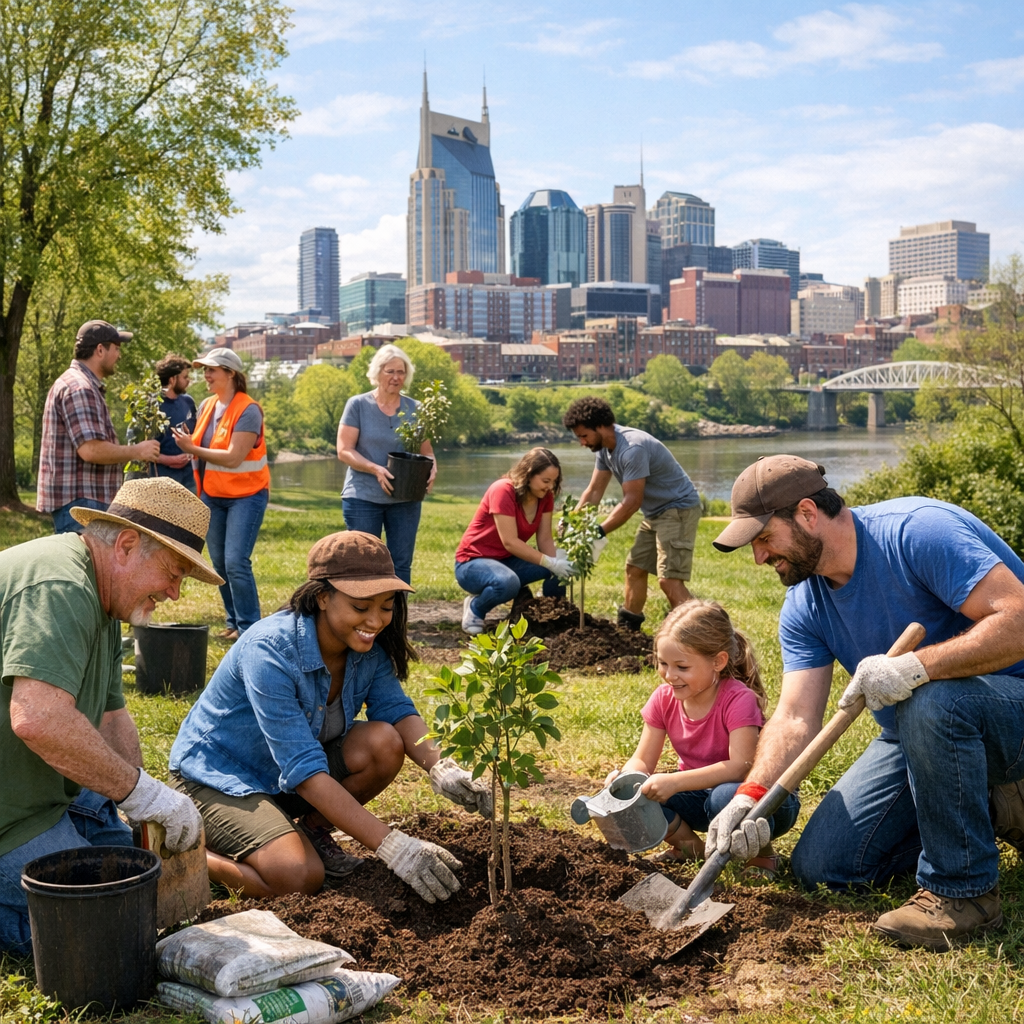
Nashville’s dedication to environmental stewardship is evident through a series of initiatives aimed at preserving the city’s natural resources and promoting sustainable growth. A notable effort is the launch of the Ecological Conservation Strategy (ECS), Nashville’s first countywide plan since 2011 to assess the impact of recent growth on the local landscape. This 18-month planning effort seeks to develop recommendations for protecting and connecting Nashville’s natural spaces, including waterways, forests, and green spaces, while supporting the city’s expansion.
Community involvement plays a crucial role in these environmental efforts. The Nashville Earth Day festival, managed by the Centennial Park Conservancy, has been instrumental in supporting local environmental projects. Since 2020, the Conservancy has donated a total of $208,000 to underwrite initiatives focused on bees, trees, water, pollinator gardens, sustainability, and education. In 2025 alone, $48,000 was awarded to 17 organizations and projects across the city, underscoring the community’s commitment to fostering a sustainable future.
Educational institutions are also contributing to Nashville’s environmental goals. Metro Nashville Public Schools (MNPS) has implemented the MNPS Energy Program, achieving a 20% annual reduction in energy consumption over the past three years. This accomplishment is equivalent to reducing 260,000 metric tons of carbon emissions. The program includes energy-efficient designs, LEED certifications for new buildings, and the installation of solar energy systems and geothermal HVAC systems at various campuses.
These collective efforts highlight Nashville’s commitment to environmental stewardship, demonstrating how city initiatives and community-driven projects can work together to create a more sustainable and resilient urban environment.