

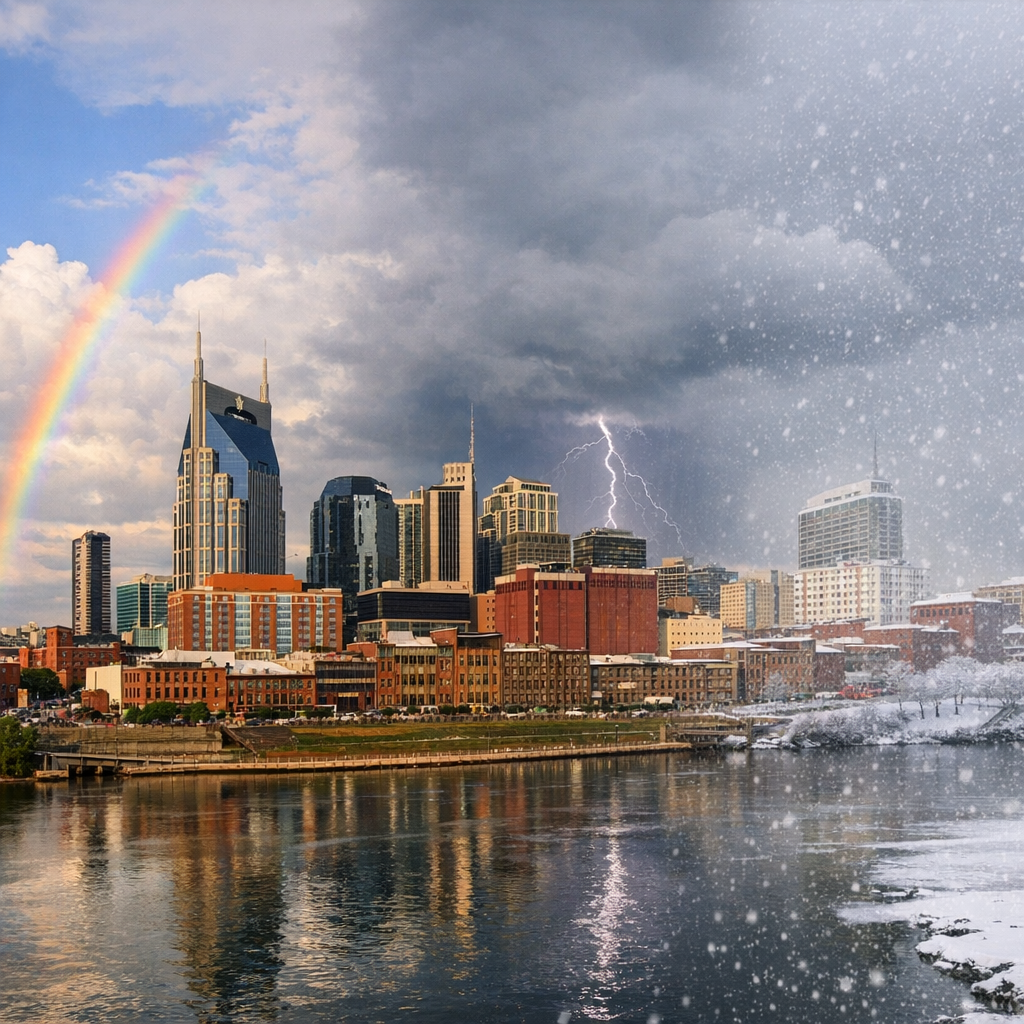
Nashville, Tennessee, experiences a humid subtropical climate characterized by four distinct seasons, each bringing its own weather patterns and environmental considerations.
Seasonal Weather Patterns
Spring (March – May)
Spring in Nashville is marked by warming temperatures and increased rainfall. Average temperatures rise from the low 60s°F (16°C) in March to nearly 80°F (27°C) by late May. This season is also the wettest, with May typically being the rainiest month. Additionally, Nashville lies within “Dixie Alley,” making it prone to severe thunderstorms and tornadoes during this period.
Summer (June – August)
Summers are hot and humid, with average high temperatures in July reaching around 88.3°F (31.3°C). Heat waves have become more frequent and longer in duration, posing health risks, especially to vulnerable populations. The urban heat island effect exacerbates these conditions, with some areas experiencing temperatures up to 10°F higher than surrounding regions.
Autumn (September – November)
Autumn brings cooler temperatures and reduced humidity. Average highs decrease from the mid-80s°F (29°C) in September to the mid-60s°F (18°C) by November. This season is generally drier, providing a respite from the summer heat and humidity.
Winter (December – February)
Winters are mild, with average temperatures ranging from 30.6°F (-0.8°C) in January to 48.9°F (9.4°C) in December. Snowfall is rare, averaging about 4 inches annually. However, occasional cold snaps can bring temperatures below freezing.
Environmental Challenges
Flooding
Nashville’s topography and proximity to the Cumberland River make it susceptible to flooding. The city has experienced significant flood events, such as the May 2010 flood, which caused extensive damage. Climate models project a 20-30% increase in extreme precipitation intensity across Middle Tennessee by 2060, heightening flood risks.
Extreme Heat
The increasing frequency and intensity of heat waves are a growing concern. In 2023, Nashville recorded 58 days above 90°F, well above the historical average of 38. The urban heat island effect, resulting from extensive urban development and reduced tree canopy, contributes to higher temperatures in certain areas.
Severe Storms and Tornadoes
Located in “Dixie Alley,” Nashville is vulnerable to severe storms and tornadoes. The March 2020 tornado outbreak caused significant damage and loss of life. The frequency of severe thunderstorms has also increased, with a 15% rise in days with damaging wind reports in the 2015-2024 decade compared to 2005-2014.
Building Climate Resilience
To address these challenges, Nashville is developing a Climate Adaptation and Resilience Plan (CARP). This plan focuses on the city’s main climate hazards—flooding, tornadoes, extreme heat, extreme cold, and thunderstorms—and aims to build adaptive capacity across Nashville’s built environment, natural environment, communities, economic systems, and public services.
Understanding Nashville’s climate and environmental challenges is crucial for residents and policymakers to develop effective strategies for resilience and sustainability.