

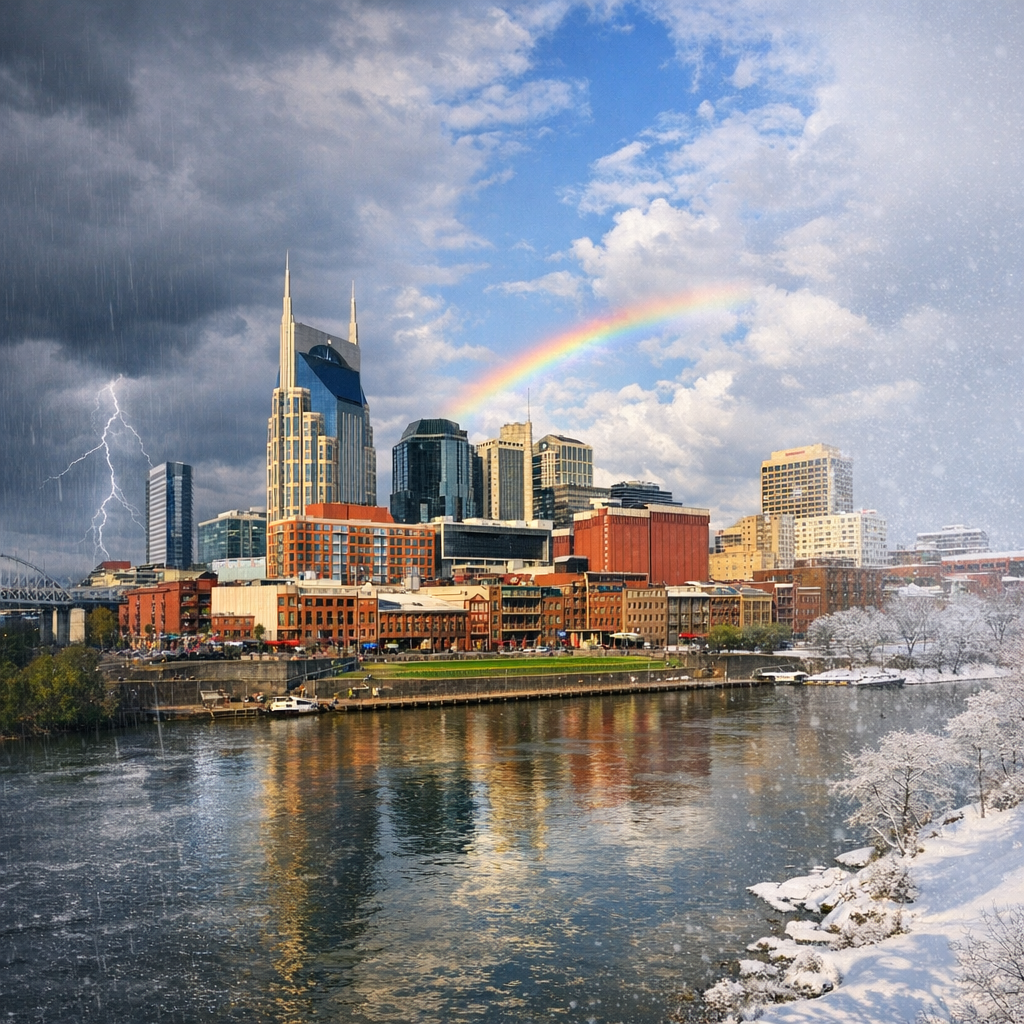
Nashville, Tennessee, experiences a humid subtropical climate characterized by four distinct seasons, each bringing its own weather patterns and environmental considerations.
Seasonal Weather Patterns
Spring (March – May)
Spring in Nashville is marked by warming temperatures and increased rainfall. Average temperatures rise from the low 60s°F (16°C) in March to nearly 80°F (27°C) by late May. This season is also the wettest, with May typically being the rainiest month. Additionally, Nashville lies within “Dixie Alley,” an area prone to strong tornadoes and severe thunderstorms, with approximately 66% of the region’s tornadoes occurring between March and May.
Summer (June – August)
Summers are hot and humid, with average high temperatures in July reaching 88.3°F (31.3°C). The city often experiences heat waves, and the urban heat island effect can make temperatures feel even hotter in densely built areas. Residents should stay hydrated and take precautions during extreme heat events.
Autumn (September – November)
Autumn brings cooler temperatures and reduced humidity, offering a pleasant respite from the summer heat. Average temperatures gradually decrease from the mid-80s°F (29°C) in September to the mid-60s°F (18°C) by November. This season is also characterized by vibrant fall foliage, making it a popular time for outdoor activities.
Winter (December – February)
Winters are generally mild, with average temperatures ranging from 30.6°F (-0.8°C) in January to 48.9°F (9.4°C) in December. Snowfall is rare, averaging about 4 inches per year, and when it does occur, it often melts quickly. However, occasional cold snaps can bring temperatures below freezing, so it’s advisable to stay prepared for sudden changes.
Environmental Challenges
Urban Heat Islands
Urban development has led to the creation of heat islands—areas with higher temperatures due to infrastructures like buildings and roads and fewer green spaces. A significant 71% of Nashville residents live in these heat-prone neighborhoods. People in historically low-income areas suffer more since they often lack access to air conditioning. To combat extreme heat, Nashville is implementing solutions such as pavement coatings that reflect sunlight.
Increased Rainfall Intensity
Rainstorms are getting more intense in Nashville and throughout the U.S. amid human-driven climate change. Hourly rainfall intensity in Nashville increased by 12% between 1970 and 2024. More intense precipitation can cause flash-flooding, dangerous driving conditions, and other potentially deadly hazards.
Flooding
Nashville’s topography and hydrology make flooding the city’s most destructive climate risk. The May 2010 flood remains Nashville’s defining climate disaster, with over 13 inches of rain falling in 48 hours, pushing the Cumberland River to 51.9 feet—12 feet above flood stage. The event caused $2 billion in damages in Nashville alone. Despite significant investments in flood mitigation, smaller tributaries remain vulnerable, as evidenced by the March 2021 event along Sevenmile Creek that caused $100 million in damage.
Conclusion
Understanding Nashville’s climate and environmental challenges is essential for residents and visitors alike. By staying informed about seasonal weather patterns and being aware of the city’s environmental issues, individuals can better prepare for and adapt to the changing conditions.