

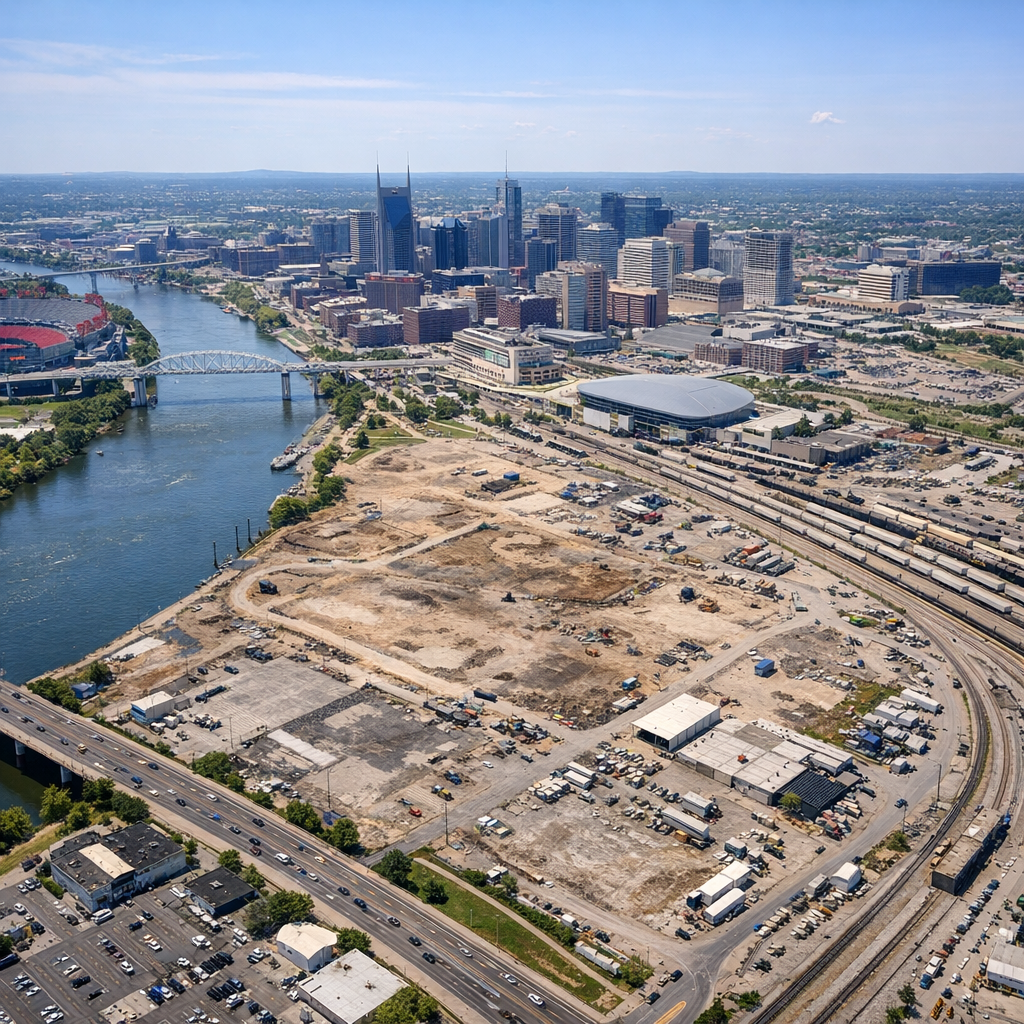
Nashville’s East Bank is poised for a significant transformation following the recent rezoning of a 47-acre scrapyard into the Downtown Code. This pivotal move marks a major step in the city’s ongoing efforts to revitalize its riverfront and create a dynamic urban neighborhood.
Rezoning the East Bank
In April 2026, Mayor Freddie O’Connell signed legislation approved by the Metro Council to rezone the expansive East Bank scrapyard site. This decision integrates the area into the Downtown Code, aligning with the city’s long-term vision for the East Bank’s development. The rezoning reflects years of collaboration between public and private partners, aiming to transform the site into a premier urban neighborhood.
Vision for The East Bend
The rezoned area, now referred to as The East Bend, is envisioned as a vibrant community featuring residential, commercial, and recreational spaces. The development plan emphasizes creating a walkable neighborhood with access to the riverfront, green spaces, and modern amenities. This initiative is part of the broader Imagine East Bank vision, which seeks to reclaim and rejuvenate Nashville’s riverfront areas.
Community Impact and Future Prospects
The transformation of the East Bank is expected to have a profound impact on Nashville’s urban landscape. By converting an industrial site into a thriving neighborhood, the city aims to address housing needs, stimulate economic growth, and enhance the quality of life for residents. The development also presents opportunities for local businesses and cultural institutions to establish a presence in the area, contributing to the neighborhood’s unique character.
As Nashville continues to grow, projects like The East Bend exemplify the city’s commitment to thoughtful urban planning and community development. Residents and stakeholders are encouraged to stay informed and participate in the planning process to ensure the new neighborhood reflects the diverse needs and aspirations of the community.